





Definition and Meaning
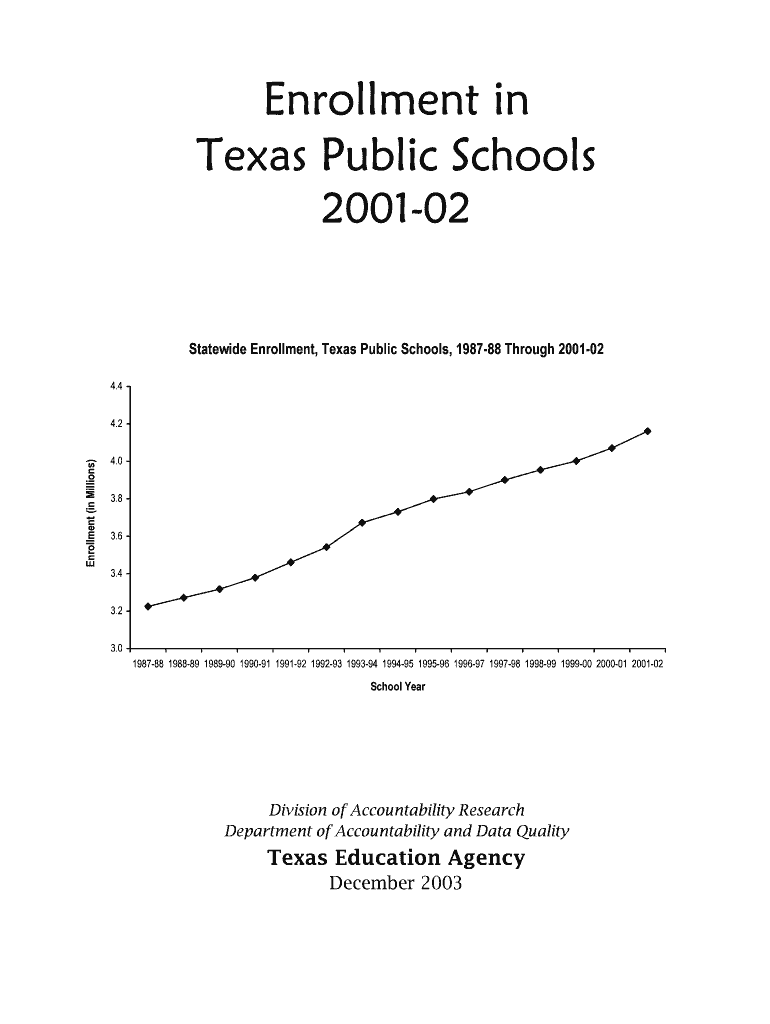
The "Enrollment in Texas Public Schools, 2001-02 - Texas Education" document provides a detailed statistical analysis of student enrollment trends within Texas public schools for the academic year 2. It examines demographic changes and trends over a span of 14 years, from 1987-88 to 2001-02. The report highlights variations in enrollment figures based on ethnicity, gender, grade levels, and participation in different instructional programs. Its content offers valuable insights into shifting demographics such as the decline in White student enrollment and a rise in Hispanic and economically disadvantaged student enrollment.
Key Elements of the Document
Several crucial elements are included in the "Enrollment in Texas Public Schools, 2001-02 - Texas Education" document:
- Demographic Analysis: Includes detailed data on student enrollment segmented by ethnicity, gender, and socioeconomic status.
- Historical Comparisons: Tracks changes from the 1987-88 to 2001-02 school years.
- Program Participation: Details student involvement in various educational programs.
- Regional Differences: Examines how different districts and educational service regions are affected by enrollment trends.
Important Terms Related to Enrollment
Understanding the key terminology associated with this document is essential for interpreting the data accurately:
- Enrollment Trends: The patterns and changes in student numbers over a specified period.
- Ethnicity and Demographics: Statistical data regarding the racial and cultural makeup of the student population.
- Educational Programs: Specific curriculum or support systems provided to students, such as ESL or special education programs.
Legal Use of the Document
The "Enrollment in Texas Public Schools, 2001-02 - Texas Education" document can be used to understand compliance with educational regulations and policies in Texas:
- Policy Development: Useful for educational policymakers to design or modify education programs that meet demographic needs.
- Budget Allocation: Assists in funding allocation decisions based on changing enrollment numbers in various regions or ethnic groups.
Steps to Complete Enrollment Analysis
Analyzing this document involves several steps to ensure a comprehensive understanding:
- Data Review: Examine the data tables and graphs provided within the document.
- Trend Identification: Identify key trends in the data, such as increases or decreases in specific demographics.
- Program Analysis: Look at participation levels in various educational programs and identify correlations with demographics.
- Regional Comparison: Compare different districts or regions to pinpoint standout areas in terms of enrollment changes.
How to Use the Document
This document serves as a valuable resource for educators, policymakers, and administrators to make informed decisions:
- Educational Planning: Utilize the data to forecast future educational needs and plan for resource allocation.
- Targeted Interventions: Develop targeted interventions for growing demographic groups, such as tailoring programs for Hispanic students or economically disadvantaged families.
Who Typically Uses the Document
The primary users of this document include:
- School Administrators: To understand demographic changes and adjust school resources accordingly.
- Educational Researchers: For conducting detailed studies on enrollment trends.
- Policymakers: To craft policies that effectively address enrollment-based challenges.


Examples of Using the Document
Different scenarios demonstrate the utility of this document:
- Long-Term Planning: A school district uses demographic trends to plan for new schools and redistribute teachers.
- Cultural Programs: An increase in Hispanic enrollment motivates the development of cultural inclusion programs.
- Funding Requests: Evidence of changing demographics supports grant applications for additional educational resources.