






Definition and Meaning
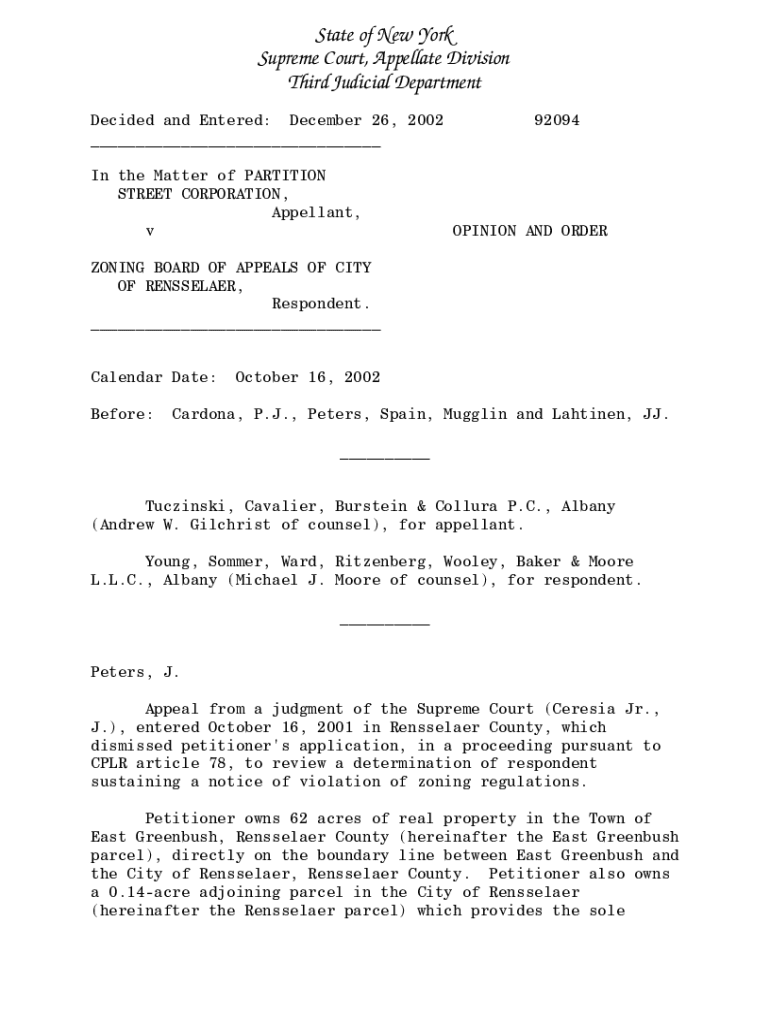
In the Matter of PARTITION refers to legal documents or cases dealing with the division of property among co-owners. This concept is often utilized when co-owners wish to divide their jointly owned real estate either voluntarily or through court intervention. The process can involve either physical division (partition in kind) or selling the property and dividing the proceeds (partition by sale). Understanding the details of this process is crucial as it impacts property rights, ownership, and distribution of real estate assets.
How to Use In the Matter of PARTITION
Understanding how to effectively utilize the In the Matter of PARTITION involves recognizing its applicability in resolving disputes among co-owners of real property. If co-owners cannot agree on the use or disposition of the property, one or more may file a partition action. This legal tool helps ensure that all parties receive a fair share of the property or its value. Typically, an attorney specializing in real estate law would guide the parties through the filing process, negotiations, or court proceedings.
Steps to Complete In the Matter of PARTITION
When engaging in the partition process, several steps should be meticulously followed:
-
Consultation: Begin by consulting with a real estate attorney to understand your rights and options.
-
Filing a Complaint: File a partition complaint in the appropriate court, detailing the property and requesting a division.
-
Service: Serve the complaint to all co-owners or interested parties.
-
Appraisal and Valuation: An appraisal of the property is typically conducted to establish its value.
-
Negotiation: Parties may negotiate to see if a mutual agreement can be reached on how to divide the property.
-
Court Decision: If no agreement is reached, the court will make a determination, which could involve ordering a partition in kind or a sale of the property.
Key Elements of In the Matter of PARTITION
The primary elements in the matter of partition include:
-
Property Description: Detailed description of the property in question, including its location, physical characteristics, and any improvements.
-
Ownership Interests: Clear identification of the ownership percentages or interest of each co-owner.
-
Proposed Division: How the property should be divided among the parties, either physically or financially.
Legal Use of In the Matter of PARTITION
The legal use of the In the Matter of PARTITION is grounded in equity principles. It ensures fairness among co-owners when consensus cannot be reached on property matters. Courts have the power to enforce a partition to protect the interests of all co-owners, avoiding prolonged disputes. It's a legal remedy essential for maintaining property rights and resolving conflicts that arise in co-ownership situations.
Required Documents
To initiate the partition process, the following documents are typically required:
-
Partition Complaint: A legal document filed with the court requesting the division of property.
-
Title Deeds: Current deeds showing ownership and any encumbrances on the property.
-
Appraisal Reports: Professional assessments indicating the property's fair market value.
-
Ownership Agreements: Any existing agreements between the co-owners regarding the use or division of the property.
Who Typically Uses the In the Matter of PARTITION
The In the Matter of PARTITION is commonly used by co-owners who are unable to agree on the management, use, or sale of jointly owned real estate. This includes family members who have inherited property together, business partners holding property for investment purposes, or any group with communal ownership interests. Parties initiate this process to ensure equitable distribution and prevent potential conflicts.


State-Specific Rules for the In the Matter of PARTITION
While the In the Matter of PARTITION process is generally similar across states, specific rules and procedures can vary. Some states may require mediation or offer alternative dispute resolution options before a court will hear a partition case. It's crucial for parties to familiarize themselves with state-specific rules, which may include unique filing requirements, court procedures, or legal standards for determining the type of partition to be ordered. Consulting local legal experts ensures compliance with state-specific regulations.