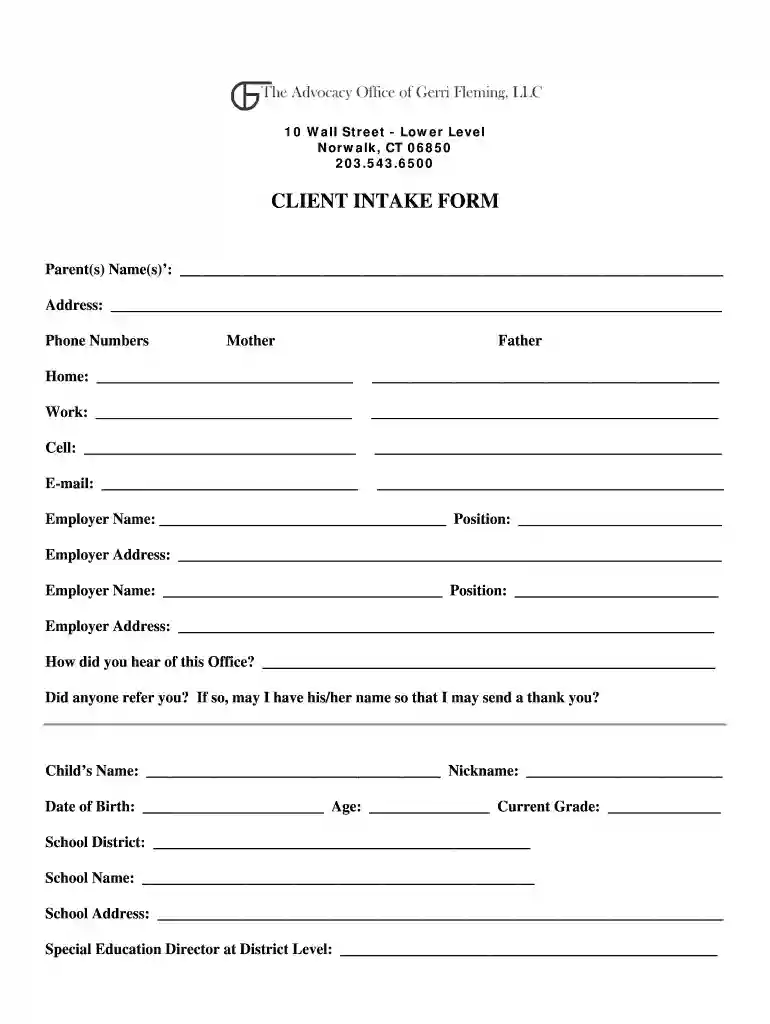
Definition and Importance of the CICL Intake Form
The CICL intake form, also known as the Client Intake for Children with Learning Disabilities form, is a critical document in special education advocacy. Its primary purpose is to collect essential information about a child’s educational background, disabilities, and parental concerns regarding the child’s developmental and academic experiences. This detailed data aids professionals in assessing the child’s needs and determining appropriate support and interventions.
Key Features of the CICL Intake Form
- Comprehensive Data Collection: The form gathers information related to the child’s academic history, including schools attended and classes taken, as well as evaluations received and diagnoses.
- Reflects Parental Insights: It allows parents to express their perspectives on their child's strengths and challenges, making their input invaluable for formulating effective support strategies.
- Legal Compliance: Utilization of this form aligns with legal requirements for documenting a child’s needs under the Individuals with Disabilities Education Act (IDEA).
Steps to Complete the CICL Intake Form
Completing the CICL intake form requires careful attention to detail and accuracy to ensure all necessary information is captured.
- Gather Required Information: Before starting the form, compile documents that provide insight into your child's educational history, diagnoses, and any previous assessments.
- Fill Out Personal Information: Begin by entering the child’s personal details, including name, date of birth, and contact information. Correct information is crucial, as it directly impacts communication with educators and service providers.
- Document Educational Background: Provide specifics about your child's schools, grade levels attended, and any special education services currently in place. Include attachments if necessary, such as report cards or Individualized Education Programs (IEP).
- Outline Concerns and Observations: Include details about any observed challenges your child might face, such as difficulties in specific subjects or social interactions. Your insights are essential for a holistic approach to support.
- Review and Submit: Carefully review all entered information for accuracy before submitting the form. This will minimize errors and ensure the data accurately reflects your child’s situation.
Who Typically Uses the CICL Intake Form
The CICL intake form is predominantly used by various stakeholders within the educational and special needs advocacy landscape.

- Parents and Guardians: They complete the form to initiate the process of obtaining appropriate special education services for their children. Their insights are crucial for understanding the child's educational journey.
- Special Education Advocates: These professionals use the form to support families in navigating the complex educational system, ensuring that children receive the resources they need.
- School Officials and Educators: Teachers and special education staff employ the intake form to gather information that can help tailor educational plans, ensuring that the unique needs of each child are met effectively.
- Educational Therapists and Psychologists: These practitioners may utilize the form to gain a comprehensive understanding of a child’s educational impact, guiding their therapeutic interventions.
Important Terms Related to the CICL Intake Form
Understanding key terminology associated with the CICL intake form is essential for effective communication and successful navigation of the special education landscape.
- Individualized Education Program (IEP): A legal document that outlines the specific educational services tailored to a child with disabilities.
- 504 Plan: A plan developed to ensure that a child with a disability has equal access to an education, tailored to meet their specific needs.
- Learning Disabilities: A variety of disorders that affect the ability to receive, process, and communicate information, impacting a child's academic performance.
- Special Education Services: Support provided under the IDEA to help children with disabilities access a free and appropriate public education.
Examples of Using the CICL Intake Form
Utilizing the CICL intake form can vary significantly depending on the child's unique circumstances.
- Initial Assessment for Services: A parent filling out the form for their child who recently received a diagnosis of a learning disability might detail the child's struggles, enabling the school to set up appropriate supports, such as an IEP.
- Ongoing Evaluation: A school might regularly ask parents to update the CICL intake form to reflect changes in a child's educational needs or progress, ensuring that interventions remain relevant and effective.
- Transition Planning: For students transitioning from elementary to middle school, the form can help identify necessary supports and professional recommendations to ensure a smooth transition into a more challenging academic environment.
Legal Use of the CICL Intake Form
The use of the CICL intake form must adhere to legal standards set forth by educational legislation.
- Compliance with IDEA: This federal law mandates that children with disabilities be provided with services that cater to their unique needs, making accurate completion of the intake form vital for legal compliance.
- Confidentiality Regulations: Appropriate handling of the information contained in the CICL intake form is essential. All personal data must remain confidential and compliant with laws such as the Family Educational Rights and Privacy Act (FERPA).
- Documentation for Advocacy: The completed form serves as a formal record that can be used in legal proceedings or advocacy situations, ensuring that educators and administrators have the necessary documentation to support the child's educational rights.