
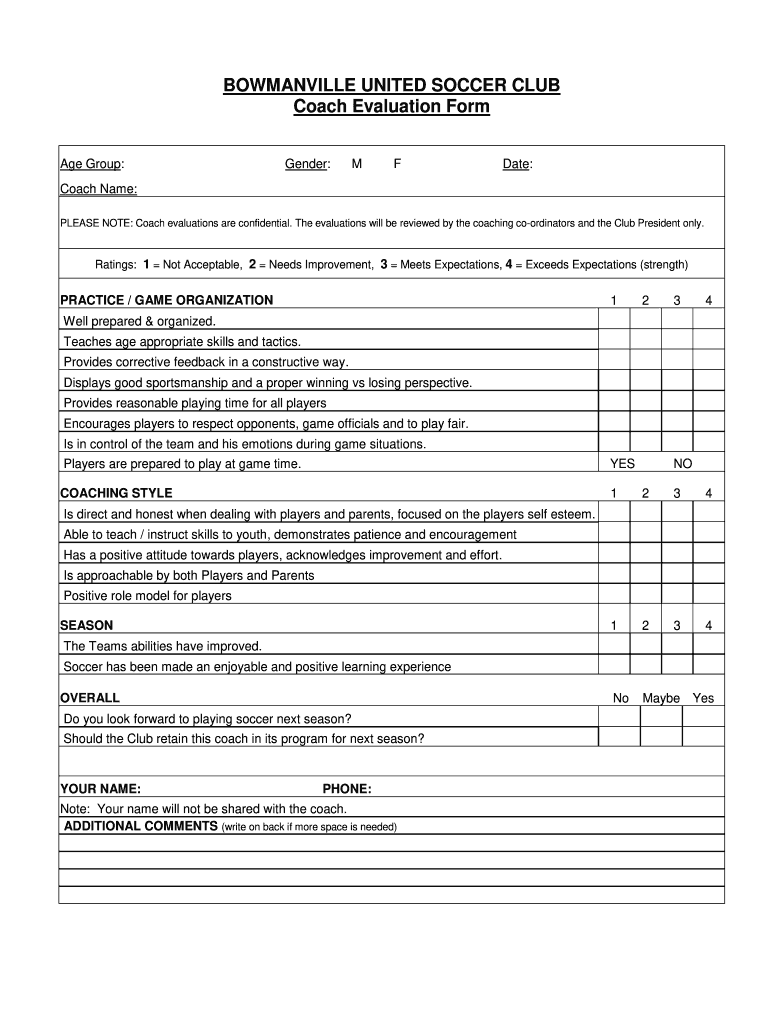







Overview of the Soccer Coach Evaluation Form
The soccer coach evaluation form is a specialized document used to assess the effectiveness of coaches in various aspects of their role. This form is essential for organizations such as youth soccer clubs and high school athletic departments, with the purpose of improving coaching quality and enhancing player development.
Purpose of the Evaluation
The primary intent of utilizing a soccer coach evaluation form is multifaceted:
- Performance Assessment: To objectively evaluate a coach's ability to teach skills, foster teamwork, and instill sportsmanship among players.
- Feedback Mechanism: To provide coaches with constructive feedback from players, parents, and other stakeholders to facilitate their professional growth.
- Program Improvement: To gather data that can lead to informed decisions about coaching development programs and potential training needs.
Key Components of the Form
A comprehensive soccer coach evaluation form should include several critical components to ensure thorough assessments:
-
Rating Scale: A section where evaluators can rate performance on a scale (for example, one to five) across various criteria such as communication skills, game strategy, and ability to motivate players.
-
Open-Ended Questions: Areas for subjective feedback where respondents can provide contexts, such as specific instances of effective or ineffective coaching behavior.
-
Skill-Specific Evaluations: Sections focusing on different facets of coaching, including technical skills, game management, player relationships, and development of individual talents.
-
Goal Setting: Space for evaluators to note recommendations for future development and strategies for achieving coaching objectives.
-
Demographic Information: Gathering basic information about the evaluator (e.g., player age, experience level with the coach) helps provide context to the evaluation.
Example Evaluation Criteria
The criteria used could widely vary, but typical aspects educators might focus on include:
- Organization of Practices: Was the practice effectively planned and structured?
- Coaching Style: How well did the coach adapt their style to suit the team’s needs?
- Communication Skills: Did the coach communicate effectively with both players and parents?
- Positive Environment: Did the coach foster a cooperative, encouraging atmosphere?
How to Administer the Evaluation
Administering the evaluation effectively involves several steps:
-
Select Evaluation Participants: Identify key stakeholders such as players, parents, and assistant coaches who interact with the coach regularly.
-
Distribution and Instructions: Provide clear instructions on how to fill out the evaluation form and specify deadlines for submissions.
-
Collect Responses: Use digital formats to streamline collection and ensure anonymity, which can lead to more candid feedback.
-
Analyze Results: Compile the data from the forms to identify trends, strengths, and areas needing improvement.
-
Provide Feedback: Share summarized results with the coaching staff while maintaining confidentiality to encourage candid responses in future evaluations.
Nuances and Considerations
When implementing a soccer coach evaluation form, it's crucial to consider:
- Cultural Sensitivity: Tailor questions to reflect the values and norms specific to the community served by the youth soccer program.
- Bias Awareness: Train evaluators to recognize and mitigate personal biases when providing feedback.
- Continuous Improvement: Regularly revise and update the evaluation form to adapt to changing coaching strategies and player needs.
This structured approach to evaluating coaches not only promotes accountability but also ensures that the coaching staff can provide the best possible experience for players.




