






Definition and Meaning
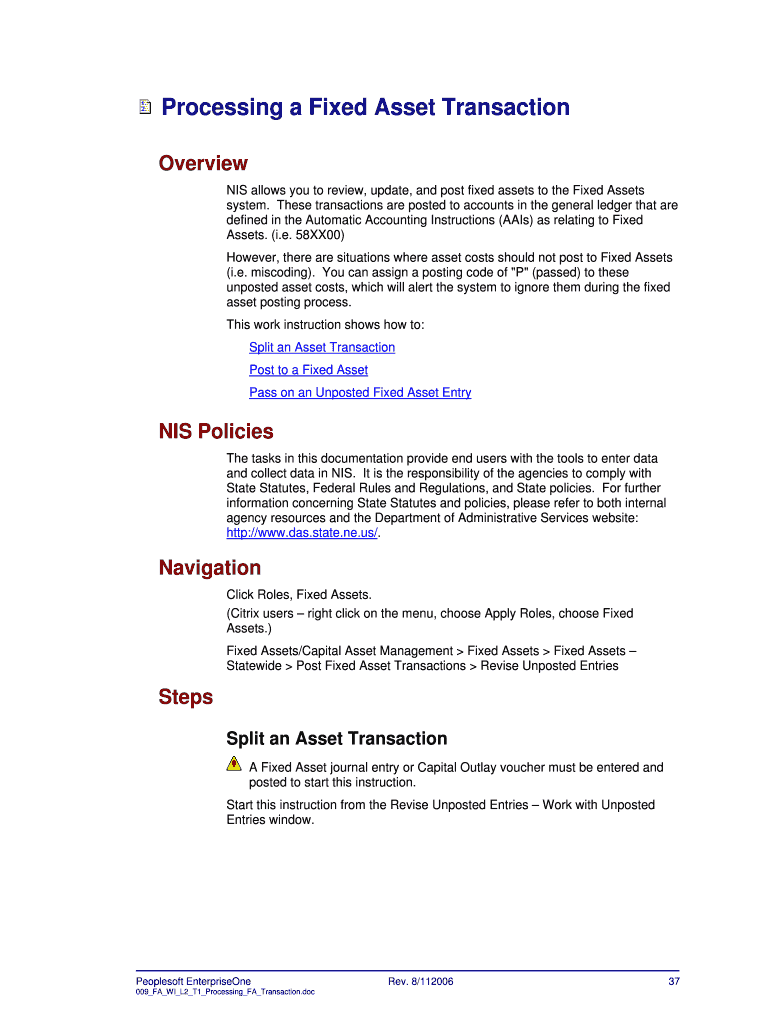
"Processing a Fixed Asset Transaction" refers to the systematic recording, management, and reporting of transactions related to fixed assets, which include long-term tangible assets such as property, equipment, and machinery. This process is essential for maintaining accurate financial records and compliance with accounting standards. Fixed asset transactions typically involve the acquisition, improvement, revaluation, and disposal of assets. Proper transaction processing ensures that books reflect the true financial position of an organization by incorporating depreciation, handling tax implications, and valuing assets according to appropriate accounting standards.
Steps to Complete the Fixed Asset Transaction Processing
-
Identify the Transaction Type:
- Determine whether the transaction involves acquisition, improvement, revaluation, transfer, or disposal.
- Ensure the transaction type is correctly classified for accurate financial reporting.
-
Gather Necessary Information:
- Obtain relevant documentation such as purchase invoices, contracts, or disposal records.
- Verify details including asset description, cost, purchase date, and vendor information.
-
Record Initial Acquisition or Improvement:
- Enter the asset details into the accounting system, including acquisition cost and estimated useful life.
- For improvements, update the asset’s book value and remaining useful life as necessary.
-
Calculate and Record Depreciation:
- Apply the appropriate depreciation method (e.g., straight-line, declining balance) based on asset type and organizational policy.
- Update the asset’s book value regularly to reflect accumulated depreciation.
-
Revaluation and Impairment Test:
- Perform periodic reviews to assess changes in asset fair value.
- Record revaluation adjustments or impairment losses if the asset value has significantly altered.
-
Disposal of Assets:
- Record details of the sale or disposal, including proceeds and any removal costs.
- Calculate and post any gain or loss on disposal, closing out the asset’s financial records.
Key Elements of the Fixed Asset Transaction
-
Asset Identification:
- Utilize tagging systems and asset numbers for easy tracking and referencing in records.
-
Valuation and Revaluation:
- Establish fair market value by considering asset length of use and potential future economic benefits.
-
Depreciation Accounting:
- Maintain a systematic approach to writing off the asset’s value over time, aligned with organizational policy.
-
Gain or Loss on Disposal:
- Analyze financial impact on asset disposal by comparing asset net book value against disposal value.
Important Terms Related to Fixed Asset Transactions
-
Capitalization: The process of recording an expenditure as an asset.
-
Depreciation: Allocation of the cost of a tangible asset over its useful life.
-
Book Value: The value of an asset as recorded on the balance sheet, reflecting purchase cost minus accumulated depreciation.
-
Impairment: A decrease in an asset’s recoverable amount below its carrying amount.
Why Process a Fixed Asset Transaction
Accurate processing of fixed asset transactions allows businesses to:
- Maintain precise accounting records for effective financial management.
- Comply with legal and regulatory standards, preventing potential penalties.
- Provide stakeholders with transparent insight into the organization’s asset value.
- Allocate resources efficiently by tracking asset utilization and depreciation.
Examples of Using Fixed Asset Transactions
-
Acquisition: Purchasing a new piece of machinery for manufacturing, recording the initial cost, and determining useful life for depreciation.
-
Improvement: Renovating an office space and updating the asset’s book value and depreciation schedule to reflect the enhancement.
-
Disposal: Selling outdated equipment, calculating the gain or loss on the sale, and removing the asset from financial records.
State-Specific Rules for Fixed Asset Transactions
Regulations governing fixed asset transactions may vary by state, particularly in relation to taxes and depreciation allowances. For example, some states might have specific rules on asset revaluation, useful life determination, or tax incentives for capital investment. It is vital for organizations to adhere to local regulations to ensure compliance and benefit from any available tax relief measures.
Software Compatibility for Fixed Asset Transactions
Software like QuickBooks, Oracle, and SAP can be used to manage and streamline fixed asset transactions by:
- Automating depreciation calculations and journal entries.
- Providing integration with other financial modules for comprehensive asset management.
- Offering customizable reports for tracking asset performance and compliance status.
Selecting efficient software tailored to business needs helps ensure accuracy and saves time in asset management processes.