
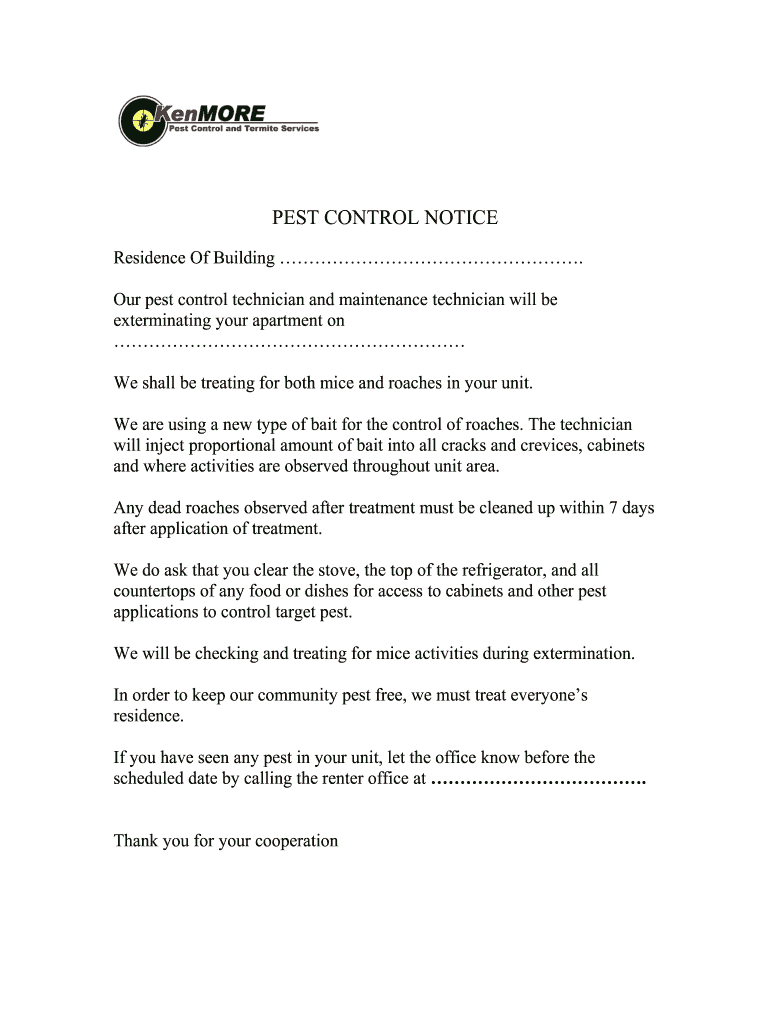







Definition and Importance of Pest Control Notice
A pest control notice is a formal communication that informs tenants or residents about scheduled pest control services in their apartments or commercial buildings. Its primary goal is to ensure that everyone affected is aware of the impending extermination efforts and can take necessary precautions for their safety and comfort. Typically, such notifications focus on specific pest management activities, including measures taken for mice, roaches, and other infestations.
Residents must understand the significance of this notice as it provides crucial details about the procedure, treatment types, and potential health implications associated with pesticide usage. Clarity on these aspects helps residents prepare adequately, allowing them to mitigate any inconvenience arising from pest control interventions.
How to Use the Pest Control Notice Effectively
When utilizing a pest control notice, it is essential to follow a structured approach to ensure its effectiveness. Here’s a breakdown of how to use the notice properly:
-
Drafting the Notice: Create a clear and concise document outlining the pest control service's date, time, and expected duration. Include specifics such as the types of pests being targeted and the methods being employed.
-
Distribution: Ensure the notice is distributed to all affected residents or tenants. This can be accomplished through physical delivery to each apartment or through digital communication channels such as email or community websites.
-
Providing Instructions: Include instructions for residents to prepare for pest control. Common directives might involve:
- Removing food items from countertops
- Storing away dishes and utensils
- Vacuuming carpets and floors
-
Follow-Up: After pest control services, communicate with residents about the results and any subsequent measures that need to be taken to maintain a pest-free environment.
-
Addressing Concerns: Provide contact information so residents can reach out with any questions or concerns. Being responsive fosters trust and ensures that residents feel supported throughout the pest management process.
Key Elements of a Pest Control Notice
A comprehensive pest control notice should encapsulate several critical elements to ensure clarity and effectiveness:
- Notice Title: Clearly label the document as a pest control notice to highlight its significance.
- Date of Service: Specify the date and time pest control services will be conducted.
- Duration of Treatment: Include an estimated time frame for the treatment process to set clear expectations.
- Affected Areas: Detail which areas or apartments will undergo treatment, ensuring all residents are informed.
- Types of Pests: Indicate the specific pests being targeted, such as rodents or insects.
- Preparation Instructions: Provide a list of preparatory actions residents should take, such as securing food items and vacating premises if needed.
- Health and Safety Information: If applicable, include safety guidelines concerning pesticide exposure and the re-entry time post-treatment.
By ensuring that all these elements are present, the notice will serve its purpose effectively, promoting resident cooperation and awareness.
Legal Use and Compliance of Pest Control Notice
The legal use of a pest control notice varies by state, but certain general principles guide its implementation:
- State Regulations: Many states have regulations governing the use of pesticides, including how and when to notify residents. Ensure compliance with these local laws to avoid legal repercussions.
- Tenant Rights: Tenants may have specific rights regarding notification and the timing of pest control services. Familiarize yourself with the respective state laws to ensure that all communications align with tenant rights.
- Documentation: Keeping records of all pest control notices sent can be vital in case of disputes. Documentation serves as proof of compliance and can be beneficial if residents file complaints regarding pest control methods or practices.
It is crucial to be aware of these legal considerations to maintain transparent relationships with residents and protect property management from potential liabilities.
Examples of Pest Control Notices Created for Different Situations
Creating tailored pest control notices for various scenarios can enhance communication and understanding among residents. Here are examples relevant for different situations:
-
Routine Extermination Notice:
- Subject: Scheduled Pest Control Service
- Content: "Dear Residents, please be advised that pest control services will occur on [date] at [time] to address a roach infestation. We ask that you prepare by [list instructions]. Thank you for your cooperation."
-
Emergency Pest Control Notification:
- Subject: Urgent Pest Control Notice
- Content: "Attention Residents: Due to an unexpected rodent sighting, pest control will be implemented immediately on [date] at [time]. Please follow these instructions [list]. Your health and safety are our top priority."
-
Fumigation Notice to Tenants:
- Subject: Fumigation Notice
- Content: "Important: Fumigation will take place on [date] at [time]. All residents must vacate their units no later than [time] and remain off the premises for [duration]. Please follow the outlined steps for preparation."
By adapting the notice to different contexts, property managers can enhance clarity and ensure residents understand their responsibilities effectively.
State-Specific Regulations for Pest Control Notices
Pest control regulations can vary significantly across different states. Understanding these differences is essential for compliance and effective communication. Here are some key considerations for several key states:
-
California: Requires landlords to provide at least 24 hours’ notice before pesticide applications, except in emergencies. Notices must indicate the pesticide's nature, potential health impacts, and specific areas requiring treatment.
-
New York: Mandates that landlords notify tenants at least 48 hours prior to pest control treatment in their apartments. Notices must also detail the method of pest control to be used and any required preparation steps.
-
Texas: Offers flexibility on notice timing but requires that landlords provide clear instructions regarding safety protocols during and after pest control activities.
Awareness of these state-specific regulations allows property managers to create notices that fulfill legal obligations, promote resident awareness, and foster collaboration.




