






Understanding Cornell Notes and Their Purpose
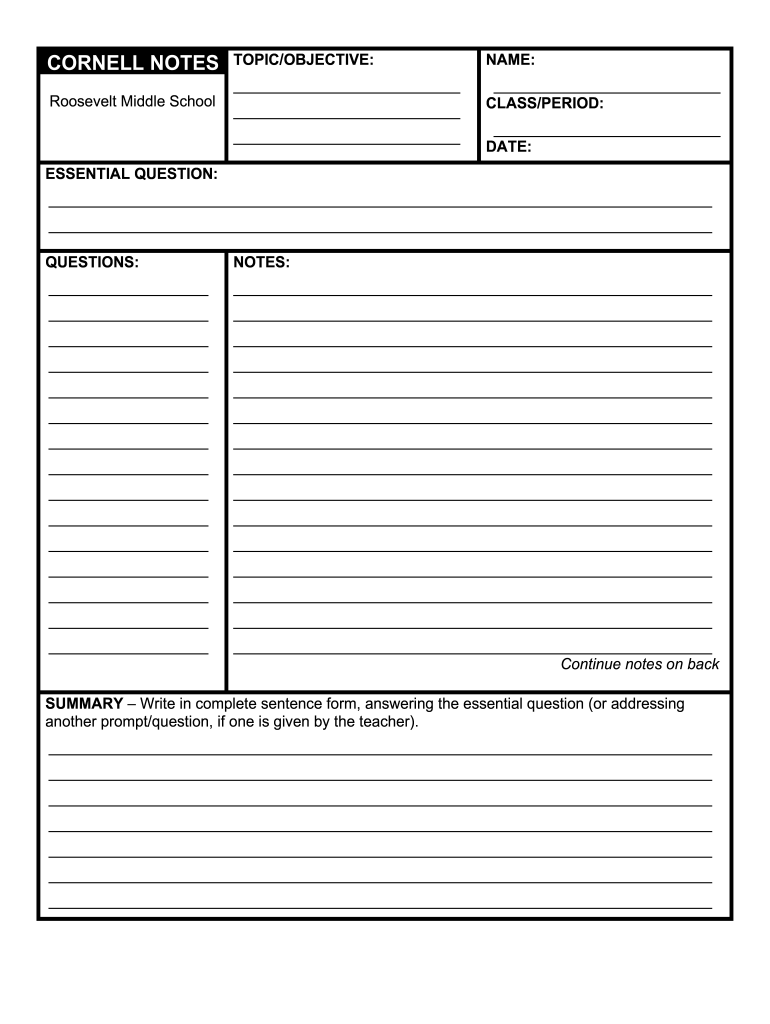
Cornell Notes is a systematic method for taking and organizing notes effectively. This technique involves dividing a page into several sections: one for main ideas, another for details, and a summary space at the bottom. This layout aids students and professionals in retaining information and promotes active engagement during lectures or while studying materials. The format fosters self-reflection and helps users evaluate their understanding, ensuring effective learning and retention.
- Main Sections of Cornell Notes:
- Cues: This section holds key questions or keywords that relate to the notes taken. It encourages active recall when revising.
- Notes: Here, detailed notes are recorded during lectures or while reviewing materials. This space allows for the capture of important ideas, concepts, and examples.
- Summary: This area is reserved for a concise summary of the notes taken, reinforcing the main ideas and enabling a quick overview for future reference.
How to Create a Cornell Notes Template in Google Docs
To effectively use Cornell Notes, creating a dedicated template in Google Docs can streamline your note-taking process. Follow these steps to set up your own Cornell Notes template:
- Open Google Docs: Log into your Google account and navigate to Google Docs.
- Create a New Document: Select “Blank” to start a new document.
- Set Up the Layout:
- Insert a Table: Use a two-column table; the left column will be your cues section and the right column will be for your notes.
- Adjust Row Heights: Create additional rows for summary space at the bottom.
- Add Headers: Label the columns accordingly as "Cues" and "Notes." You may also add a separate line for your summary at the bottom of the page.
- Format for Visual Clarity: Use different font sizes or colors to distinguish between cues, notes, and summary sections for easier navigation.
This organized layout not only enhances your note-taking efficiency but also improves your study habits.
Using a Cornell Notes Template in Google Docs Effectively
Once you have your Cornell Notes template ready in Google Docs, utilizing it effectively during lectures or study sessions is essential. Here are practical tips on how to take Cornell Notes:
- Active Listening: Focus on what the lecturer emphasizes; this often indicates the main ideas you'll want to note.
- Utilize Cues: As you take notes, jot down significant terms or questions in the cues column to help with reviews later.
- Summarize Regularly: After completing your notes, summarize key points at the bottom to reinforce learning and ensure clarity.
- Review and Revise: Regularly revisit your notes, utilizing the cues for self-testing to enhance retention.
By embedding these practices, your ability to recall and apply knowledge increases substantially.
Advantages of Using Cornell Notes in Google Docs
Adopting the Cornell method through a digital platform like Google Docs offers several benefits:
- Accessibility: Google Docs is cloud-based, meaning your notes are accessible from any device with internet connectivity. This flexibility allows for studying anytime, anywhere.
- Collaboration: If you're working on group projects or study sessions, multiple users can access and edit the same document simultaneously. This enhances collaborative learning.
- Searchable Content: Digital notes can be easily searched, making review sessions more efficient when revisiting specific terms or topics.
- Automatic Saving: Changes are saved in real-time, reducing the risk of losing important notes.
Customizing Your Cornell Notes Template
For personalized learning experiences, customization of your Cornell Notes template is highly beneficial. Consider these options:
- Incorporate Colors: Use color coding for different subjects or themes for visual distinction.
- Insert Links: Add hyperlinks to resources or videos that relate to your notes directly in your document, providing easy access during study sessions.
- Adjust Font Styles: Experiment with different font styles or sizes for headings and subheadings to create a visually appealing template that suits your learning style.
Tailoring your Cornell Notes to fit your preferences can significantly affect your engagement and retention.
Digital vs. Traditional Note-Taking: The Case for Cornell Notes in Google Docs
While traditional handwriting methods hold value, digital note-taking—especially with tools like Google Docs—offers unique advantages:
- Organizational Ease: Editing and rearranging digital notes is simpler, allowing for better organization of thoughts and ideas.
- Multimedia Integration: Incorporate images, charts, or links seamlessly, enriching your notes beyond text.
- Environmental Impact: Digital notes reduce paper consumption, contributing to sustainable practices in your academic or professional life.
In summary, shifting to a digital Cornell Notes approach in Google Docs maximizes efficiency and effectiveness in information retention and recall.