Definition and Meaning of Grant Deed Document
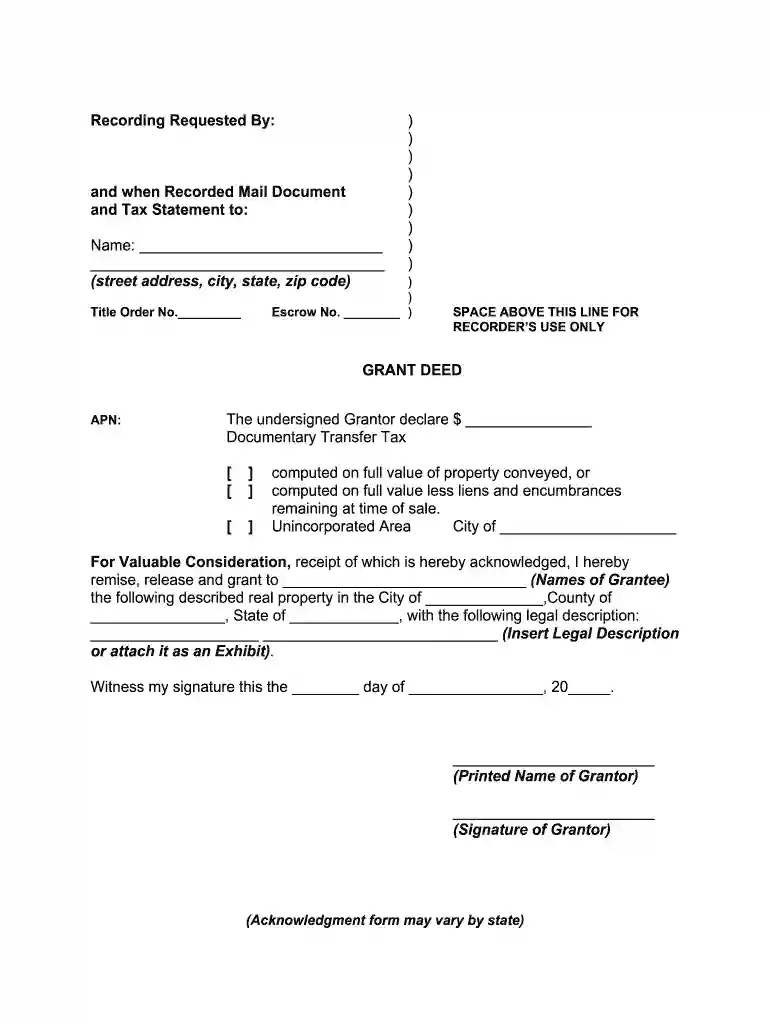
A grant deed is a legal document used in real estate to transfer ownership of property from one entity, known as the grantor, to another, referred to as the grantee. This document provides a level of certainty regarding the grantor's interest in the property, ensuring that they have the right to transfer it. Grant deeds typically contain the names and addresses of both parties, a clear description of the property, and assurances that the grantor has not sold the property to anyone else. This type of deed is widely used across the United States and plays a crucial role in property transactions by confirming the transfer's validity.
How to Use the Grant Deed Document
Using a grant deed involves several steps to ensure that the document is filled out correctly and adheres to legal requirements. It is vital to include the following elements:
- Identify the Grantor and Grantee: Clearly state the full legal names and addresses of both parties involved in the transaction.
- Describe the Property: Provide a detailed description of the property being transferred, including parcel numbers or other identifiers.
- Incorporate Warranties: Ensure the deed includes any warranties or assurances regarding the grantor's interest in the property.
- Notarization: The grant deed must be signed by the grantor in the presence of a notary public to be legally binding.
- Recording the Deed: After notarization, submit the deed for recording at the county recorder's office. This step is crucial for public record and the grantee's protection.
How to Obtain the Grant Deed Document
To obtain a grant deed, individuals or entities involved in a property transaction can take the following actions:
- Contact a Real Estate Attorney: Attorneys can draft a personalized grant deed ensuring compliance with state-specific laws.
- Real Estate Agent or Broker: These professionals often have standardized forms that can be used for property transactions.
- Online Legal Document Services: Various websites provide templates for grant deeds that can be tailored to specific needs, but it is advisable to have a legal review.
Steps to Complete the Grant Deed Document
Completing a grant deed involves a systematic process, ensuring each section is accurately filled. Here is a step-by-step approach:
- Fill in the Grantor and Grantee Information: Begin by entering the legal names and contact details of the grantor and grantee.
- Describe the Property: Use precise language to outline the property details, avoiding any ambiguity.
- Include Legal Language: Maintain the necessary legal terms and warranties that assure the deed's enforceability.
- Sign Before a Notary: The grantor must sign the document in the presence of a notary public to validate the deed.
- Record the Deed: Submit the completed and notarized deed to the appropriate county office for recording.
Key Elements of the Grant Deed Document
Understanding the core components of a grant deed is essential for its proper use:
- Parties Involved: Identification of the grantor and grantee with their legal names.
- Property Description: Detailed information about the property, including legal boundaries and lot numbers.
- Assurances: Legal assurances that the grantor holds the title and has the right to transfer it.
- Signature and Notarization: The grantor's signature, witnessed by a notary, confirms the document's authenticity.
- Recording Information: Recording the deed with the county ensures the transaction is part of the public record.
State-Specific Rules for the Grant Deed Document
Each state in the U.S. has unique requirements and laws governing real estate transactions and grant deeds. Some states may require additional disclosures or specific language in the deed:
- California: Requires specific formatting standards and a Preliminary Change of Ownership Report.
- Florida: Does not require witnesses to sign the deed, unlike some other states.
- Texas: Acknowledgment must conform to state requirements, with specific wording mandated by Texas law.
Legal Use of the Grant Deed Document
Grant deeds serve several legal purposes, providing critical assurances in property transactions:
- Ownership Assurance: Confirms that the grantor has clear title to the property and legal authority to transfer it.
- Encumbrances Disclosure: Any known liens or encumbrances must be disclosed to the grantee.
- Record Enhancement: A recorded grant deed enhances public records, ensuring a traceable and verifiable ownership history.
Examples of Using the Grant Deed Document
Grant deeds are utilized in a variety of real-world scenarios:
- Inheritance: When a property is passed down to an heir, a grant deed formalizes the transfer.
- Gifts: Property transferred as a gift may use a grant deed to document the transition.
- Sale Transactions: In selling residential or commercial property, a grant deed ensures the buyer receives a clear title from the seller with defined rights.
By understanding these elements and processes, parties involved in property transactions in the U.S. can use grant deeds effectively, ensuring clear and legally recognized transfers of ownership.