







Definition & Meaning of Fault Log Template
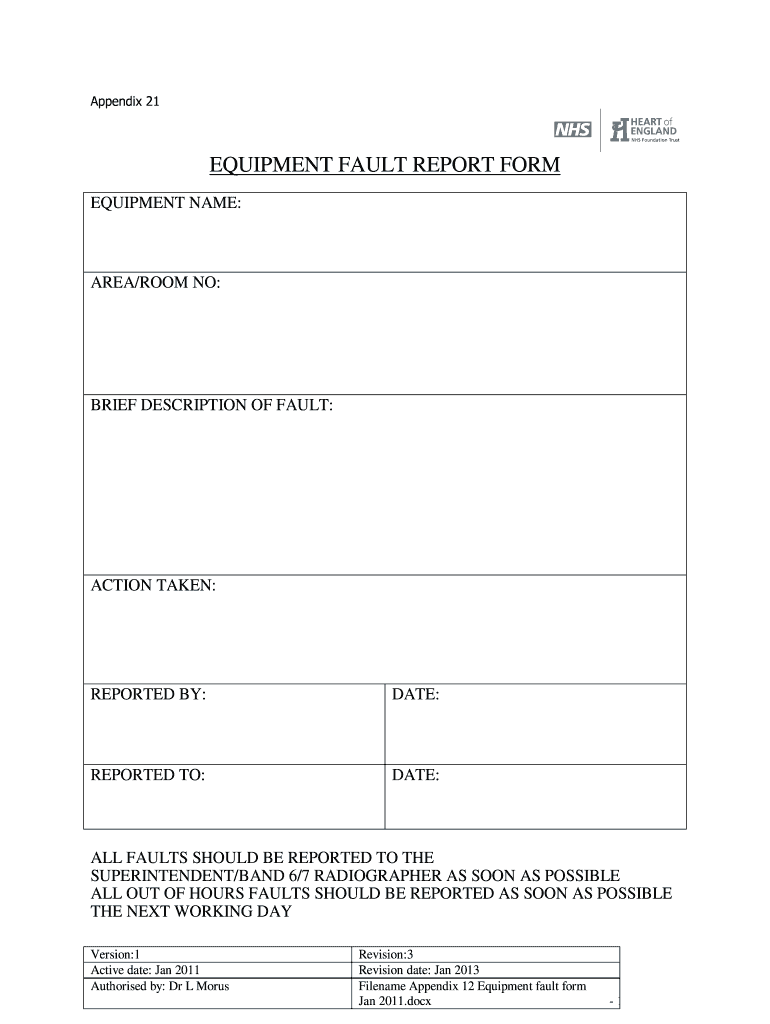
A fault log template is a structured document used to record faults or defects related to equipment and processes. This template facilitates the systematic documentation of issues, enabling organizations to monitor and address equipment performance effectively.
Purpose of a Fault Log Template
The primary purpose of utilizing a fault log template is to provide a clear, organized method for reporting malfunctions. By tracking this information, organizations can analyze patterns in equipment failures, contributing to improved maintenance schedules and reduced downtime. Key aspects include:
- Clarity: Clearly delineates faults reported by users.
- Traceability: Allows for tracking the history of faults within equipment.
- Accountability: Holds individuals responsible for reporting and resolving issues.
Key Elements of the Fault Log Template
An effective fault log template should incorporate several critical elements to ensure comprehensive documentation. These elements generally include:
- Equipment Identification: A specific section for recording the name and unique identifier of the equipment experiencing the fault.
- Fault Description: A space to describe the fault, providing users with the opportunity to explain what happened in detail.
- Date and Time of Incident: Essential for chronological tracking and for recognizing patterns over time.
- Actions Taken: Documenting initial responses or repairs made to address the fault.
- Reported By: A field that captures the name of the individual who identified the fault, ensuring accountability.
- Status of Fault: Indicating whether the fault is still open, resolved, or deemed non-critical.
These elements provide a comprehensive overview that helps in analyzing equipment performance metrics and enhancing operational efficiencies.
Steps to Complete the Fault Log Template
Completing the fault log template requires a methodical approach to ensure accuracy and reliability of the recorded information. Here’s a step-by-step breakdown:
- Identify the Equipment: Start by clearly noting the name and identification number of the equipment in question.
- Record the Fault: Describe the fault or issue observed in as much detail as possible, focusing on what and how the issue occurred.
- Document Time and Date: Write down the precise date and time the fault was noticed to facilitate trending analysis.
- Outline Actions Taken: List any immediate actions that were taken to address the fault, including repairs or temporary fixes.
- Fill in Reporting Information: Include your name and role or position to maintain accountability and ensure proper follow-up.
By adhering to these steps, organizations can maintain a thorough history of equipment issues.
Examples of Using the Fault Log Template
Real-world application of the fault log template demonstrates its importance in various sectors, including manufacturing, hospitality, and healthcare. Here are some examples:
-
Manufacturing Facilities: An equipment fault log might be used to record machinery issues such as downtime due to equipment failure. For instance, if a conveyor belt repeatedly malfunctions, records would track the frequency and nature of the failures, informing maintenance schedules.
-
Healthcare Settings: Hospitals use fault logs for medical equipment. If a defibrillator fails during use, the fault log ensures a detailed record is available for investigation.
-
Hospitality: In hotels, a fault log can be used to report issues like malfunctioning air conditioning units. Records ensure timely repairs and customer satisfaction.
These examples illustrate how the fault log template is integral to operational efficiency across different sectors.
Legal Use of the Fault Log Template
The use of a fault log template must be compliant with relevant legal standards, especially in heavily regulated industries.
Regulatory Compliance
Many industries are governed by specific regulations that require organizations to maintain accurate records of equipment performance and issues. For example:
-
Healthcare: Medical device regulations mandate meticulous documentation of faults to ensure patient safety and compliance with the FDA.
-
Manufacturing: OSHA standards require that machinery must be maintained in safe working conditions, which includes documentation of all faults.
Failure to maintain appropriate records can result in fines or legal repercussions.
Who Typically Uses the Fault Log Template
The fault log template is utilized across a wide array of industries, making it a versatile tool. Typical users include:
- Maintenance Teams: Responsible for equipment upkeep, team members use the template to track issues and repairs.
- Quality Assurance Personnel: They monitor equipment performance and use fault logs to highlight areas needing improvement.
- Operations Managers: Ensuring operational efficiency, these managers analyze fault logs to optimize processes.
- Field Technicians: In environments like manufacturing plants and hospitals, technicians rely on fault templates to report defects encountered in the field.
This tool is essential for facilitating communication and tracking equipment issues among different roles within an organization.






