01. Edit your form online
Type text, add images, blackout confidential details, add comments, highlights and more.

Type text, add images, blackout confidential details, add comments, highlights and more.

Draw your signature, type it, upload its image, or use your mobile device as a signature pad.

Send it via email, link, or fax. You can also download it, export it or print it out.
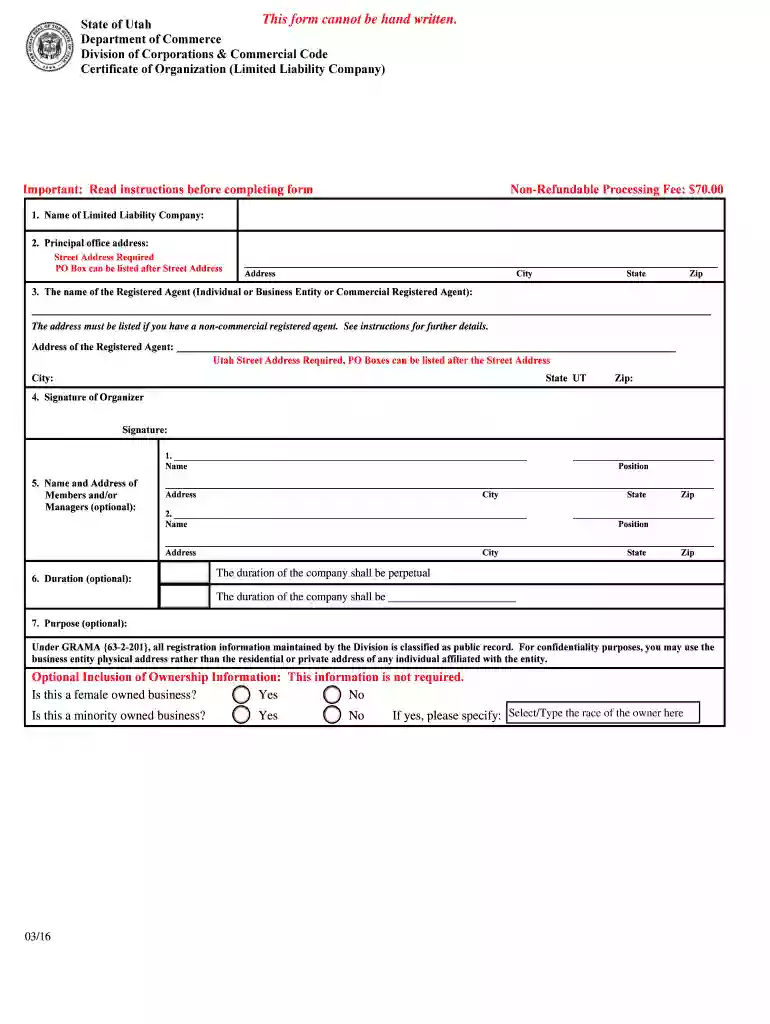
The Certificate of Organization for a Limited Liability Company (LLC) is a foundational legal document used in the United States to officially register an LLC with the state. This certificate serves as the LLC’s charter, detailing essential information such as the LLC’s name, management structure, duration, and operating purpose. By filing this document, business owners protect their personal assets and define the legal framework within which the LLC operates.
Filing a Certificate of Organization is crucial as it transforms an informal business arrangement into a recognized legal entity. This document grants the LLC legal status, allowing it to conduct business, enter into contracts, and be held accountable under the law. It also facilitates tax benefits and liability protection, distinguishing between the business’s obligations and the owners' personal assets.
Completing the Certificate of Organization involves several key steps. Here's a structured guide:
Choose a Name: Select a unique and compliant name for your LLC, adhering to state-specific naming criteria.
Appoint a Registered Agent: Designate a registered agent authorized to receive legal documents on behalf of the LLC. This individual or entity must have a physical address in the state where the LLC is registered.
Principal Office Address: Provide the primary business address of the LLC, ensuring it meets state requirements for transparency and accountability.
Determine Management Structure: Decide whether your LLC will be member-managed or manager-managed and include this in the certificate.
Specify the Purpose: State the business activities or purpose as required by the state’s filing guidelines, ensuring compliance with legal purposes.
Sign and Submit: The document must be signed by the LLC organizer, then submitted through state-approved methods such as online filing or mail.
The Certificate of Organization includes several essential components:
The Certificate of Organization is commonly used by entrepreneurs and small business owners looking to establish a limited liability company. It is particularly beneficial for:
Additionally, experienced business owners venturing into new industries may utilize the certificate to create distinct entities, thereby managing risk across different operations.


Each U.S. state has unique guidelines and filing procedures for the Certificate of Organization. These can include:
It is crucial to consult state-specific resources or legal professionals to ensure compliance with local regulations when filing.
Keeping track of key dates is vital for maintaining an LLC’s active status:
These dates can vary significantly from state to state, making it important to maintain an accurate schedule.
Submitting the Certificate of Organization can be done through multiple channels:
Each method has its own processing time and requirements, so it’s essential to choose the method that best meets your business’s needs and timelines.
Failing to file the Certificate of Organization or meet ongoing requirements can result in:
To prevent these consequences, it’s necessary for businesses to remain vigilant about compliance with all filing and operational regulations.
We've got more versions of the Certificate of Organization (Limited Liability Company) form. Select the right Certificate of Organization (Limited Liability Company) version from the list and start editing it straight away!
At DocHub, your data security is our priority. We follow HIPAA, SOC2, GDPR, and other standards, so you can work on your documents with confidence.