






Introduction to the Alaska Process Server License
The Alaska Process Server License is an official certification regulated by the Alaska Department of Public Safety, required for individuals seeking to serve legal documents within the state. This license ensures that process servers adhere to a standardized set of procedures and maintain ethical practices while performing their duties. Understanding the requirements and processes associated with obtaining this license is crucial for legal professionals and individuals new to the field.
Obtaining the Alaska Process Server License
To secure an Alaska Process Server License, applicants must follow specific steps set forth by the state. These steps ensure that each applicant is thoroughly vetted and equipped to handle the responsibilities of serving legal documents.
-
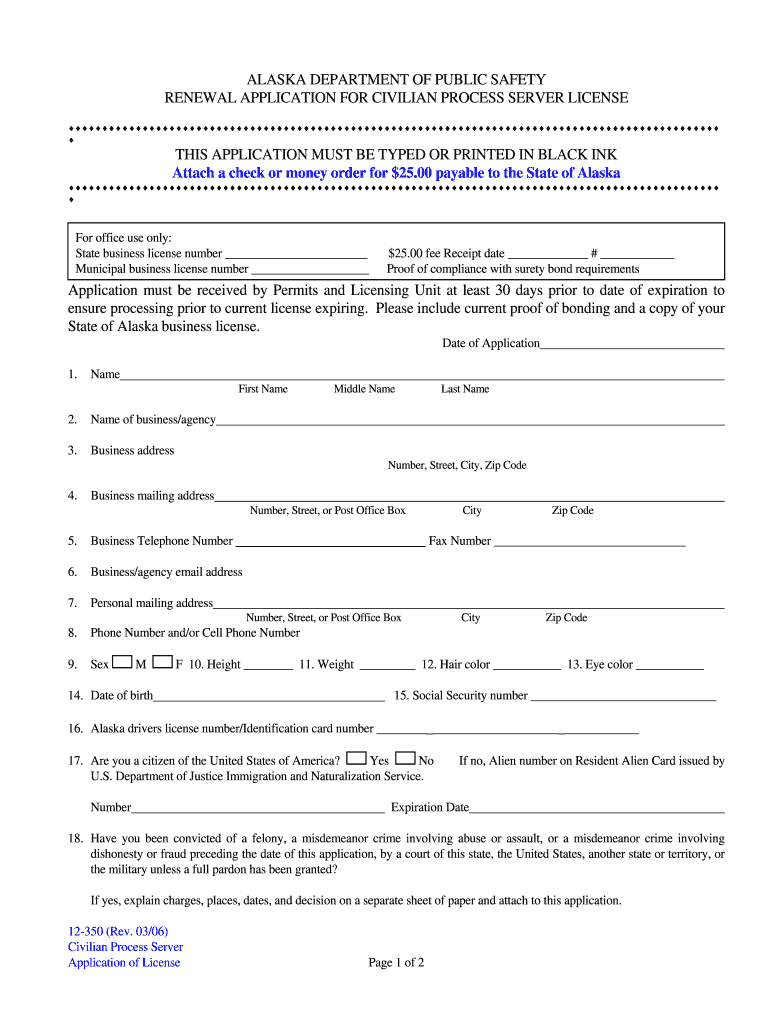
Complete the Application: Prospective process servers must fill out a detailed application form provided by the Alaska Department of Public Safety. The form requires personal and professional information, including a declaration of any past criminal records.
-
Submit Required Documentation: Part of the application process involves providing proof of bonding, a vital requirement that protects against potential misconduct. Applicants should also include any necessary business licenses pertinent to their operations.
-
Pay the Application Fee: A non-refundable fee of $25 must be submitted with the application. This fee covers the processing and administrative costs associated with the licensing procedure.
-
Await Approval: Once submitted, applications are typically reviewed within a designated period, allowing the department to verify the information provided and ensure compliance with state regulations.
Key Requirements for Applicants
Understanding the prerequisites for the Alaska Process Server License is essential for successful application. Applicants must meet specific criteria to be eligible for licensure.
-
Age and Residency: Applicants must be at least 21 years old and legally residing within Alaska. Proof of age can be provided via driver's license or government-issued ID.
-
Background Check: A comprehensive background check is conducted to ensure that applicants have no disqualifying criminal history. This step helps maintain the integrity of the process serving profession.
-
Professional Conduct: Applicants are expected to adhere to a code of conduct, ensuring ethical and professional interactions when serving legal documents.
Important Documents for Submission
When applying for the Alaska Process Server License, certain documents must be provided to validate the application:
-
Proof of Bonding: A bond serves as a protective measure, safeguarding against improper conduct and ensuring accountability.
-
Identification: A valid government-issued ID or driver's license must accompany the application to verify identity and age.
-
Business Documentation: Any relevant business licenses or registration papers should be included if the applicant operates a business related to process serving.
Legal Use and Ethical Guidelines
The Alaska Process Server License not only grants legal authority to serve documents but also obligates licensees to adhere to strict legal and ethical guidelines. This ensures the rights and privacy of those being served are respected.
-
Compliance with State Laws: License holders must follow state-specific serving regulations, such as serving documents within legal hours and properly identifying themselves.
-
Confidentiality Obligations: Process servers must handle all documents and personal information with the utmost confidentiality to protect the privacy of involved parties.
-
Ethical Conduct: Licensees are required to conduct their duties professionally, avoiding conflicts of interest and refraining from improper persuasion tactics.
State-Specific Rules and Regulations
Alaska imposes unique rules on process servers, designed to uphold justice and protect parties involved in legal proceedings. Familiarity with these regulations is crucial for performing duties legally and effectively.
-
Service Times: Documents must be served during permissible hours dictated by Alaska law, typically outside of early morning or late evening.
-
Serving Procedures: Specific methods must be used when serving documents, including direct delivery or substitute service, where permissible.
-
Documentation and Reporting: Process servers must keep accurate records of their service attempts, including the date, time, and manner of service, to provide an affidavit of service if required in court.
Renewal Process for the Alaska Process Server License
The Alaska Process Server License must be renewed periodically to remain valid. This process involves a renewal application similar to the initial application but requires updated information to reflect any changes in personal or professional status.
-
Timely Submission: Renewals should be submitted at least 30 days prior to license expiration to avoid lapses in authorization.
-
Updating Information: Any changes in personal details, business status, or bonding must be reported during the renewal process.
-
Fee Payment: Renewal applications are subject to the standard processing fee, ensuring administrative costs are covered for the new license period.
Consequences of Non-Compliance
Failure to comply with the regulations governing the Alaska Process Server License can result in severe penalties, impacting the ability to serve process legally.
-
Fines and Penalties: Non-compliance can lead to fines or penalties, affecting the professional standing of the process server.
-
License Revocation: Repeated or severe violations can result in license revocation, prohibiting the individual from legally serving documents in the state.
-
Legal Actions: Unlawful service practices can lead to legal repercussions, including civil litigation by affected parties.
Technological Integration and Software Compatibility
While the Alaska Process Server License is fundamentally a legal document, integrating certain technologies can streamline the process of managing applications and services.
-
Digital Submissions: With advancements in technology, some components of the application process may be completed digitally, helping reduce processing times and streamline operations.
-
Software Tools: Tools like DocHub can be used to manage and maintain application documents, providing a secure platform for editing, signing, and storing necessary digital forms.
Understanding the requirements and processes associated with the Alaska Process Server License is essential for anyone looking to serve legal documents professionally and ethically in the state. Maintaining compliance with state regulations not only ensures effective service but also upholds the rights of all parties involved.