






Definition and Purpose of Form 1098-C
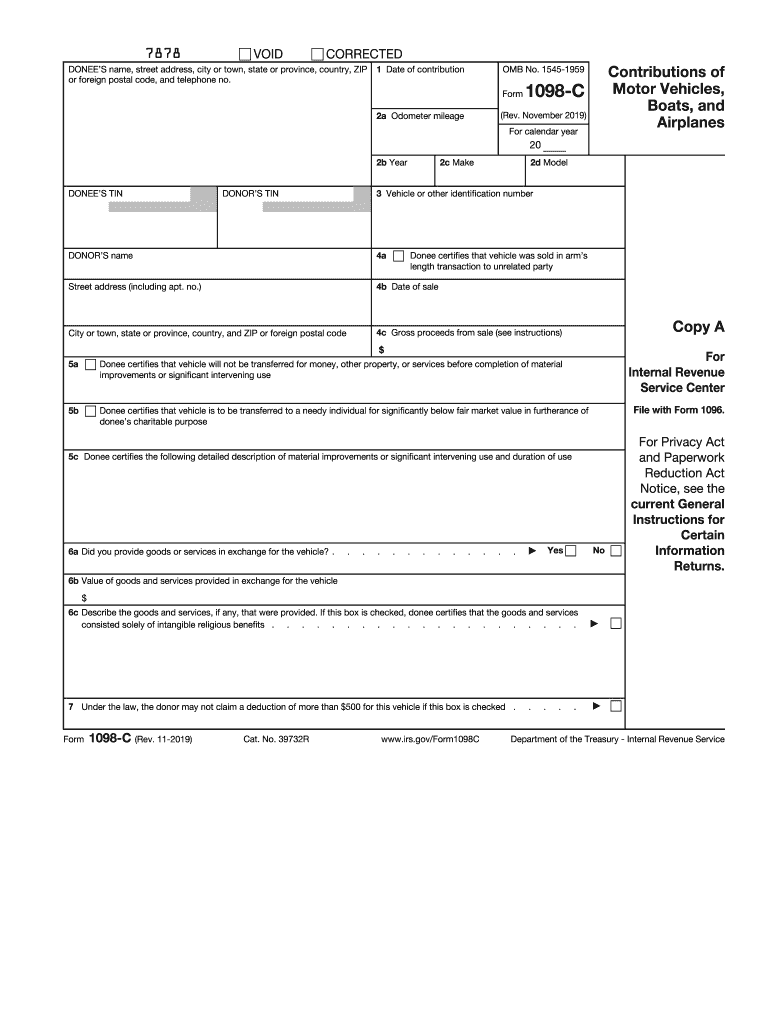
Form 1098-C, officially titled "Contributions of Motor Vehicles, Boats, and Airplanes," is used by organizations to report charitable contributions of vehicles such as cars, boats, and airplanes to the Internal Revenue Service (IRS). This form is essential for documenting the transfer, sale, or significant use of donated vehicles, ensuring both donors and donees have accurate records for tax purposes. It outlines conditions under which donors can claim tax deductions based on their contributions' value. This enhances transparency and compliance within the U.S. charitable donation system.
How to Obtain Form 1098-C
There are several methods by which donors or donee organizations can obtain Form 1098-C. Authorized donee organizations typically provide this form to donors once a vehicle donation is made. It is also available for download from the IRS website in PDF format. This allows organizations and individuals to access and print the form as needed, which is crucial for tax preparation purposes.
Steps to Complete Form 1098-C
-
Gather Necessary Information: Before completing Form 1098-C, gather all essential details such as donor information, vehicle identification number (VIN), date of donation, and the fair market value of the vehicle.
-
Fill Out Donor and Donee Information: Enter the donor's and the donee organization's details accurately. This includes names, addresses, and EIN for organizations.
-
Document Vehicle Information: Provide specific information about the vehicle, such as its make, model, year, and VIN. This ensures precise identification of the donated asset.
-
Complete Sections on Sale or Significant Use: If the vehicle is sold, state the sale price. For significant use, describe how the donee organization uses the vehicle to advance its charitable mission.
-
Certification and Signatures: Ensure that the form includes required certifications and signatures from the donee organization. This legitimizes the form's content for IRS processing.
Key Elements of Form 1098-C
- Donor Information: Captures the details of the individual or entity donating the vehicle.
- Donee Information: Details about the organization receiving the donation.
- Vehicle Description: Specifics such as make, model, and vehicle identification number.
- Certification of Use or Sale: Statements regarding the vehicle's sale price or its usage post-donation.
- Fair Market Value Documentation: Information about the vehicle’s valuation, proving the donor's claim.
IRS Guidelines on Form 1098-C
The IRS provides comprehensive guidelines on how to use and submit Form 1098-C. It clarifies that the form should accompany the donor's tax filings to validate deductions based on the vehicle's donation. Donee organizations are expected to furnish this form to the donor within 30 days of receiving the donation or completing its sale. Strict adherence to these IRS instructions is essential to avoid potential penalties or deduction disallowance.
Who Uses Form 1098-C
Form 1098-C is primarily used by charitable organizations and individuals donating motor vehicles, boats, or airplanes. Organizations provide it to donors eligible for tax deductions, thereby facilitating contributions tracking and compliance. It is particularly useful for donors itemizing deductions on their federal tax returns, as it substantiates their charitable contributions.
Penalties for Non-Compliance
Failing to properly complete or submit Form 1098-C can lead to serious penalties. Donors may face disallowed deductions for any discrepancies, while donee organizations may incur penalties from the IRS for failing to provide accurate forms. Both parties must ensure full compliance with all form requirements to avoid financial repercussions.
Filing Deadlines and Important Dates
Form 1098-C should be issued to donors within 30 days of the donation or sale of the vehicle. Donors must also ensure their deductions are reported on their tax returns by the annual filing deadline, typically April 15. It is crucial for organizations and donors to be aware of these timelines to comply with IRS regulations and take full advantage of tax benefits.