Definition and Purpose of the Form
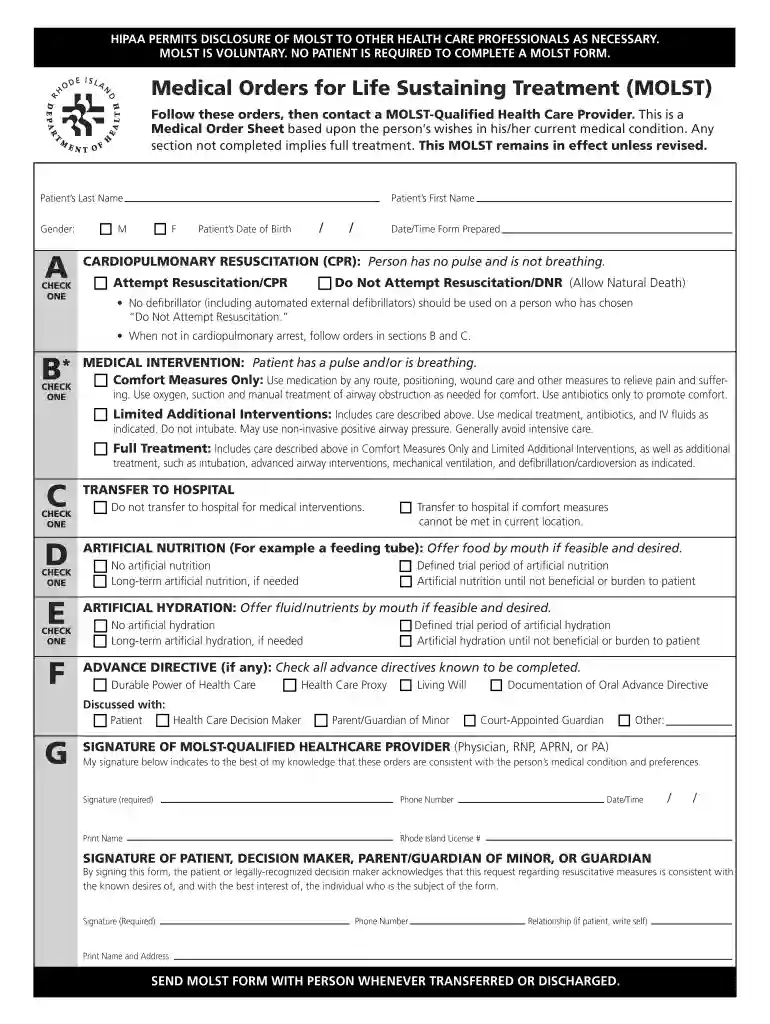
The HIPAA Permits Disclosure of Medical Orders for Life-Sustaining Treatment (MOLST) to Other Healthcare Professionals form is a critical document that allows healthcare providers to share patient-specific medical directives across different care teams. The primary purpose of this form is to ensure that a patient's wishes regarding life-sustaining treatments are accurately communicated and respected, even when they are transferred between healthcare facilities or providers. This form significantly contributes to coordinated care by preventing misunderstandings and ensuring continuity in treatment decisions.
Situations for Usage
- Transfer of Care: When patients move from one healthcare facility to another, such as from a hospital to a rehabilitation center.
- Interdisciplinary Team Consultations: Involving multiple specialists each offering a different perspective concerning treatment strategies.
- Emergency Situations: Ensuring first responders have immediate access to the patient's medical orders.
How to Obtain the Form
To obtain the HIPAA Permits Disclosure of MOLST form, you should contact the primary healthcare provider or the medical facility where the patient's initial treatment decisions were recorded. Many hospitals, clinics, and outpatient facilities have the form readily available for both patients and healthcare workers.
Steps to Acquire
- Contact Health Provider: Reach out to your healthcare provider to request the form.
- Check Online Portals: Many facilities provide access to forms through their patient portals.
- Visit Health Facility: Obtain a physical copy by visiting the facility where the initial orders were documented.
Completing the Form
Filling out the HIPAA Permits Disclosure of MOLST form requires attention to detail to ensure accuracy and compliance. It's essential to follow these steps:
- Patient Information: Enter the complete name, date of birth, and contact information of the patient.
- Healthcare Provider Details: Include the name and contact information of the primary clinician involved.
- Medical Orders Confirmation: Accurately transcribe the patient’s life-sustaining treatment preferences.
- Authorization: Secure signatures from both the patient and healthcare provider to authorize the disclosure.
Important Tips
- Legal Compliance: Ensure compliance with HIPAA guidelines to maintain the security and privacy of patient information.
- Verification: Double-check all entered information to prevent errors.
Legal Use and Compliance
The sharing of MOLST forms is legally supported under HIPAA regulations, which permit the disclosure of health information that is crucial for treatment, payment, and healthcare operations. The form plays a vital role in maintaining legal compliance by:
- Enabling Informed Consent: Ensuring patients’ treatment preferences are observed.
- Facilitating Legal Documentation: Serving as an official record of consent for treatment decisions.
Compliance Assurance
- Secure Handling: Always store and transfer forms securely to maintain patient confidentiality.
- Authorization: Ensure proper authorization has been acquired before any disclosure.
Key Elements of the Form
The HIPAA Permits Disclosure of MOLST form contains several essential elements that guide its completion and utilization:
- Patient Demographics: Accurate input of personal information.
- Care Instructions: Detailed description of specific medical orders related to life-sustaining treatments.
- Signatures and Authorizations: Legal and procedural endorsements by relevant parties.
Common Medical Orders Included
- Comfort Measures: Basic care focused on relieving pain without prolonging life artificially.
- Limited Interventions: Non-invasive care to address specific concerns like infections.
- Full Treatment Spectrum: Encompasses all possible life-sustaining interventions.
Examples of Application
- Example 1: A patient with complex cardiac issues needs to be transferred to a specialist facility; the MOLST ensures that their DNR order is honored upon arrival.
- Example 2: During a hospital stay, an elderly patient expresses wishes to receive only comfort care; the form ensures all departments respect this choice.
Real-World Implications
- Efficient Transitions: Patients experience a seamless transition between care providers, ensuring consistent adherence to their treatment preferences.
- Reduced Errors: Minimizes the risk of miscommunication among healthcare professionals involved in patient care.
State-Specific Rules
Different states may have varying regulations regarding the implementation and recognition of the MOLST form. It's crucial to be informed about specific rules in your location:
- Rhode Island Example: The state emphasizes voluntary completion and frequent reviews of MOLST forms to ensure they represent the patient's current wishes.
Considerations
- Cross-State Transfers: Extra documentation might be required if patients are transferred across state lines.
- State-specific Addendums: Some states include additional requirements or sections to address local legal stipulations.