Definition and Purpose of the Kentucky Self-Proving Affidavit Form
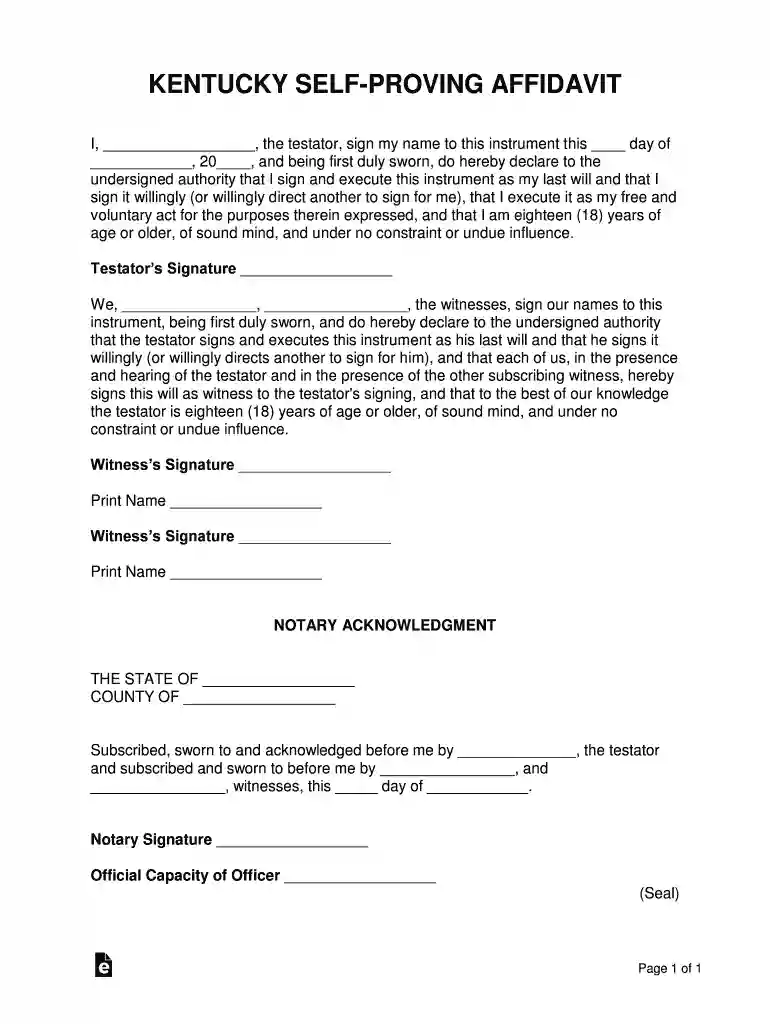
The Kentucky Self-Proving Affidavit Form is a crucial legal document used in estate planning. It serves as a declaration by the testator, affirming the authenticity of their last will and testament. This form is designed to simplify and expedite the probate process by confirming the testator's intent and mental soundness when creating the will. It involves signatures from the testator, witnesses, and a notary, providing a legal acknowledgment that ensures the document meets all necessary legal standards.
Key Elements
Several critical components make up the Kentucky Self-Proving Affidavit Form:
- Testator's Details: Includes the full name and address of the individual making the will.
- Witnesses: Typically, two witnesses are required to sign the document, attesting to the testator's mental capacity and voluntary decision in creating the will.
- Notary Public: The affidavit must be notarized by a licensed notary public who verifies the identities of the signatories and the execution of the document.
- Signatures: It requires the testator’s and witnesses’ signatures to make the affidavit valid.
Steps to Complete the Kentucky Self-Proving Affidavit Form
- Prepare the Will: Before completing the affidavit, ensure that the last will and testament are prepared and clearly articulate the distribution of assets.
- Select Witnesses: Choose two individuals not named in the will to serve as impartial witnesses.
- Arrange a Notary Session: Schedule a meeting with a notary public to finalize the document.
- Complete the Form: The testator and witnesses must sign the affidavit in the notary’s presence.
- Notarization: The notary public certifies the document by adding their seal and signature.
Important Considerations
- Ensure that witnesses are capable adults, typically over eighteen, and unrelated to any beneficiaries to avoid conflicts of interest.
- Verify that all fields are accurately filled out and legible to prevent potential legal challenges.
Importance of Using a Kentucky Self-Proving Affidavit Form
Using this form provides multiple benefits:
- Streamlined Probate: It can significantly expedite the probate process by eliminating the need for witnesses to testify in court.
- Legal Protection: Offers enhanced protection against claims that the will is invalid due to undue influence or lack of mental capacity.
- Clarity: Clearly validates the testator's intentions and wishes, providing peace of mind to the estate and beneficiaries.
State-Specific Rules for the Kentucky Self-Proving Affidavit
In Kentucky, specific statutes govern the creation of self-proving affidavits:
- Kentucky Revised Statutes Section 394.225 stipulates the requirements for self-proving affidavits, including the necessity for notary acknowledgment and witness signatures.
- The form must accompany the original will during probate to be effective.
Key Differences
- Kentucky law is unique in that it mandates a signed affidavit to be attached to the will itself, separate from the core document. This distinct requirement is not universal across all states.
Legal Use and Compliance with the Kentucky Self-Proving Affidavit Form
Ensuring compliance with legal standards is essential for the form's effectiveness:
- Eligibility: Only testators who are legally competent and free from coercion may execute the form.
- Compliance: Adhering to state-specific requirements ensures that the affidavit is enforceable during probate.
Examples of Using the Kentucky Self-Proving Affidavit Form in Practice
Consider a retiree in Louisville drafting their estate plan. By using a self-proving affidavit, they guarantee that their will can be processed smoothly upon their passing without needing further court testimony. This approach is particularly beneficial for those with complex family dynamics, as it minimizes disputes and legal challenges.
Obtaining the Kentucky Self-Proving Affidavit Form
Acquiring this form can be done through several methods:
- Legal Service Providers: Many law firms and notary services offer templates and guidance.
- Online Platforms: Digital document services like DocHub provide editable templates that can be filled out and saved electronically.
Required Documents
Ensure you have the following when completing the affidavit:
- The original will.
- Identification documents for the testator and witnesses.
- Notary certification materials.
Digital and Paper Versions of the Kentucky Self-Proving Affidavit
While traditionally a paper document, modern legal processes allow for digital versions:
- Digital Version: Platforms like DocHub enable users to create and store an electronic affidavit, which can be printed and notarized.
- Paper Version: A printed affidavit is still necessary for notarization, even if initially completed digitally.
By understanding these elements, users can effectively integrate the Kentucky Self-Proving Affidavit Form into their estate planning process, ensuring their wishes are legally recognized and executed efficiently.