






Definition and Meaning
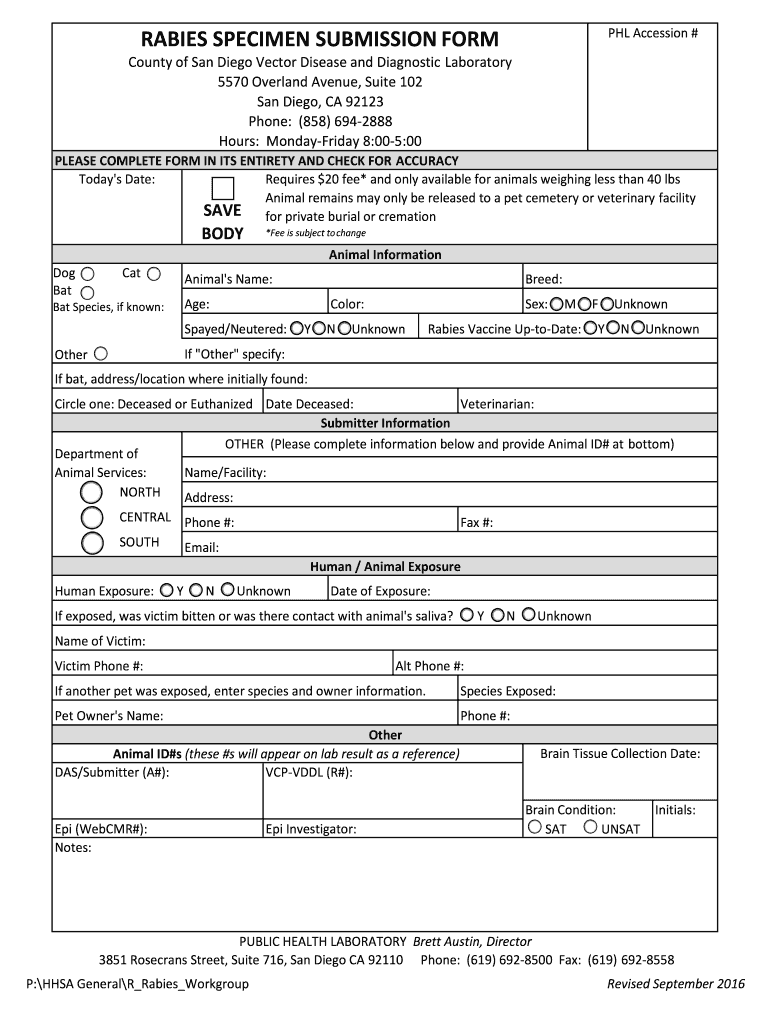
The term "Part I Rabies Control - Department of Public Health" pertains to specific guidelines and procedures endorsed by health authorities to manage and monitor rabies cases. These regulations outline how the public health department collaborates with local health officers and animal control agencies to manage rabies exposure cases, especially when a person is bitten by a mammal. The guidelines emphasize responsibilities in testing, documentation, and follow-ups to mitigate the spread of rabies and safeguard public health.
Steps to Complete the Part I Rabies Control Form
-
Identify the Incident: Begin by detailing the incident involving the bite, including the date, location, and the type of animal involved.
-
Consult Local Authorities: Contact the relevant local health departments and animal control services to report the incident and seek guidance on immediate actions.
-
Collect Necessary Information: Gather information about the person bitten, such as contact details and any medical observations post-bite.
-
Submit to Testing: Follow the procedure for euthanasia and submission of the animal, if applicable, for rabies testing as outlined by local public health guidelines.
-
Complete the Documentation: Ensure all relevant forms and documents are filled out with accurate information. This may include forms provided by both the health department and animal control agencies.
-
Review and Finalize: Before submission, review the document for completeness and accuracy. Submit it to the designated agency for official processing.
Who Typically Uses the Part I Rabies Control Form
The primary users of the "Part I Rabies Control - Department of Public Health" form include local health officers, animal control agents, and other public health officials. These professionals are responsible for efficiently managing rabies exposure cases and minimizing public risk. Additionally, veterinarians and medical personnel might access these guidelines to provide timely advice and treatment for exposed individuals.


Key Elements of the Part I Rabies Control Form
-
Incident Details: Specific information about the rabies exposure incident, including the context and nature of the animal involved.
-
Stakeholder Responsibilities: Clearly outlined roles for local health officials and animal control agencies concerning response procedures and follow-up actions.
-
Legal Framework: Applicable health regulations and laws that guide rabies management based on state and federal guidelines.
-
Testing Protocols: Detailed steps for the euthanasia and rabies testing of high-risk mammals.
-
Contact Information: Essential contacts for the health department and other agencies involved in handling rabies cases.
State-Specific Rules for Rabies Control
Different states may have unique regulations regarding rabies control. These may involve varying protocols for reporting rabies cases, specific mammals considered high-risk, and alternative methods for quarantine and testing. It is crucial for professional involved to be acquainted with their state's specific rules to ensure legal and procedural compliance.
Required Documents
When dealing with a rabies exposure case, several documents are required to ensure proper case management:
-
Incident Report: Document filled with necessary details of the rabies exposure incident.
-
Medical Records: For the victim to track potential symptoms and treatment measures.
-
Rabies Vaccination Certification: If available, for domestic animals involved, which may alter the procedure required.
-
Euthanasia and Testing Consent Forms: If euthanasia is necessary for testing purposes, these forms are essential to proceed legally.
Penalties for Non-Compliance
Failure to comply with rabies control guidelines can result in significant penalties. These may include fines for individuals or organizations failing to report exposures promptly, legal repercussions for non-compliance with animal testing procedures, and potential liabilities if the non-compliance leads to further spread of the disease.
Legal Use of the Part I Rabies Control Form
The form serves as a legally binding instrument to document rabies exposure incidences and their management. It ensures that all procedures are conducted within the scope of state and federal laws, maintaining the safety and health of the public while protecting the liabilities of officials involved in the process.