01. Edit your letter of intention to lein texas online
Type text, add images, blackout confidential details, add comments, highlights and more.

Type text, add images, blackout confidential details, add comments, highlights and more.

Draw your signature, type it, upload its image, or use your mobile device as a signature pad.

Send filing a lien in texas form via email, link, or fax. You can also download it, export it or print it out.
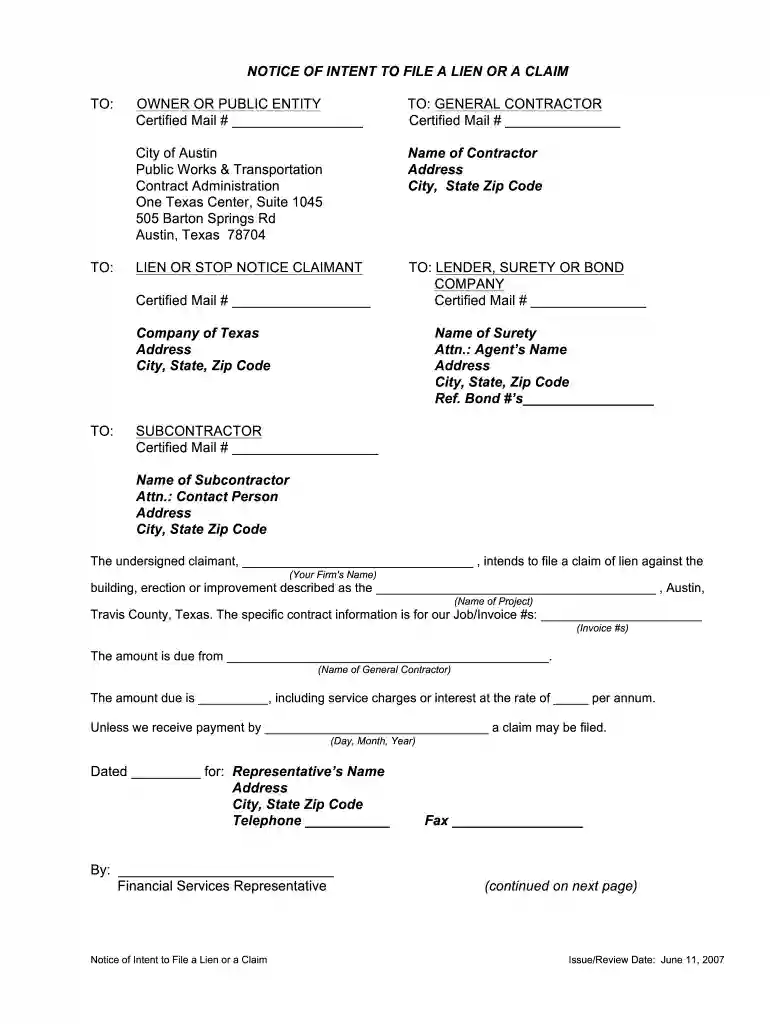
The "TX Notice of Intent to Lien Form" is a legal document used within Texas to alert relevant parties about a contractor or supplier's intention to file a lien due to unpaid invoices related to a construction project. This notice is a crucial preliminary step in the lien process, serving as a formal warning to property owners, general contractors, and other stakeholders that a claim for unpaid work or materials may be imminent. By issuing this notice, the claimant ensures transparency and facilitates communication between parties regarding outstanding debts, which can often lead to resolution without resorting to a formal lien.
In practical terms, the notice details the amount owed, the services or materials provided, and the specific project concerned. Additionally, it outlines the key deadlines and legal ramifications if the debt remains unsettled. Given the serious nature of filing a lien, this notice acts as a protective measure for subcontractors and suppliers to preserve their right to claim payment.
Identify the Necessary Information: Gather all relevant details, including the project name, address, involved parties, invoice numbers, and specific amounts owed. Ensure accuracy to avoid complications.
Complete the Form: Utilize a reliable document management platform like DocHub to access, fill in, and edit the form digitally. Ensure each section is complete, including personal details, project specifics, and the precise amount being claimed.
Specify the Deadline: Clearly state the date by which the owed party expects resolution; this is critical for enforcing the right timeline.
Review for Accuracy: Double-check all entries for mistakes to prevent disputes over inaccuracies that could invalidate the notice.
Dispatch the Notice: Deliver the notice to all required parties using certified mail with a return receipt to ensure proof of delivery. This step is crucial for legal verification purposes.
Documentation and Follow-Up: Retain records of all communications and monitor the response of the recipient to decide the subsequent legal steps if necessary.
Acquiring the Texas Notice of Intent to Lien form can be done through various channels, ensuring that you select one that suits your method of document management and filing.
Download Online: Several legal resources and document management platforms provide downloadable versions of the form. Websites like DocHub offer easy access and editing capabilities for PDF versions of the document.
Local Legal Offices: Visit local legal or government offices where forms might be available for public use.
Professional Services: Engage a lawyer or a professional lien service provider to acquire and prepare the document for you, ensuring compliance with all legal requirements.
Regardless of the source, ensure that the form is the latest version to prevent any compliance issues.
Initiate the Form: Begin by entering general information such as the claimant’s name, contact details, and the date of notice preparation.
Input Project Details: Include the project name, location, and description to clearly identify the scope of work or materials provided.
Identify the Debtors: List the names and addresses of the property owner, general contractor, and any relevant party involved in the contract.
Detail the Claim: Specify the total amount due, referencing all relevant invoices and outlining the services/materials rendered. Include any pertinent dates and deadlines.
Sign and Date: The form must be duly signed and dated by the individual preparing the notice to authenticate its validity.
Optional: Add Supporting Documentation: Attach copies of the original contracts, invoices, and any evidence supporting the claim to strengthen the notice's basis.
After completion, follow the steps for delivery and ensure all methods of submission align with legal standards to avoid loopholes that could invalidate your claim.
This form is predominantly utilized by parties involved in construction projects who face non-payment issues. These parties often include:
Subcontractors: Entities that have completed or contributed to a specific part of the construction project under a general contractor and are owed payments.
Material Suppliers: Companies or individuals who supply materials to a project and have not been paid according to agreed terms.
Service Providers: Specialists like electricians, plumbers, and other tradespeople who may file this notice to ensure payment for their professional services.
General Contractors: While less common, they may also utilize it if facing non-payment from property owners, delineating their intention to claim for funds.
Understanding who commonly files this notice aids both in comprehending its legal implications and in possibly preventing disputes from escalating to this stage.


The Notice of Intent to Lien form serves legal purposes beyond mere notification. By issuing this formal document, claimants adhere to Texas lien laws, which lays out procedural requirements that must be followed for any formal lien filing to hold in court.
Preserving Lien Rights: The primary legal use is to secure lien rights, which, if unchecked, can expire without the notice being served.
Settlement Facilitation: Often, serving this notice initiates settlement discussions, encouraging resolution before further legal action ensues.
Documentation of Intent: Legally documents the claimant's intent to seek payment, reinforcing the seriousness of the claim and potentially affecting negotiations favorably.
It's crucial to understand that misuse or issuance without genuine cause can lead to legal repercussions, emphasizing the importance of accuracy and good faith.
A comprehensive Notice of Intent to Lien must include several key components to ensure legal compliance and clarity.
Claimant Information: Details about the party filing the notice, including name, contact information, and role within the project.
Detailed Account of Services/Materials: Clearly states what was provided, including labor and materials, along with accompanying costs.
Outstanding Payment: The exact amount the claimant is seeking, alongside a breakdown if necessary.
Project Identification: Full details of the project involved, including location and scope of work.
Specific Deadlines: The timeframe for payment resolution before further action is considered.
Each component substantiates the claim and presents a clear case to the receiving party. Absence or inaccuracy can compromise the document's effectiveness.
The Notice of Intent to Lien must adhere to specific timelines to preserve its enforceability under Texas law.
Filing Deadline: Generally, the notice must be served before filing a formal lien. The precise deadline may vary based on the particulars of the project and contract terms.
Response Timeframes: After issuing the notice, the claimant should allow a reasonable period for payment or resolution. The standard practice involves waiting at least ten days after dispatch before proceeding with a lien.
Extended Deadlines: In some cases, additional time may be granted or required due to project complexities, necessitating legal advice for unusual circumstances.
Being mindful of these deadlines is critical for maintaining lien rights and ensuring compliance with statutory requirements.
We've got more versions of the letter of intention to lein texas form. Select the right letter of intention to lein texas version from the list and start editing it straight away!
| Versions | Form popularity | Fillable & printable |
|---|---|---|
| 2007 | 4.8 Satisfied (163 Votes) |
At DocHub, your data security is our priority. We follow HIPAA, SOC2, GDPR, and other standards, so you can work on your documents with confidence.