







Definition and Meaning of Sample Program Exit Form
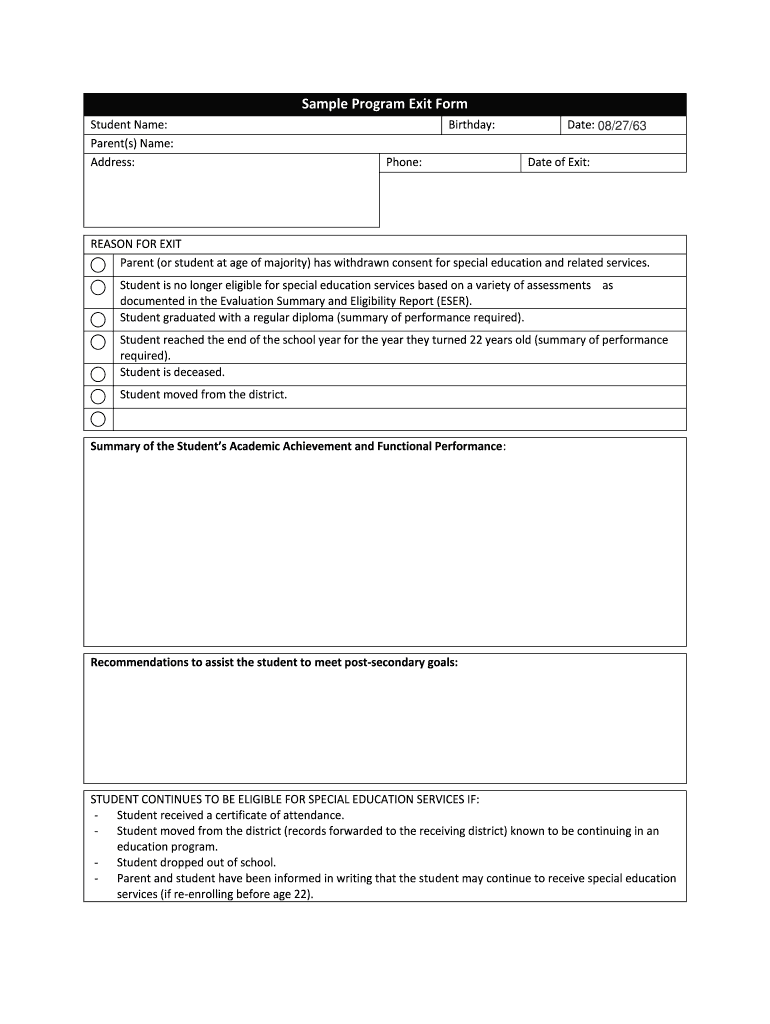
The Sample Program Exit Form is a document used primarily in educational settings to record the exit of a student from special education services. It captures key details about the student's departure, ensuring all relevant information is documented for future reference. The form typically includes personal information such as the student’s name, identification number, and contact details. Additionally, the form outlines the reasons for the student's exit, which may range from withdrawal of consent to graduation or even relocation.
Practical Scenarios
- End of Special Education Services: When a student graduates from the program.
- Parental Decisions: Instances where parents withdraw consent for continued participation.
- Regulatory Compliance: Administrative needs for official record-keeping.
Steps to Complete the Sample Program Exit Form
Completing the Sample Program Exit Form requires careful attention to detail to ensure all information is accurately recorded. The process typically involves several steps:
- Gather Personal Information: Begin by collecting the student's personal details, including full name, contact information, and student ID.
- Specify Reason for Exit: Clearly state the reason for the student’s exit—each reason may necessitate different documentation.
- Summarize Accomplishments: Detail the academic and developmental achievements attained during the program.
- Outline Future Recommendations: Provide guidance on potential post-secondary paths or recommendations for future interventions.
- Review for Accuracy: Ensure all sections are complete, accurate, and error-free.
- Submission: Submit the form as per school or district’s protocol, often requiring signatures from relevant authorities.
Edge Cases
- Instances where a student’s exit may not fit typical categories, needing special documentation.
Important Terms Related to Sample Program Exit Form
Understanding the terminology associated with the Sample Program Exit Form is crucial for accurate completion and compliance. Key terms include:
- Special Education Services: Tailored educational and developmental support for students with identified disabilities.
- Withdrawal of Consent: A formal process where parents or guardians revoke their consent for continued participation.
- Post-Secondary Goals: Educational or career planning intended for a student's life after program completion.
- Age Limit: Regulations that may dictate the maximum age for program eligibility.
Nuances
- Variations in terminology based on state or district regulations could impact how forms are completed.
Who Typically Uses the Sample Program Exit Form?
The use of the Sample Program Exit Form is typically the domain of:
- School Administrators: Responsible for ensuring accurate documentation and compliance.
- Special Education Professionals: Often complete the educational sections detailing services provided and achievements.
- Parents and Guardians: May provide critical input or consent for the student's exit.
- Regulatory Agencies: For auditing and verifying compliance with legal obligations.


Examples
- School Districts: Ensuring exit data aligns with funding and service criteria.
- State Education Departments: Oversight and compliance checks.
Key Elements of the Sample Program Exit Form
The form is comprehensive and contains several critical elements to ensure thorough documentation:
- Personal Information: Details like student name, ID number, and school.
- Exit Reason: Specific, documented reasons for the student’s departure.
- Performance Summary: Academic and developmental achievements.
- Post-Secondary Recommendations: Advice tailored to ensure continuity in the student's growth and development post-exit.
Variations
- Some districts may include additional fields for more granular data collection.
Legal Use of the Sample Program Exit Form
The legal implications of the Sample Program Exit Form are significant. Proper usage ensures compliance with educational laws and regulations:
- Documentation Requirement: Failure to properly complete and file can result in penalties.
- Parental Consent: Legally required for certain exit reasons, such as withdrawal of consent.
- Confidentiality: Adherence to privacy laws concerning personal and educational data.
Case Studies
- Instances of non-compliance leading to funding adjustments or legal actions against schools.
Software Compatibility for the Sample Program Exit Form
Many educational institutions leverage digital tools to complete and submit the Sample Program Exit Form:
- DocHub: Allows for editing and signing forms online, integrating seamlessly with cloud services like Google Drive.
- Other Platforms: Systems like TurboTax or QuickBooks are generally not applicable, but educational software platforms may offer integration paths.
Examples
- Cloud Integration: Institutions using Google Workspace can benefit from streamlined workflows.
Examples of Using the Sample Program Exit Form
Illustrative examples of the form's application help clarify its importance and variability:
- Student Relocation: When a family moves out-of-district and the student exits the program.
- Reaching Age Limit: Completing the form as a student surpasses the program's age restrictions.
- Graduation: Using the form to document end-of-service due to successful completion of required milestones.
Variations
Differing scenarios may necessitate additional documentation to support the stated exit reason.




