Online exam request and invigilation instructions 2026

Get Form
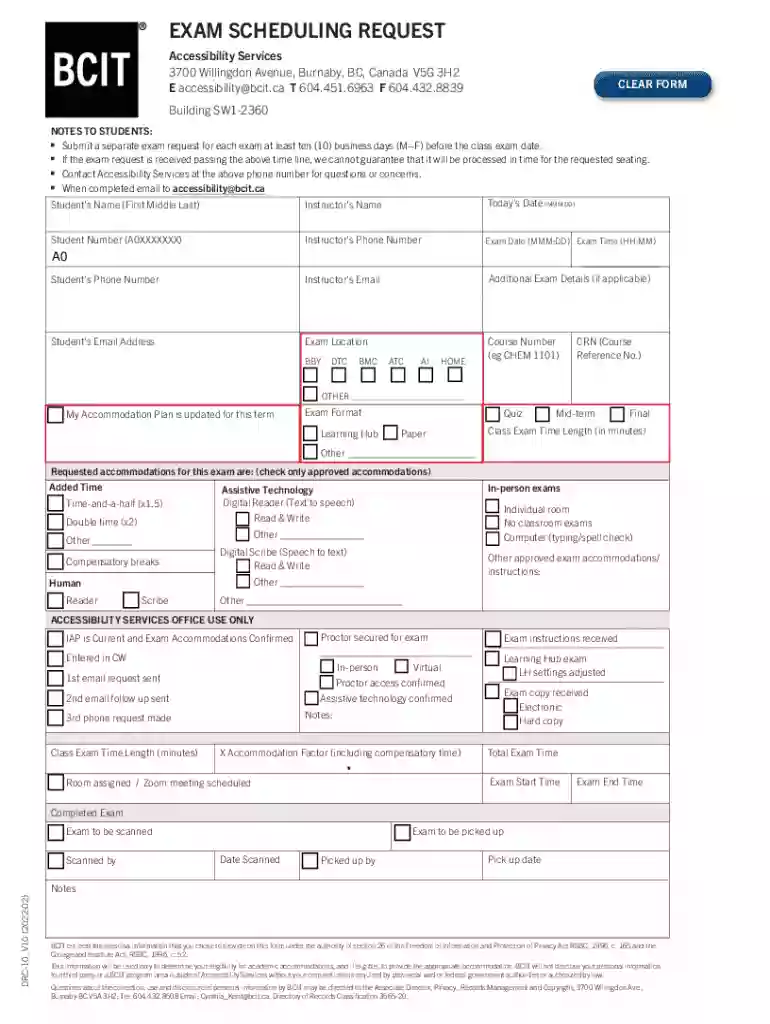
online exam request and invigilation instructions Preview on Page 1

Here's how it works

01. Edit your form online
Type text, add images, blackout confidential details, add comments, highlights and more.

02. Sign it in a few clicks
Draw your signature, type it, upload its image, or use your mobile device as a signature pad.

03. Share your form with others
Send it via email, link, or fax. You can also download it, export it or print it out.

Definition & Meaning

"Online exam request and invigilation instructions" refer to the comprehensive guidelines and procedures designed to facilitate students or participants in scheduling their online exams and ensuring proper oversight during the examination process. These instructions typically detail how to make a formal request for an online exam, specify the conditions under which the exam will be monitored, and outline the responsibilities of both the examinee and the institution or service providing the invigilation. This process is pivotal in maintaining academic integrity and ensuring that online examinations are conducted according to institutional policies.

How to Use the Online Exam Request and Invigilation Instructions

Using the online exam request and invigilation instructions involves following a structured series of steps to successfully schedule and complete an online examination under supervised conditions. Typically, this process includes:

  1. Accessing the Portal: Locate and log into the appropriate platform, such as a learning management system or a specific invigilation service.

  2. Completing the Request Form: Fill out the required information on the online exam request form, which may include course details, preferred exam times, and any specific accommodations needed.

  3. Submitting the Request: Ensure the form is submitted by any stated deadlines, which may be several business days before the intended exam date to allow for processing.

  4. Receiving Confirmation: Await confirmation of exam scheduling and invigilation logistics, usually sent via email or notification through the portal.

  5. Following Invigilation Protocols: Adhere to all guidelines regarding device setup, environment preparation, and identity verification to comply with invigilation standards.

Steps to Complete the Online Exam Request and Invigilation Instructions

Completing the online exam request and invigilation instructions involves several detailed steps that ensure both the student and the institution are prepared for the examination:

  1. Gather Required Information: Prepare all necessary details, including personal identification, course information, and specifics of any required accommodations.

  2. Access the Instruction Portal: Log into the designated portal or service site using your credentials.

  3. Fill Out the Request Form:

    • Provide personal details such as name, student ID, and contact information.
    • Enter specific exam details including course code, exam title, and preferred scheduling times.
    • Highlight any accommodations or special needs that have been pre-approved, such as extended time or assistive technology.
  4. Submit the Form: Ensure submission is complete, adhering to any deadlines specified by the educational institution or invigilation service.

  5. Confirmation and Preparation: Upon receiving confirmation, review the guidelines on how to prepare your environment and technology for the day of the exam. This may include ensuring a quiet, clutter-free space, checking internet stability, and setting up required software or browsers.

Key Elements of the Online Exam Request and Invigilation Instructions

The key elements of the online exam request and invigilation instructions encompass several critical components that ensure the process is smooth and effective:

  • Student and Instructor Information: Essential for verifying identities and confirming that exam requests align with course requirements.
  • Exam Details: Includes the subject, duration, form of the exam, and specific instructions pertaining to the exam content.
  • Technical Requirements: Details on the necessary hardware and software prerequisites for both accessing the exam and ensuring proper invigilation.
  • Authentication Procedures: Methods for verifying participant identity, which may include a combination of photo ID presentation and webcam verification.
  • Compliance Guidelines: Rules to maintain academic integrity, such as prohibitions on open book or third-party assistance unless explicitly allowed.

Important Terms Related to Online Exam Request and Invigilation Instructions

Understanding the terminology associated with online exam request and invigilation instructions is crucial for compliance and successful completion:

  • Proctoring: The process of supervising an exam to deter cheating and ensure that testing protocols are followed.
  • Accommodations: Modifications or supports that provide equitable exam access for students with disabilities.
  • Authentication: Procedures that confirm the identity of the test-taker, often involving secure logins or monitored environments.
  • Compliance: Adherence to the rules and standards as set by the educational institution to ensure a fair exam environment.

Legal Use of the Online Exam Request and Invigilation Instructions

The legal use of online exam request and invigilation instructions is governed by institutional policies and relevant educational laws:

  • Privacy Laws: Compliance with laws like FERPA in the U.S., which protect the privacy of student educational records.
  • Equal Opportunity: Institutions are mandated to provide equal access and accommodations per the Americans with Disabilities Act (ADA) for students requiring additional support.
  • Security Measures: Implementation of secure systems, including data encryption and secure credential processes, to protect student information.

Examples of Using the Online Exam Request and Invigilation Instructions

Real-world scenarios illustrate how these instructions are applied across different contexts:

  • University Setting: A college student requiring accommodations submits an online exam request form two weeks prior to finals. The institution reviews and confirms the accommodations, ensuring the student can take the exam with additional time granted.
  • Professional Certification: An individual taking a professional certification exam uses a third-party invigilation service. They follow precise setup guidelines for their home workspace, ensuring that their webcam and microphone function seamlessly to adhere to invigilator protocols.
  • International Students: A student studying remotely from another country requests an online exam during a different time zone. The institution adjusts scheduling to accommodate time differences while maintaining monitoring standards.

Software Compatibility and Integration

Ensuring that the online exam request and invigilation process is compatible with various devices and software ecosystems is critical:

  • Device Requirements: Compatibility with desktops, laptops, and potentially mobile devices, considering different browsers and operating systems.
  • Integration with Learning Platforms: Seamless connection with learning management systems like Moodle or Blackboard, allowing direct form submission and status tracking.
  • Cloud Services: Utilization of cloud storage for saving completed exam requests, making them easily accessible and retrievable under institutional data policies.

By following these detailed blocks, users can effectively navigate the online exam request and invigilation process, ensuring a well-prepared, secure, and compliant examination experience.

be ready to get more

Complete this form in 5 minutes or less

Get form

Got questions?

We have answers to the most popular questions from our customers. If you can't find an answer to your question, please contact us.
Contact us
7 Tips for Taking Online Exams Take a Breath. First things first: You can do this! Check Your Tech. Make sure you have all the tech youll need in the location where you will take your exam. Control Your Environment. Understand the Format. Protect the Integrity of Your Work. Know the Tools. Prioritize Your Work.
Are you looking for affordable and reliable help for your online exams? Hire someone to take my online exam from Writink and our professionals will provide the necessary guidance at an affordable price. Our team members have years of experience in multiple subjects and make sure that you receive the best support.
Good test items automatically satisfy various criteria of a good test namely; purpose, acceptability, adequacy, usability, standardization, objectivity, validity, reliability, discrimination, and so on, which are both technical and practical characteristics of a good test.
Explanation. The purpose of requiring invigilators to follow up online training with a briefing session is to ensure that they are fully prepared for their specific roles and responsibilities.
Before the Online Exam: Prepare Read and understand the test guidelines. Know the test format. Test yourself. Check your computer. Study the class materials! Plan your time. Carve out a quiet test-taking spot with minimal distractions. Determine when you will take the test.

Security and compliance

At DocHub, your data security is our priority. We follow HIPAA, SOC2, GDPR, and other standards, so you can work on your documents with confidence.
Learn more
ccpa2
pci-dss
gdpr-compliance
hipaa
soc-compliance

People also ask

While taking the test Answer the questions you know and can do most easily first. This will give you a confidence boost and help you to not use too much time on difficult questions. Read questions actively. Underline key words and eliminate any distractors.
Write objective test questions so that there is one and only one best answer. Word questions clearly and simply, avoiding double negatives, idiomatic language, and absolutes such as never or always. Test only a single idea in each item. Make sure wrong answers (distractors) are plausible.
Strategies to Overcome Common Challenges for In-person Evaluations. Clear Communication: Clearly explain the rules and expectations to students before the exam begins. This can help reduce misunderstandings and set the tone for maintaining integrity.

Related links