






Definition & Meaning
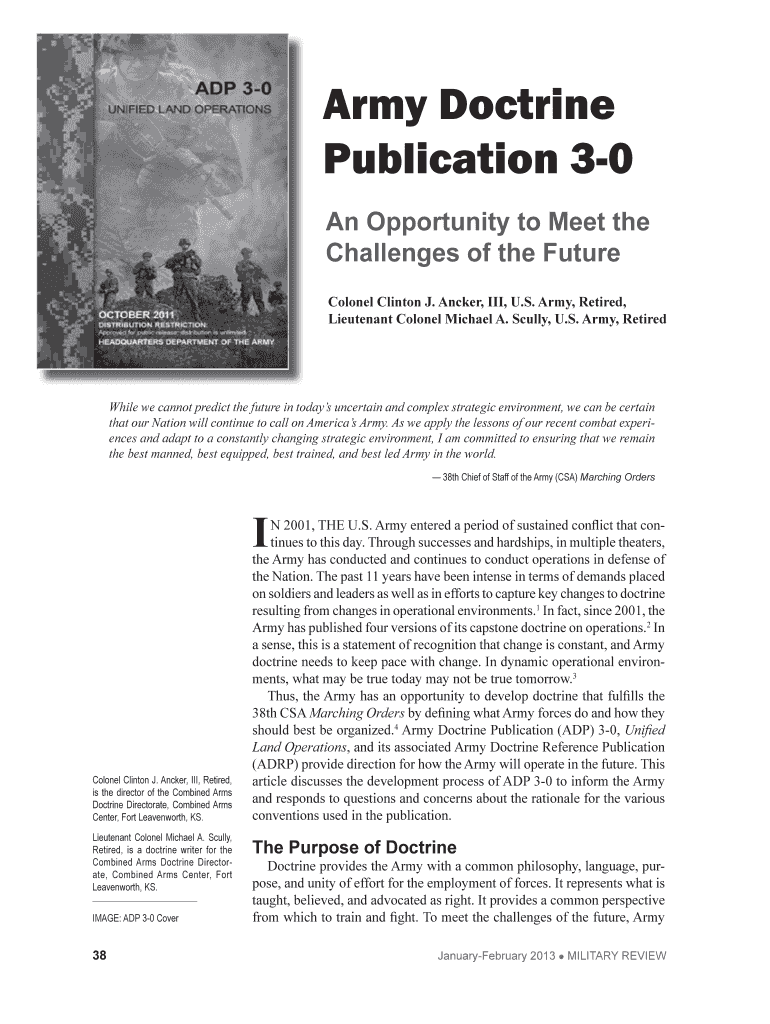
Army Doctrine Publication 3-0 (ADP 3-0) is a critical document outlining the United States Army’s approach to unified land operations. It serves as a guide for Army professionals to adapt their strategies in response to evolving combat environments and strategic demands. ADP 3-0 emphasizes the importance of incorporating real-world combat experiences into military doctrine, allowing for a responsive and effective approach to military operations. This publication is designed to foster a common understanding among soldiers, ensuring consistency and unity in executing missions.
Key Elements of Army Doctrine Publication 3-0
ADP 3-0 incorporates several key elements essential for understanding and executing unified land operations. These elements include:
- Operational Framework: Defines the structure for conducting operations and includes concepts such as decisive action, operations process, and mission command.
- Combat and Logistics Support: Details the integration of support functions crucial for sustaining operations and ensuring mission success.
- Integration of Joint Forces: Discusses the synchronization of efforts with other branches of the military to achieve strategic goals.
Each element is designed to provide Army professionals with a comprehensive framework for addressing current and future military challenges.
How to Use Army Doctrine Publication 3-0
Army professionals can leverage ADP 3-0 by:
- Reviewing the Document: Familiarize themselves with the core principles and strategies outlined in ADP 3-0.
- Applying Doctrine in Training: Incorporate ADP 3-0 concepts into training exercises to enhance operational readiness and adaptability.
- Engaging in Continuous Learning: Participate in discussions and critique sessions to deepen understanding and incorporate new insights into practice.
The goal is to ensure the Army remains adaptive and prepared for diverse combat scenarios.
Who Typically Uses Army Doctrine Publication 3-0
ADP 3-0 is primarily used by military leaders, planners, and strategists involved in developing and executing military operations. These Army professionals rely on ADP 3-0 to guide their decisions, ensuring strategic alignment with broader military objectives. Additionally, trainers and educators may use the publication to develop curricula for training programs, focusing on the application of unified land operations strategies.
Steps to Complete Army Doctrine Publication 3-0
While ADP 3-0 itself is not a form to be completed, understanding and implementing its strategies can be viewed as a process:
- Study the Document: Engage with the material thoroughly to grasp its concepts and principles.
- Integrate into Training: Apply lessons from the publication into training regimens and tactical exercises.
- Adapt Plans Accordingly: Use the insights gained from the document to inform strategic and tactical plans.
Regularly revisiting and updating strategies based on ADP 3-0 ensures alignment with current military doctrine and strengthens operational readiness.
Important Terms Related to Army Doctrine Publication 3-0
Several terms are crucial for understanding ADP 3-0:
- Unified Land Operations: Refers to the synchronization of efforts across military domains to achieve goals.
- Mission Command: A leadership philosophy encouraging initiative and decision-making aligned with the commander’s intent.
- Operational Art: The use of tactical actions to achieve strategic objectives within and across domains.
Understanding these terms enhances the ability to effectively implement the strategies outlined in ADP 3-0.
Examples of Using Army Doctrine Publication 3-0
Examples of ADP 3-0 application include:
- Operational Planning: Military units use ADP 3-0 to plan joint operations, ensuring integration across different branches.
- Training Exercises: Doctrine principles are incorporated into simulated environments to prepare soldiers for real-world scenarios.
- After-Action Reviews: Following missions, ADP 3-0 serves as a basis for evaluating performance and identifying areas for improvement.
These examples illustrate ADP 3-0’s role in guiding effective military operations.
Legal Use of Army Doctrine Publication 3-0
ADP 3-0 serves as an authoritative guide within the U.S. Army’s legal framework for operations. It aligns with military law and policy, ensuring that operations conducted under its guidance conform to rules of engagement and international law. The publication supports the legal and ethical execution of military missions, providing a foundational reference for compliance in complex operational environments.
Digital vs. Paper Version
The availability of ADP 3-0 in both digital and paper formats offers flexibility for Army professionals. The digital version allows for easy access and distribution, ensuring that soldiers and leaders can quickly reference and collaborate on strategic initiatives. Meanwhile, the paper version provides a tangible resource for those who prefer traditional reading methods or require it in environments where digital access is limited.
Business Types that Benefit Most from Army Doctrine Publication 3-0
While ADP 3-0 is specifically designed for military use, certain defense-focused businesses, such as military contractors and defense think tanks, may find value in understanding its content. These organizations benefit by aligning their products and services with current military strategies, ensuring relevance and effectiveness in supporting military operations.
This structure and content offer a comprehensive and insightful overview of Army Doctrine Publication 3-0, tailored to meet the needs and interests of those interacting with or affected by this significant military document.