
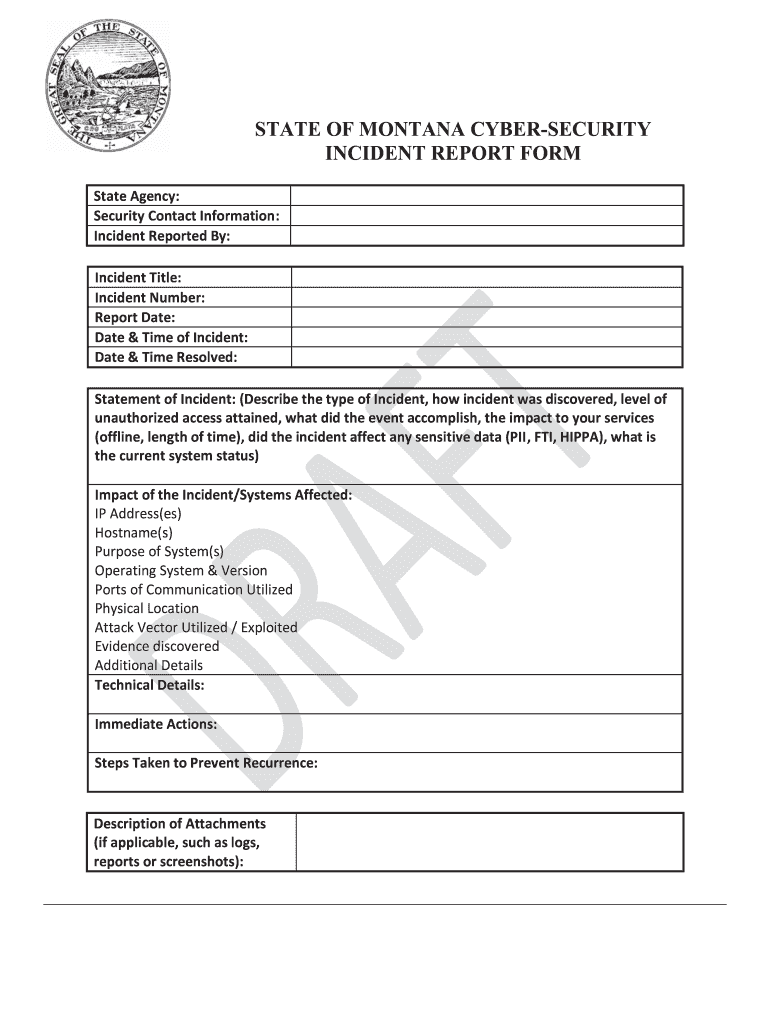







Definition and Meaning of Cyber Security Incident Report
A cyber security incident report is a formal document that records the details of a security incident, highlighting the circumstances leading to the incident, the impact of the incident, and the response actions taken. This report provides a structured way to document events such as data breaches, system compromises, or any unauthorized access to sensitive information. It is essential for organizations to maintain accurate records of incidents for compliance, analysis, and learning purposes.
Purpose of the Cyber Security Incident Report
The primary purpose of this report is to facilitate the investigation and analysis of security breaches. It helps organizations:
- Identify vulnerabilities in their systems
- Improve existing security measures
- Comply with regulatory requirements
- Mitigate the risk of future incidents
In essence, the report serves as a critical tool for continuous improvement in the organization’s cyber defense strategy.
Key Elements of the Cyber Security Incident Report
A comprehensive cyber security incident report typically includes several key elements that ensure thorough documentation and analysis:
Incident Overview
- Description of the Incident: A clear and concise description of what occurred.
- Date and Time: When the incident was discovered and any subsequent activities.
- Location: Where the incident occurred, whether on-site or remotely.
Incident Details
- Affected Systems: An inventory of systems, applications, or data that were impacted.
- Impact Assessment: The extent of the damage, including data loss, system downtime, or financial implications.
- Users Affected: Identification of individuals who were impacted by the incident.
Response Actions Taken
- Immediate Actions: Steps taken to contain and mitigate the incident, such as isolating affected systems.
- Long-term Measures: Solutions implemented to prevent recurrence, including updates to software or policy changes.
- Notification: Records of when and how affected parties were notified, such as customers or regulatory bodies.
Investigative Findings
- Root Cause Analysis: Examination of the underlying causes of the incident.
- Lessons Learned: Insights gained from the incident that inform future security strategies.
Who Typically Uses the Cyber Security Incident Report
Cyber security incident reports are utilized by various stakeholders within an organization. Understanding the audience helps to tailor the report to meet their needs effectively.


Internal Stakeholders
- IT Security Teams: Responsible for analyzing incidents and implementing preventive measures.
- Management: Requires reports to understand the risks associated with security incidents and make informed decisions.
- Compliance Officers: Ensure that the organization adheres to legal and regulatory requirements regarding data handling and security.
External Stakeholders
- Regulatory Authorities: May require incident reports for compliance with laws such as the General Data Protection Regulation (GDPR) or the Health Insurance Portability and Accountability Act (HIPAA).
- Insurance Companies: Use reports to assess claims related to breaches or cybersecurity insurance coverage.
Steps to Complete the Cyber Security Incident Report
Completing a cyber security incident report involves a systematic approach to ensure that all relevant information is captured accurately.
- Collect Initial Data: Gather information about the incident, including timestamps, system logs, and witness reports.
- Compile Incident Overview: Write a concise summary of the incident, including the nature and scope.
- Document Response Actions: Record immediate actions taken in response to the incident, employing chronological order for clarity.
- Perform Assessment: Evaluate the impact of the incident on the organization and affected systems.
- Analyze Findings: Conduct a root cause analysis to determine how and why the incident occurred.
- Provide Recommendations: Suggest improvements or measures to prevent similar incidents in the future.
Throughout this process, clarity and accuracy are paramount to ensure the report is actionable and informative.
Examples of Using a Cyber Security Incident Report
Real-world application of cyber security incident reports can vary based on the type of incident and the organization’s policies. Here are a few examples:
Data Breach Scenario
A financial institution experiences a data breach that exposes customer information. The incident report would detail how the breach occurred, which systems were compromised, the number of customers affected, and immediate steps taken to notify customers and secure systems.
Phishing Attack Example
An employee falls victim to a phishing attack, allowing unauthorized access to corporate email accounts. The incident report would include details of the phishing attempt, actions taken to secure email accounts, and preventive measures implemented to educate employees about recognizing phishing attempts.
Ransomware Attack Instance
A healthcare provider is attacked by ransomware, causing significant operational disruption. The report would capture the attack's onset, the negotiation with attackers, any data loss, and the recovery efforts taken to restore operations and secure data backups.
These examples illustrate the diverse scenarios that require comprehensive cyber security incident reporting to ensure accountability and continuous improvement.




