01. Edit your form online
Type text, add images, blackout confidential details, add comments, highlights and more.

Type text, add images, blackout confidential details, add comments, highlights and more.

Draw your signature, type it, upload its image, or use your mobile device as a signature pad.

Send it via email, link, or fax. You can also download it, export it or print it out.
Current Methods for the Detection of Antibodies of Varicella, such as enzyme-linked immunosorbent assay (ELISA) and fluorescent antibody to membrane antigen (FAMA), are essential for identifying immune responses to the Varicella Zoster Virus (VZV). These methods are crucial in determining immunity status, which is particularly relevant for individuals who face a risk of exposure to the virus or those planning vaccination. ELISA is commonly used due to its efficiency and ability to handle large volumes of samples, whereas FAMA is considered a gold standard due to its high specificity, despite being more labor-intensive. Understanding these techniques ensures accurate diagnosis and appropriate public health responses.
Health professionals and epidemiologists use the Current Methods for the Detection of Antibodies of Varicella to make informed decisions for public health interventions. For instance, detecting the antibodies informs healthcare providers about the immunity status of patients, thereby determining the need for vaccination or revaccination. Additionally, during outbreaks of varicella, these tests help differentiate between primary infections and breakthrough infections in vaccinated individuals. The data garnered from such detections aids in the strategic planning of vaccination programs and resource allocation.
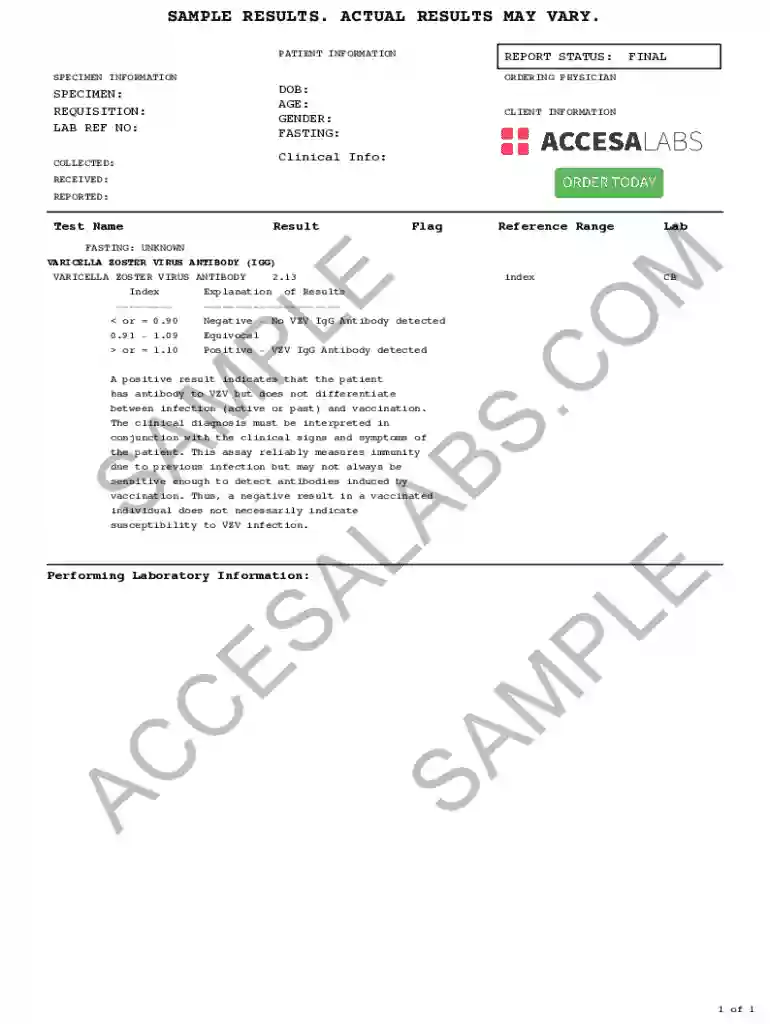
To utilize the Current Methods for the Detection of Antibodies of Varicella, individuals must visit medical laboratories where tests like ELISA and FAMA are conducted. Once obtained, healthcare professionals interpret these results in conjunction with patient history and symptoms to provide a comprehensive diagnosis or immunity status. The results are categorized as negative, equivocal, or positive, where a positive outcome indicates past infection or vaccination.
The laboratory report of the VZV antibody test includes critical data such as:
Understanding these elements is essential for accurate interpretation and subsequent healthcare decisions.
The use of Current Methods for the Detection of Antibodies of Varicella must comply with standards set by health authorities like the Centers for Disease Control and Prevention (CDC) and the Clinical Laboratory Improvement Amendments (CLIA). The legal framework ensures that testing is carried out under specified guidelines to maintain accuracy and reliability. Compliance also necessitates that individuals' health data is protected under regulations like the Health Insurance Portability and Accountability Act (HIPAA).
Eligibility for antibody testing is primarily granted to individuals who are at risk of exposure to VZV, such as unvaccinated children, healthcare workers, or immunocompromised individuals. This testing is applicable in various scenarios, such as verifying immunity years after vaccination, guiding treatment plans for at-risk groups, and preventing transmission in outbreak situations.
State regulations may influence how the Current Methods for the Detection of Antibodies of Varicella are applied, especially concerning public health policies and mandatory vaccination or testing requirements. For example, certain states might mandate proof of immunity for school children, thereby increasing the demand for antibody testing. Understanding these differences is vital for healthcare providers to ensure compliance and optimal health outcomes.
Traditional lab-based methods remain the cornerstone of VZV antibody detection due to their established accuracy and specificity. However, advancements in digital health platforms are promoting the development of at-home testing kits that may offer preliminary results. Despite their convenience, these digital methods still require confirmation through traditional laboratory testing to ensure accuracy. As digital solutions evolve, they may increasingly complement existing methods, broadening accessibility without compromising reliability.
By addressing these aspects, individuals seeking to understand or utilize the Current Methods for the Detection of Antibodies of Varicella can make informed decisions regarding their health in contexts that align with U.S. healthcare practices.
We've got more versions of the Current Methods for the Detection of Antibodies of Varicella form. Select the right Current Methods for the Detection of Antibodies of Varicella version from the list and start editing it straight away!
At DocHub, your data security is our priority. We follow HIPAA, SOC2, GDPR, and other standards, so you can work on your documents with confidence.