






Definition & Meaning
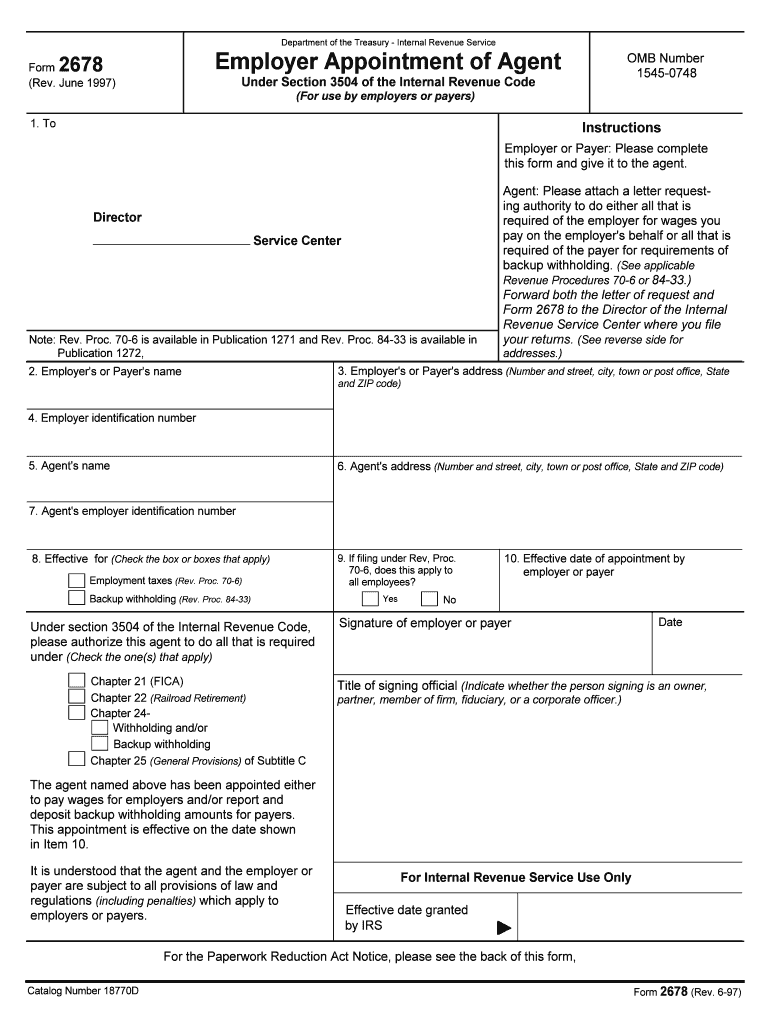
Form 2678, formally titled "Employer Appointment of Agent," is an official document issued by the Department of the Treasury - Internal Revenue Service (IRS). This form allows employers or payers to appoint an agent to handle specific responsibilities, such as employment taxes and backup withholding on their behalf. This delegation is sanctioned under Section 3504 of the Internal Revenue Code. By using Form 2678, businesses and individuals can simplify their tax obligations by entrusting these tasks to a designated agent, thereby ensuring compliance with federal tax laws.
How to Obtain the Form 2678
Obtaining Form 2678 is a straightforward process. The form can be downloaded directly from the IRS website, ensuring you have the most current version. Alternatively, businesses can contact the IRS directly to request a physical copy. For those who prefer digital convenience, third-party document management platforms like DocHub may offer access to this form and facilitate its completion. Ensure you only use trusted sources to obtain tax forms to avoid outdated or incorrect versions.
Steps to Complete the Form 2678
-
Provide Employer Information: Begin by filling in the employer's details, including the name, address, and Employer Identification Number (EIN).
-
Detail the Agent Information: Enter the designated agent's information. This includes their name, address, and, if applicable, their EIN.
-
Specify the Designated Duties: Clearly outline the specific duties the agent is authorized to handle, such as filing tax returns or paying withheld taxes.
-
Authorization Signatures: Both the employer and the appointed agent must sign and date the form to authorize the arrangement fully.
-
Submission: Once complete, submit Form 2678 to the IRS. The method of submission can be by mail or electronically, depending on your preference.
Why Should You Use Form 2678
Using Form 2678 can significantly ease the administrative burden of tax compliance for businesses. By appointing an agent, companies can ensure that duties related to employment taxes are handled by professionals, reducing the risk of errors and penalties. This arrangement is beneficial for businesses that may lack the resources or expertise to manage these tasks internally. Additionally, it provides peace of mind as the agent must follow IRS regulations, helping to maintain compliance with federal tax requirements.
Who Typically Uses the Form 2678
Form 2678 is commonly used by various entities needing assistance with employment taxes. This includes small business owners who may not have a dedicated in-house finance team, larger corporations looking to streamline their tax operations, or nonprofit organizations wanting to ensure compliance without allocating extensive resources to tax management. Payers who manage multiple employee accounts often appoint an agent to handle complex payroll systems, making Form 2678 a popular choice in these scenarios.


Key Elements of the Form 2678
Form 2678 consists of several critical sections that must be completed accurately:
- Employer Details: Essential contact information and identifiers for the employer.
- Agent Designation: Information about the chosen agent authorized to act on behalf of the employer.
- Scope of Authority: Explicit delineation of the duties the agent will perform.
- Signatures: Authorization requiring both parties' signed approval.
- Instructions for Submission: Guidance on how to properly file the form with the IRS.
Understanding these components ensures that the form is completed correctly, thereby facilitating a smooth agent appointment process.
Important Terms Related to Form 2678
A thorough comprehension of the following terms will ease the understanding and execution of Form 2678:
- Employer Identification Number (EIN): A unique number assigned to a business for federal tax reporting purposes.
- Agent: An individual or entity authorized to execute duties related to tax handling for an employer.
- Backup Withholding: The IRS-mandated withholding on certain types of income, which an agent might handle on behalf of the employer.
- Compliance: Adherence to IRS rules and regulations, which is maintained through the correct use of Form 2678.
Understanding these terms ensures effective use of Form 2678 in various tax-related scenarios.
Filing Deadlines / Important Dates
While Form 2678 does not have a set annual filing deadline, it's crucial for businesses to submit this form promptly once they choose to appoint an agent. Delays in submission can result in a lag in the agent's ability to manage tax responsibilities effectively. Companies should align the filing with their fiscal calendar to ensure their tax obligations are met without interruption. Monitoring IRS communications for any updates on filing procedures or deadlines is also advisable.
Legal Use of the Form 2678
Form 2678 is a legal document that must be used in compliance with federal laws governing employment and tax obligations. The appointed agent assumes responsibility for adhering to these statutes on behalf of the employer. The arrangement is regulated under Section 3504 of the Internal Revenue Code, establishing a clear legal framework for such appointments. Employers must ensure the chosen agent is reliable and knowledgeable about legal requirements to avoid potential legal repercussions.