






Definition & Meaning
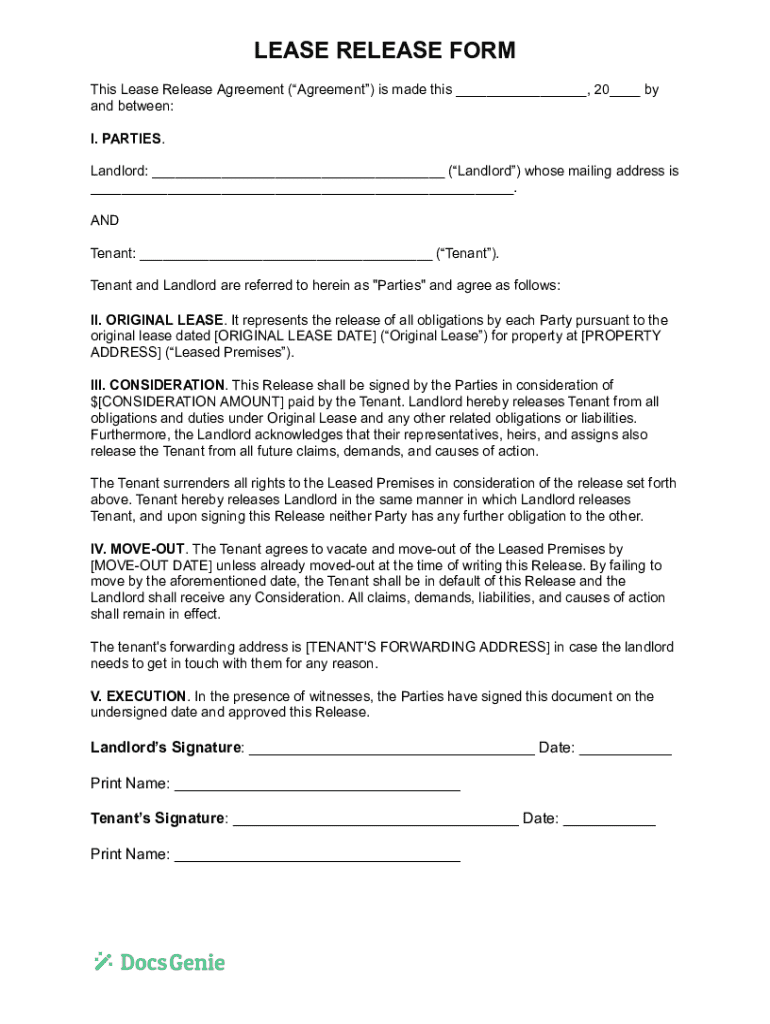
The Lease Release Form is a legal agreement between a landlord and a tenant allowing both parties to terminate an existing lease without further obligations. This document provides clarity on each party's responsibilities, releasing them from potential claims and liabilities. Typically, it requires the tenant to vacate the property by a designated move-out date, ensuring a clear understanding of the tenant's exit and eliminating any future disputes about obligations that would typically extend to the end of the lease term.
How to Use the Lease Release Form
To effectively use a Lease Release Form, both landlord and tenant must agree on specific terms before completing and signing the form. It typically involves a negotiation process where the landlord may offer to waive certain fees or provide other incentives for the tenant’s early departure. Once both parties reach an agreement, they fill out the form with details such as names, property address, termination date, and any compensation amount. The form is then signed by both parties, and any witnesses if required, to make the release legally binding.
Steps to Complete the Lease Release Form
- Gather Information: Begin by collecting necessary details such as the full names of both parties, the property address, and the original lease terms.
- Draft Termination Terms: Agree on a move-out date and any compensation amount or other terms that might apply.
- Complete the Form: Enter all the required information into the Lease Release Form, ensuring accuracy and clarity.
- Review: Both parties should carefully review the document to ensure all details are correct and that there are no misunderstandings.
- Signatures: The form must be signed by the landlord and the tenant, and in some cases, it may require witnesses or notarization to be legally valid.
- Distribution: Provide a copy to all parties involved for their records and future reference.
Key Elements of the Lease Release Form
- Party Identification: Includes full names and contact information for both landlord and tenant.
- Property Details: The address and possibly a description of the property in question.
- Termination Date: The agreed-upon date when the tenant must vacate the premises.
- Financial Compensation: Any consideration amount the tenant receives or pays for early termination.
- Release Clauses: Specific statements releasing both parties from future claims and responsibilities related to the lease.
- Signatures and Date: Must be signed by all involved parties and dated to confirm agreement and execution.
Legal Use of the Lease Release Form
The Lease Release Form holds legal significance as it can protect both parties from future legal disputes. It is essential to ensure that the form complies with local tenant-landlord laws. Ideally, it should be reviewed by a legal professional to safeguard the interests of both parties. The form serves as a legally binding contract once executed and should clearly outline all agreed-upon terms and conditions to prevent potential litigation over lease termination issues.
Important Terms Related to Lease Release Form
- Consideration: Refers to any payment or benefit agreed upon between the parties for terminating the lease.
- Vacate Date: The date by which the tenant agrees to leave the rental property.
- Release Clause: A provision that frees both landlord and tenant from obligations and potential claims once the lease is terminated.
- Witness/Notarization: Not all forms require it, but having a witness or notarizing the document can add an extra layer of legal validation.
State-Specific Rules for the Lease Release Form
Lease release laws can vary significantly from state to state. Some jurisdictions might require additional stipulations such as compulsory notice periods or specific tenant protections before a lease can be terminated. Landlords and tenants should be aware of local regulations and consult legal advice to ensure the Lease Release Form adheres to state-specific requirements, thereby avoiding penalties or invalidation of the agreement.
Examples of Using the Lease Release Form
- Early Relocation: A tenant might be required to move due to job relocation, using the Lease Release Form to legally end their lease early without penalties.
- Property Sale: A landlord planning to sell the property may use this form to terminate the lease agreement before the sale.
- Mutual Decision: Both parties may agree to terminate the lease if circumstances change, requiring an official document to prevent future claims or misunderstandings.
Who Typically Uses the Lease Release Form
This form is most commonly used by landlords and tenants who jointly decide to end their lease agreement early. It can also be utilized by property management companies, real estate lawyers, and lease negotiation specialists to provide a structured and legally-binding approach to early lease termination.