






Definition & Meaning
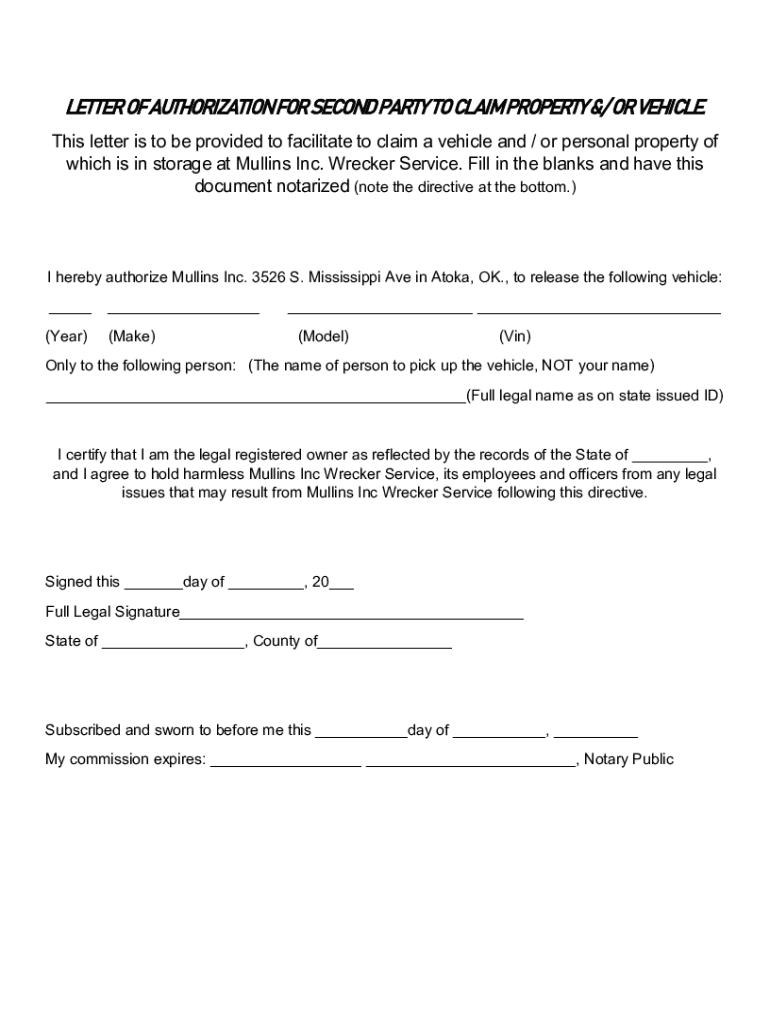
The Vehicle Release Form is an essential legal document that authorizes a designated individual to retrieve a vehicle from a storage facility, towing company, or impound lot on behalf of the vehicle owner. This form serves as a Letter of Authorization, explicitly detailing who is entitled to claim the vehicle, thereby ensuring that only approved individuals can access the vehicle. In cases of impounded or stored vehicles, the form acts as a safeguard, protecting owners from unauthorized vehicle recovery and any potential liabilities associated with unauthorized access.
How to Use the Vehicle Release Form
To use the Vehicle Release Form effectively, follow these steps:
-
Identify the Purpose: Clarify why the vehicle needs to be released, whether due to impoundment, storage, or after an accident.
-
Complete Owner Information: Include the vehicle owner's full details, such as name, address, and contact information.
-
Designate a Representative: Clearly state the name of the individual authorized to retrieve the vehicle. Ensure this person has valid identification.
-
Verify Vehicle Details: Provide specific vehicle information, including make, model, year, VIN, and license plate number, to accurately identify the vehicle in question.
-
Notarization: The form often requires notarization to become legally valid. Ensure this step is completed to avoid any disputes when presenting the form.
-
Submission to Facility: Present the form at the location where the vehicle is being held. Ensure the designated person accompanies the form and identification.
Steps to Complete the Vehicle Release Form
Filling out the Vehicle Release Form involves several key steps. Here is a detailed guide on how to complete it:
- Gather Necessary Information: Obtain details of the vehicle (VIN, license plate), owner, and authorized representative.
- Fill in the Owner's Section: Provide accurate and complete information of the vehicle owner, including their contact details.
- Complete the Vehicle Details: Enter the vehicle-specific data accurately to prevent any mix-ups during the release process.
- Designate an Authorized Person: Clearly identify who will be picking up the vehicle. This person should be willing to present identification.
- Affix Signatures: Both the vehicle owner and the authorized representative must sign the form in the presence of a notary public, if notarization is required.
- Notarize the Document: Arrange for the document to be notarized to satisfy any legal requirements, ensuring it is duly completed.
Key Elements of the Vehicle Release Form
Several critical elements must be included for the Vehicle Release Form to be effective:
- Owner Information: Full name, address, and contact information.
- Authorized Representative: Name and contact details of the person delegated to claim the vehicle.
- Vehicle Information: Essential vehicle identifiers such as make, model, year, VIN, and license plate number.
- Notary Section: Space for a notary's signature and seal to validate the form where required.
- Signature Lines: For both the vehicle owner and the designated representative.
Legal Use of the Vehicle Release Form
The Vehicle Release Form is predominantly used in legal contexts, such as retrieving a vehicle from impound. Valid use of this form ensures compliance with property rights and safeguards against unauthorized vehicle retrieval. It protects both the vehicle's owner and storage facility operators by creating a clear record of authorization. The notarization step further lends legal weight to the document, deterring potential misuse due to its mandated authenticity certification.
State-Specific Rules for the Vehicle Release Form
While the Vehicle Release Form is broadly standardized, there are state-specific regulatory nuances to consider:
- Notarization Requirements: Some states may mandate notarization, while others may accept a witness signature or a simple sign-off.
- Identification Protocols: Vary by state or local jurisdiction, affecting what documentation the authorized person must present.
- Special Provisions for Towing and Storage: Differences exist in how some states handle the release of vehicles from storage or impound.
- Fee Structures: Fee requirements for processing forms can differ, impacting the overall cost when retrieving a vehicle.
Compliance with these rules is essential to ensure the legal integrity of the form and prevent complications during the vehicle release process.
State-by-State Differences
Significant variations between states can affect the execution of the Vehicle Release Form:
- California: Might require a specific release form issued by the Department of Motor Vehicles for impounded vehicles.
- New York: Often requires additional documentation for release, such as proof of insurance or a police release form.
- Texas: May be more lenient on notarization but strict on vehicle storage policies and associated fees.
- Florida: Could necessitate evidence of all applicable fines or penalties being paid prior to vehicle release.
Being aware of these variations is crucial to processing the form correctly within the pertinent legal context of each state.
Examples of Using the Vehicle Release Form
The Vehicle Release Form is employed in various scenarios, including:
- Impounded Vehicles: Allows vehicle owners to authorize someone else to recover a car from an impound lot due to parking violations or legal hold.
- Accident Recovery: Utilized when retrieval delegations are necessary following a tow after an accident.
- Loaned Vehicles: When owners loan vehicles for extended periods, they may use this form to grant temporary retrieval capabilities to trusted individuals.
These examples demonstrate the form's versatility and essential role in authorizing vehicle retrieval under different circumstances.