







Definition & Meaning
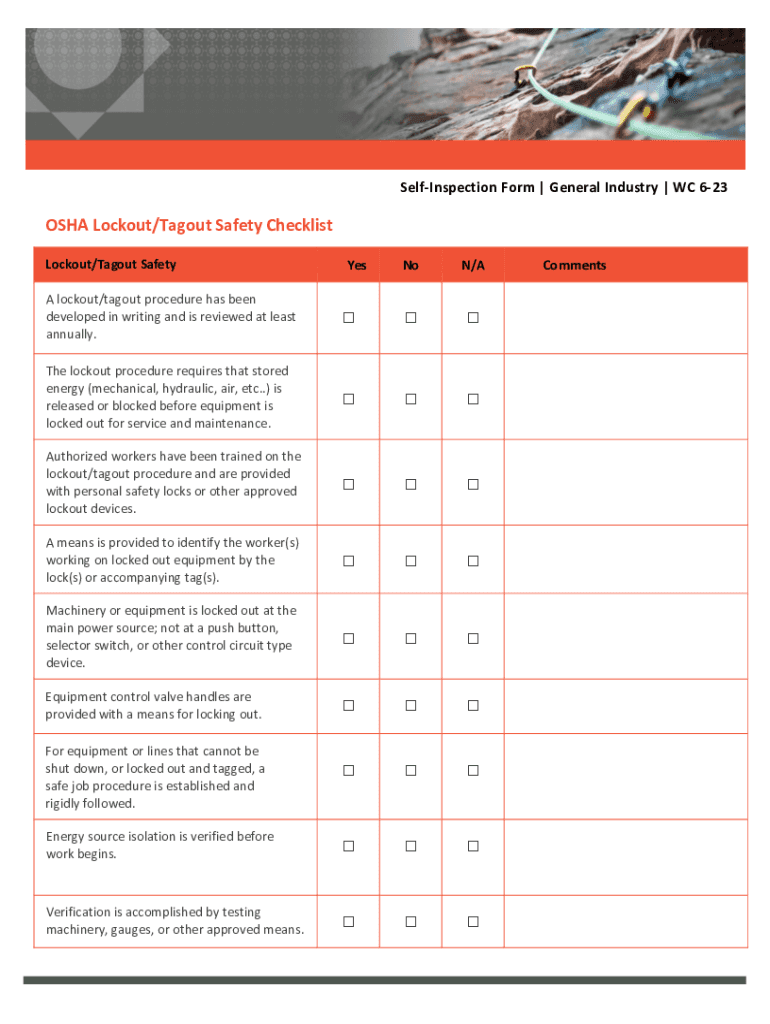
The "Self-Inspection Form, General Industry OSHA Lockout Tagout Safety Checklist" is a vital document designed for organizations to ensure compliance with Occupational Safety and Health Administration (OSHA) regulations. This checklist serves as a comprehensive guide to verify that machinery and equipment are properly locked out during maintenance or servicing to prevent accidental start-up, safeguarding the health and safety of workers. It focuses on essential procedures including energy source isolation and verification of lockout effectiveness, ensuring that businesses mitigate risks associated with equipment servicing.
How to Use the Self-Inspection Form, General Industry OSHA Lockout Tagout Safety Checklist
-
Preparation: Before using the form, gather information about all equipment and energy sources that require lockout procedures. This involves identifying machines, tools, and associated hazards in the workplace.
-
Assessment: Work through each item on the checklist methodically. Check for the presence of written procedures, appropriate training for workers, and the effectiveness of energy source isolation techniques.
-
Documentation: Record observations for each checklist item. This documentation provides a verifiable record of compliance and non-compliance areas, facilitating follow-up actions as needed.
-
Corrective Action: Address any issues identified during the assessment immediately. Implement corrective actions and re-evaluate to ensure all procedures align with OSHA's lockout/tagout standards.
-
Continuous Monitoring: Regularly revisit and update the checklist to reflect changes in equipment, processes, or regulatory requirements. Consistent use of the checklist helps maintain a safe working environment.
Key Elements of the Self-Inspection Form, General Industry OSHA Lockout Tagout Safety Checklist
-
Written Procedures: Ensure all machinery has documented step-by-step lockout procedures. These should be easily accessible and clearly detail the methods for isolating energy sources.
-
Employee Training: Verify that workers receive comprehensive training on lockout/tagout processes. Training should cover the importance of these procedures, individual responsibilities, and how to execute them effectively.
-
Energy Source Isolation: Identify and assess all potential energy sources for each piece of equipment. The checklist should confirm that each source can be effectively isolated to prevent accidental start-up.
-
Verification of Lockout: After locking out equipment, there should be a verification process to ensure it is completely de-energized and safe for maintenance activities.
-
Signage and Tags: Check that all lockout and tagout devices are clearly labeled and visible. These labels must include the date and name of the person responsible for the lockout.
Steps to Complete the Self-Inspection Form, General Industry OSHA Lockout Tagout Safety Checklist
-
Conduct an Initial Review: Begin by understanding the scope of equipment and lockout procedures needed. Gather all previous compliance records for comparison and context.
-
Safety Assessment: Use the checklist to evaluate current procedures. Pay attention to details like machinery labels, training records, and physical inspection of lockout devices.
-
Employee Interviews: Talk to workers participating in lockout/tagout activities. Their insights can reveal practical issues or misunderstandings about safety protocols.
-
Gap Analysis: Identify any discrepancies between current practices and OSHA regulations. Note areas requiring immediate attention or improvement.
-
Implementation of Improvements: Develop a plan to address identified gaps. This could involve additional training, revising procedure documents, or investing in new lockout equipment.
-
Final Review and Sign-Off: Complete the checklist by noting all findings and actions taken. Ensure a supervisor or safety officer reviews and signs off on the final document.
Who Typically Uses the Self-Inspection Form, General Industry OSHA Lockout Tagout Safety Checklist
-
Health and Safety Officers: Responsible for maintaining workplace safety standards and ensuring compliance with OSHA regulations. They are typically tasked with conducting inspections and maintaining compliance records.
-
Maintenance Personnel: Often involved in the direct application of lockout/tagout procedures. Their feedback during inspections can be invaluable for improving safety measures.
-
Facility Managers: Oversee the daily operations of industrial environments, ensuring all processes adhere to safety guidelines. They play a critical role in implementing systemic changes based on inspection findings.
-
OSH Compliance Auditors: Conduct regular checks to ensure organizations remain compliant with OSHA standards. Their use of the checklist ensures consistent and thorough evaluations of workplace safety practices.


Benefits of Using the Self-Inspection Form, General Industry OSHA Lockout Tagout Safety Checklist
-
Enhanced Safety: By systematically checking lockout/tagout procedures, the checklist helps prevent accidents and injuries, fostering a safer work environment.
-
Regulatory Compliance: Regular use of the checklist ensures adherence to OSHA regulations, reducing the risk of non-compliance penalties.
-
Efficient Maintenance: Proper lockout procedures streamline maintenance activities. Ensuring all equipment is de-energized reduces downtime and prevents unexpected hazards.
-
Vigilance and Accountability: Structured documentation and regular inspections increase accountability within the organization. Workers become more vigilant about following safety protocols.
State-Specific Rules for the Self-Inspection Form, General Industry OSHA Lockout Tagout Safety Checklist
While OSHA provides a federal framework, some states have additional regulations or amendments. It is crucial for organizations to:
- Research state-specific OSHA plans that may impose stricter standards.
- Adjust procedures and checklists to align with both federal and state requirements.
- Consult with legal experts familiar with state-specific labor laws to ensure comprehensive compliance.
This multilevel understanding ensures that all relevant legal mandates are effectively met.
Legal Use of the Self-Inspection Form, General Industry OSHA Lockout Tagout Safety Checklist
Adhering to the checklist is not just a safety measure; it's a legal requirement under OSHA regulations. Proper utilization of the checklist results in:
- Legal Protection: Reduces liability in the event of a workplace incident, as it demonstrates proactive efforts to maintain safety standards.
- Audit Trail: Provides documented evidence of compliance for legal inspections or audits, showcasing the organization's commitment to worker safety.
- Risk Mitigation: Identifies potential hazards before they result in legal issues, serving as a preventive tool against workplace injuries and associated legal ramifications.
These measures help companies avoid costly fines and legal consequences while prioritizing employee safety and well-being.




