






Definition & Meaning
The "Emergency Eyewash and Shower Inspection" is a critical safety procedure aimed at ensuring the proper functioning and readiness of emergency eyewash stations and safety showers in workplaces, particularly where hazardous substances are present. These systems are vital for providing immediate decontamination to individuals exposed to harmful chemicals, reducing the risk of injury. Inspections are carried out to verify that equipment meets safety standards, is accessible, and operates effectively during emergencies.
How to Use the Emergency Eyewash and Shower Inspection
Using this inspection involves conducting regular checks on the functionality and accessibility of emergency eyewash stations and showers. Key tasks include:
- Ensuring they are free from obstructions.
- Checking for visible signs of damage or wear.
- Activating the units to confirm proper water flow and temperature.
- Recording observations and any maintenance actions needed.
Steps to Complete the Emergency Eyewash and Shower Inspection
To effectively complete this inspection, follow these steps:
- Review the equipment location and ensure it is easily accessible.
- Visually inspect for physical damage or vandalism.
- Operate the unit to test for adequate flow rate and water pressure.
- Monitor the water temperature to confirm it’s within a safe range.
- Document findings and schedule necessary repairs or replacements.
Why You Should Conduct Emergency Eyewash and Shower Inspections
Conducting regular inspections is crucial for maintaining compliance with Occupational Safety and Health Administration (OSHA) regulations, safeguarding employee health by ensuring equipment reliability, and minimizing downtime during emergencies. Regular inspections also provide an opportunity to train personnel in equipment use, which can be life-saving in chemical exposure events.
Key Elements of the Emergency Eyewash and Shower Inspection
Several key elements should be included in each inspection:
- Accessibility: Equipment must be within a 10-second reach from potential hazards.
- Functionality: Ensure the equipment activates immediately and remains operational for at least 15 minutes.
- Cleanliness: Units should be free from debris and contaminants.
Who Typically Uses the Emergency Eyewash and Shower Inspection
This inspection is generally utilized by safety officers, facility managers, and lab supervisors in environments where chemicals are handled. Industrial and manufacturing workplaces, laboratories, and chemical processing facilities commonly implement these inspections to ensure the safety of their employees.


Legal Use of the Emergency Eyewash and Shower Inspection
The inspection complies with OSHA’s 29 CFR 1910.151(c), which specifies the need for suitable facilities for quick drenching or flushing of the eyes and body in work areas where dangerous chemicals are used. Complying with these regulations is not just a legal requirement but a moral obligation to ensure workplace safety and health.
State-Specific Rules for the Emergency Eyewash and Shower Inspection
While OSHA provides a federal framework, some states have additional regulations that may require more frequent inspections or specific documentation standards. For instance, California's Division of Occupational Safety and Health (Cal/OSHA) might have unique standards, which should be reviewed to ensure both state and federal compliance.
Required Documents
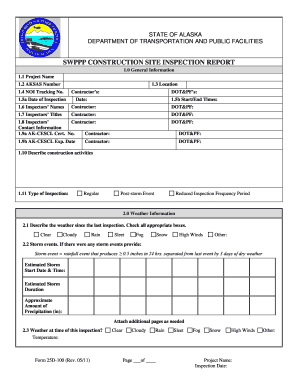
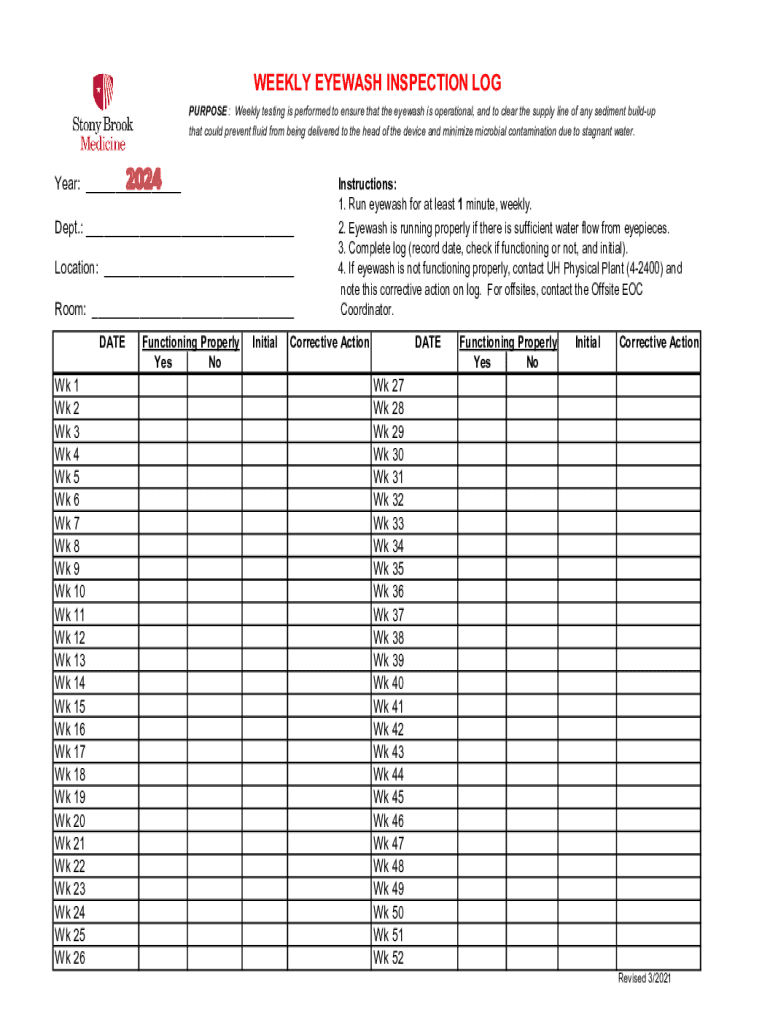
Documentation for each inspection should include:
- Date and time of inspection.
- Name of the inspector.
- Condition of equipment.
- Any issues observed and corrective actions taken.
- Signature of the inspector. Maintaining these records is critical for compliance audits and validating that safety checks are being conducted consistently.
Examples of Using the Emergency Eyewash and Shower Inspection
In a chemical processing facility, weekly inspections might reveal clogging due to deposits in the shower pipes. Repair actions can then be scheduled without interrupting operations. In laboratories, inspections ensure eyewashes remain accessible and operational during student and staff experiments involving hazardous substances.
Penalties for Non-Compliance
Failure to conduct regular inspections can result in significant penalties including fines from OSHA, increased liability in the event of an incident, and potentially severe harm to employees. OSHA can impose penalties ranging from warnings to thousands of dollars in fines, which underscores the importance of consistent compliance.
Digital vs. Paper Version
Inspections can be documented using traditional paper logs or digital applications. Digital platforms offer advantages such as easy record retrieval, automatic reminders for upcoming inspections, and simplified report sharing. However, paper logs remain a reliable option where digital access is limited.
Application Process & Approval Time
While there is typically no formal application or approval process for performing inspections, ensuring internal compliance processes and getting necessary approvals within an organization might be required. This includes securing buy-in from management and providing adequate training to inspection personnel.
Software Compatibility
Digital documentation of inspections can be streamlined using software like DocHub, which allows for secure, easily accessible records, and ensures that all compliance measures are met. Integration with cloud services facilitates collaborative record-keeping and quick access to documentation during audits.