






Definition & Meaning
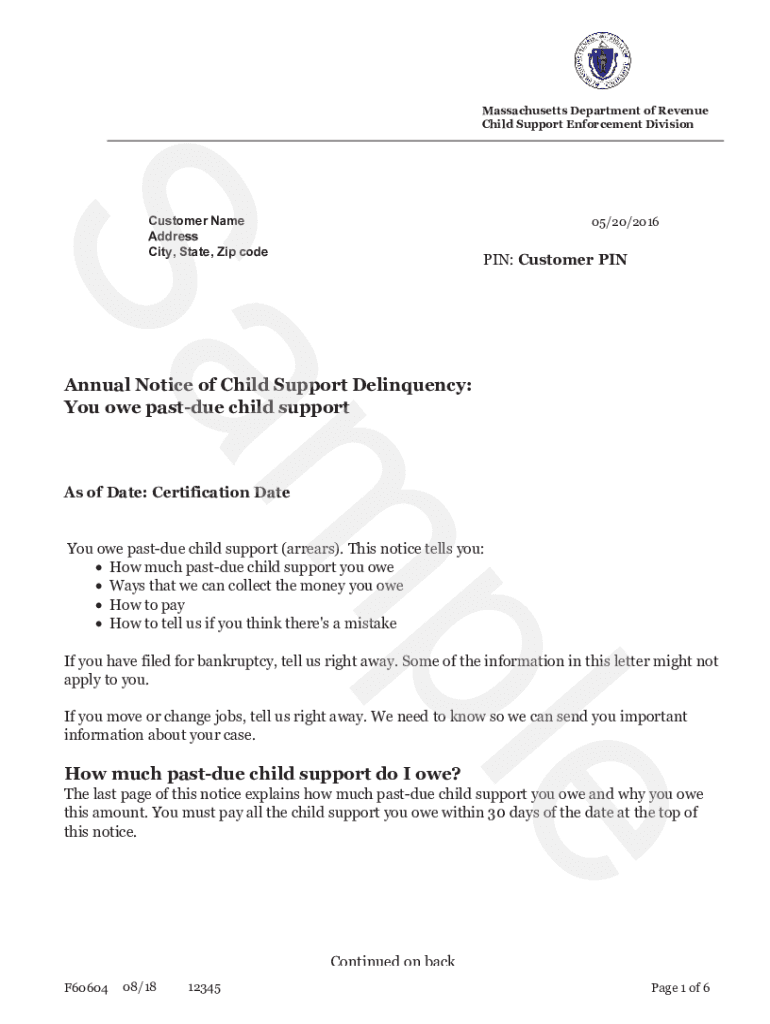
The Annual Notice of Child Support Delinquency refers to a formal notification issued by a state child support enforcement agency, commonly the Department of Revenue's Child Support Enforcement Division, indicating that an individual owes past-due child support payments. This document serves as a critical communication tool to inform the recipient about their outstanding obligations and the potential consequences of continued non-payment. The notice typically details the total amount owed, the timeframe during which the payments have been missed, and the steps required to resolve the delinquency.
Examples of Use:
-
Massachusetts Department of Revenue Example: In Massachusetts, the notice will highlight the overdue amounts, outline payment methods, and provide the recipient with options to dispute the information or request further review.
-
Other States: While details may vary by state, the core function remains to emphasize the legal expectations and responsibilities of the individual to meet their child support obligations promptly.
Steps to Complete the Annual Notice
Completing the actions required in response to the Annual Notice of Child Support Delinquency involves several critical steps to ensure compliance and potentially avoid further legal repercussions. Here is a general guideline:
-
Review the Notice Carefully: Check all details for accuracy, including the amount owed and the dates associated with the delinquency.
-
Gather Required Documents: Collect any relevant documents that may support your case if you believe there is an error, such as proof of payment or court orders.
-
Follow Payment Instructions: The notice will specify payment methods available, such as online payments, checks, or money orders. Immediate payment is often encouraged to avoid further penalties.
-
Contact Child Support Agency: If there are discrepancies or concerns, contact the issuing agency using the contact information provided.
-
Dispute or Request a Review: File an official dispute if you find errors in the notice. Often this requires submitting a written request along with supporting documentation.
-
Comply with Prescribed Actions: Ensure all actions are taken within any listed deadlines to prevent the escalation of penalties or enforcement actions.
Penalties for Non-Compliance
Failing to respond to or resolve issues presented in the notice can result in significant legal and financial repercussions. These penalties are structured to compel compliance with child support laws and can vary in severity:
-
Wage Garnishment: A common enforcement action where a portion of your earnings is automatically deducted to cover child support arrears.
-
Tax Refund Interception: State and federal tax refunds may be redirected to satisfy outstanding child support obligations.
-
Property Liens: Liens may be placed on property owned by the non-compliant individual, potentially affecting ownership rights and credit.
-
License Suspension: Non-payment can lead to the suspension of driver's licenses and professional licenses, impacting personal mobility and employment opportunities.
State-Specific Rules
Child support enforcement can vary significantly from state to state, affecting how notices are issued, what they contain, and the remedies available for delinquency. It is important to understand the specific regulations applicable in your state:
-
Massachusetts: Utilizes administrative enforcement without the need for a court order to compel compliance.
-
Texas: Offers amnesty programs during specific periods to encourage individuals to come forward and settle debts without incurring full penalties.
-
New York: Allows for the suspension of recreational licenses like hunting or fishing for non-payment.
Understanding these differences ensures you are informed about the precise legal framework and obligations pertaining to your location.
Key Elements of the Notice
The Annual Notice of Child Support Delinquency usually contains critical information required for understanding and addressing the delinquency:
-
Total Due Amount: A clear indication of how much is owed, taking into account any accumulated interest or fees.
-
Payment History: A detailed list of missed payments and dates, helping to pinpoint the period of non-compliance.
-
Rights and Responsibilities: Explanation of legal rights, including disputing the amounts claimed, as well as obligations under current child support agreements.
-
Consequences of Non-Payment: A summary of potential enforcement actions that may be initiated if compliance is not achieved.
Legal Use of the Notice
The notice operates within the broader legal context of family law and child support enforcement, ensuring that children receive the financial support they are entitled to. It must comply with state-specific statutes and federal regulations, providing an official method for states to communicate with obligors about their responsibilities:
-
Compliance with Federal Law: Adheres to standards set by federal initiatives like the Personal Responsibility and Work Opportunity Reconciliation Act (PRWORA).
-
Documentation for Dispute Resolution: Acts as an official document in legal proceedings where disputes over child support payments arise.
Examples of Using the Notice
The practical use of the notice extends beyond mere payment demands. Consider these scenarios:
-
Correction of Records: An obligor uses the notice to verify or correct their payment record, ensuring future compliance reflects accurate history.
-
Dispute Resolution: Individuals dispute inaccuracies by submitting evidence against what's documented in the notice to avoid unjust penalties.
-
Financial Planning: Used by obligors to manage or restructure personal finances to meet obligations consistently, utilizing payment plans detailed in the notice.
Who Typically Uses the Notice
This form is primarily directed toward individuals who have been identified as having overdue child support obligations, typically termed as obligors, or non-custodial parents. However, several parties may interact with this notice:
-
Obligors: Direct recipients responsible for payment of delinquent child support.
-
Child Support Enforcement Agencies: Issue and oversee compliance with the notice.
-
Legal Representatives: Lawyers advising clients on how to navigate legal obligations related to child support.
Understanding who commonly interacts with these notices can aid in efficiently handling responsibilities outlined within.