Disability premiums are paid 100% by the employee on a post-tax basis 2026

Get Form
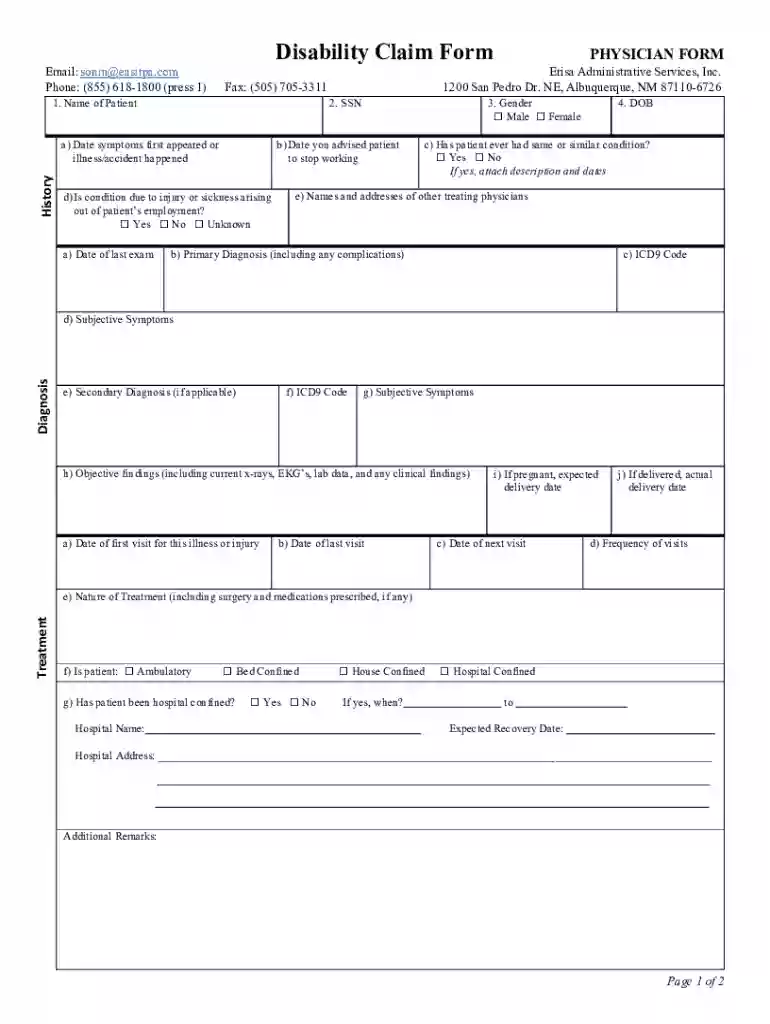
Disability premiums are paid 100% by the employee on a post-tax basis Preview on Page 1

Here's how it works

01. Edit your form online
Type text, add images, blackout confidential details, add comments, highlights and more.

02. Sign it in a few clicks
Draw your signature, type it, upload its image, or use your mobile device as a signature pad.

03. Share your form with others
Send it via email, link, or fax. You can also download it, export it or print it out.

Definition & Meaning

Disability premiums paid 100% by the employee on a post-tax basis refer to a specific arrangement in which employees bear the full cost of disability insurance premiums using their net income after taxes have been deducted. This type of insurance policy safeguards an individual's income in case they are unable to work due to a qualifying disability. By choosing this method, any benefits received under the policy, if the employee becomes disabled, are generally tax-free.

Key Characteristics

  • Employee-funded premiums: The policyholder, rather than the employer, is entirely responsible for the premium payments.
  • Post-tax: These payments are made using income that has already been taxed, meaning no pre-tax advantages are available at the time of payment.
  • Tax-free benefits: In the event of a claim, the benefits paid out typically are not subject to income tax, due to the nature of the premiums' payment.

How to Use Disability Premiums

When dealing with disability premiums paid post-tax, employees should consider both their financial capacity and potential long-term needs. Managing these premiums involves recognizing the potential impact on personal finances and understanding how their structure may benefit them in the event of a disability.

Practical Use

  1. Budgeting: Incorporate premium payments into monthly expenses to ensure affordability.
  2. Policy Review: Regularly assess the coverage to ensure it aligns with current income replacement needs and lifestyle changes.
  3. Financial Planning: Consider these policies within an overall risk management and financial plan for comprehensive coverage.

Steps to Complete the Disability Premium Process

Understanding and completing the process for disability premiums involves several key steps. This ensures full utilization and compliance.

  1. Evaluate Insurance Needs: Determine the necessary coverage based on income, dependents, and lifestyle.

  2. Select an Insurance Provider: Choose a reputable insurance company offering post-tax premium options.

  3. Sign Up and Pay Premiums: Complete necessary forms, adhere to application requirements, and start paying premiums post-tax.

  4. Maintain Documentation: Keep records of all transactions and policy documents for ease of verification in claims or tax scenarios.

Important Terms Related to Disability Premiums

The nature of disability premiums on a post-tax basis involves several essential concepts and terms critical for informed decision-making.

  • Premiums: Regular payments made to keep the insurance policy active.
  • Net Income: Income after taxes, which is used to pay these premiums.
  • Disability Benefit: A financial payout that substitutes income, typically tax-free because premiums were paid using post-tax dollars.
  • Policyholder: The individual who owns the insurance policy and is responsible for premium payments.

Legal Use of Disability Premiums

The consent and structuring of disability premiums paid post-tax are subject to specific legal guidelines which govern their use.

Compliance and Regulation

  • Insurance Regulations: Ensure chosen providers and policies comply with state and federal insurance laws.
  • Tax Implications: Familiarity with the tax treatment of both premiums and benefits under IRS regulations.

IRS Guidelines

Disability premiums paid post-tax have implications under IRS guidelines. Understanding relevant tax policies is critical.

  • Pre-Tax Vs. Post-Tax: Benefits are only tax-free if premiums were paid post-tax.
  • Reporting Requirements: Clarity on any IRS-reporting practices for disability benefits, despite being tax-free.

Required Documents

Documentation is necessary not only to initiate a policy but also for future reference or claims processing.

Essential Documentation

  • Proof of Payments: Records showing payment of premiums using post-tax income.
  • Policy Agreement: A summarized document outlining terms and coverage.
  • Identification: Personal identification documents required to verify policyholder information.

Penalties for Non-Compliance

Failure to appropriately manage disability premiums can result in consequences, particularly regarding tax compliance.

Potential Penalties

  • Tax Liabilities: Incorrect handling can lead to unexpected tax obligations.
  • Coverage Disputes: Mismanagement may result in delays or denials in claim benefits.

Examples of Using Disability Premiums

Real-world scenarios illustrate the practical application of maintaining disability insurance with post-tax premiums.

Scenarios

  • Individual Case: An employee sustains a temporary disability and benefits from non-taxed payouts due to the premiums being paid with post-tax dollars.
  • Small Business Owner: Opts for post-tax premium payments to ensure personal income protection without affecting business operations.

By considering these sections and examples, individuals and businesses can make informed decisions about managing disability premiums on a post-tax basis, ensuring financial protection in the face of unforeseen circumstances.

be ready to get more

Complete this form in 5 minutes or less

Get form

Got questions?

We have answers to the most popular questions from our customers. If you can't find an answer to your question, please contact us.
Contact us
Disability compensation is tax-free. Property: If youre a disabled Veteran or the surviving spouse or registered domestic partner of a Veteran, you may be entitled to exempt a portion of your homestead propertys assessed value from property taxes.
An after-tax deduction, also known as a post-tax deduction, is an amount of money that is subtracted from a taxpayers earnings after taxes (federal, state, and local income, Social Security, and Medicare) are withheld. After-tax deductions can vary by state but may include: Roth 401(k) contributions.
HSA Tax Advantages All contributions to your HSA are tax-deducible, or if made through payroll deductions, are pre-tax which lowers your overall taxable income.
Post-tax deductions are taken from an employees paycheck after all required taxes have been withheld. Since post-tax deductions reduce net pay, rather than gross pay, they dont lower the individuals overall tax burden.
With an after-tax election, benefit premiums are deducted from your pay after Medicare, Federal, and State taxes are calculated and does not reduce your taxable gross salary.

Security and compliance

At DocHub, your data security is our priority. We follow HIPAA, SOC2, GDPR, and other standards, so you can work on your documents with confidence.

Learn more
ccpa2
pci-dss
gdpr-compliance
hipaa
soc-compliance
be ready to get more

Complete this form in 5 minutes or less

Get form

People also ask

Both Roth deferrals and after-tax contributions are made with post-tax money. Given the similarity, after-tax and Roth are commonly confused; however, they differ on how the investment earnings are taxed. Earnings on after-tax contributions grow tax-deferred and those earnings are taxable upon withdrawal in the future.
Individual Disability Insurance If you have an individual policy, in most cases, you pay the premiums on a post-tax basis. Individual benefits typically cover about 60% of gross income PLUS bonuses. Benefits are tax-free and your policy stays with you as long as you continue to pay premiums, no matter where you work.
Employer-paid insurance Generally, if your company pays the disability insurance premiums for your employees, you can consider this a tax-deductible business expense. But any benefits paid to an employee will be taxable to the employee, thus reducing the actual benefits received.

Related links