01. Edit your pub taxation self employment form online
Type text, add images, blackout confidential details, add comments, highlights and more.

Type text, add images, blackout confidential details, add comments, highlights and more.

Draw your signature, type it, upload its image, or use your mobile device as a signature pad.

Send pub taxation self employment download via email, link, or fax. You can also download it, export it or print it out.
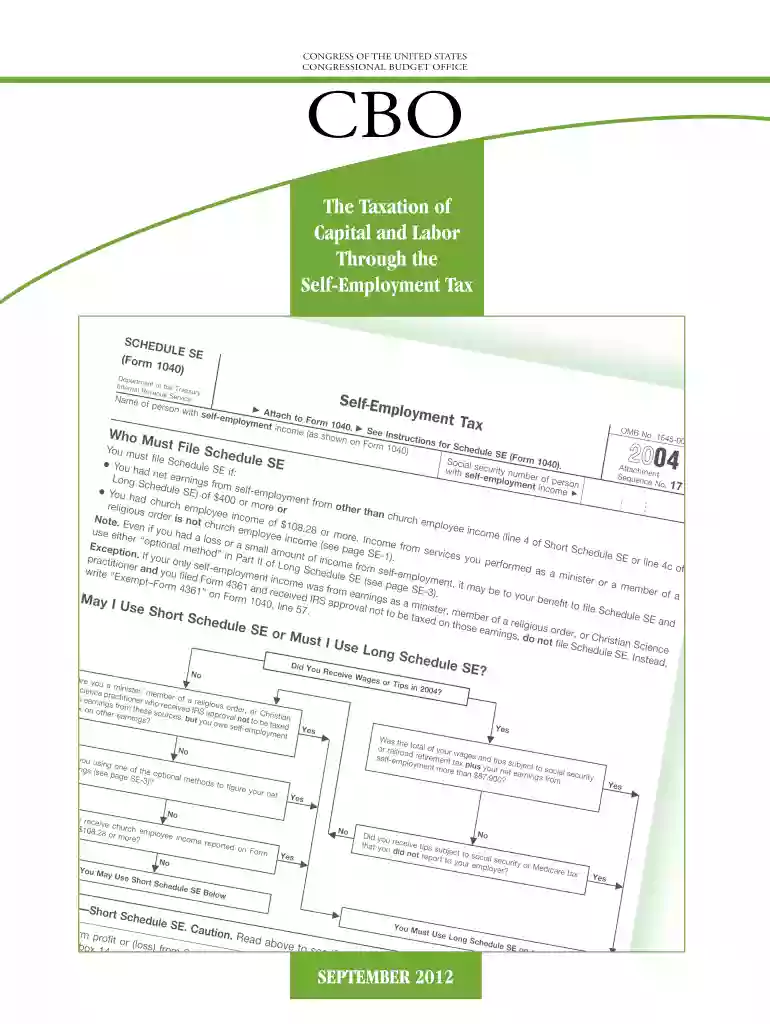
The "pub taxation self employment form" refers to a document used primarily by individuals who are self-employed to report income and calculate taxes owed under the Self-Employment Contributions Act (SECA). This form serves to delineate income received from self-employment endeavors, ensuring compliance with tax regulations specific to independent contractors, freelancers, and small business owners. Unlike traditional employee taxation through the Federal Insurance Contributions Act (FICA), SECA encompasses both labor and capital income, reflecting a broader tax base.
Successfully completing the pub taxation self employment form requires precision and familiarity with one's financial details. Here is a breakdown of the process:
Gather Essential Documents: Collect all necessary financial documents that report income and expenses related to self-employment, including invoices, expense receipts, and income statements.
Calculate Gross Income: Total the income earned through self-employment activities. Typically, you would refer to payments you’ve received from clients for services rendered or products sold.
Deduct Business Expenses: Enumerate and subtract allowable business expenses from your gross income. Common deductions include office supplies, travel costs, and marketing expenses.
Apply the SECA Tax Rate: Calculate the SECA tax based on the net self-employment income. Both employer and employee portions are your responsibility.
Report Net Earnings: Input the net earnings into the designated areas on the form, ensuring all computations align with IRS guidelines.
Submit Form with Tax Return: Timely file the completed form alongside your annual tax return, using either electronic or paper submission methods.
Accurate form completion hinges on the availability of specific documents, which serve to substantiate the financial data entered. Key documents include:
Inaccuracies or omissions in these documents can result in discrepancies or potential audits.
The pub taxation self employment form can be filed through several methods, each offering distinct advantages:
The form serves a broad array of self-employed individuals, including:
Understanding the diverse user base helps tailor advice and foster compliance.


Ensuring adherence to federal tax laws, the form functions as a legal record of a taxpayer's self-employment income and tax obligations.
Penalties for incorrect use or non-compliance underscore the importance of accuracy.
Different self-employment contexts involve varying implications for form usage:
These scenarios assist in tailoring the form to individual financial situations.

Failure to properly file or complete the pub taxation self employment form can result in substantial consequences:
The punitive measures underscore the essential nature of following form procedures accurately and timely.
We've got more versions of the pub taxation self employment form form. Select the right pub taxation self employment form version from the list and start editing it straight away!
| Versions | Form popularity | Fillable & printable |
|---|---|---|
| 2012 | 4.8 Satisfied (111 Votes) |
At DocHub, your data security is our priority. We follow HIPAA, SOC2, GDPR, and other standards, so you can work on your documents with confidence.