
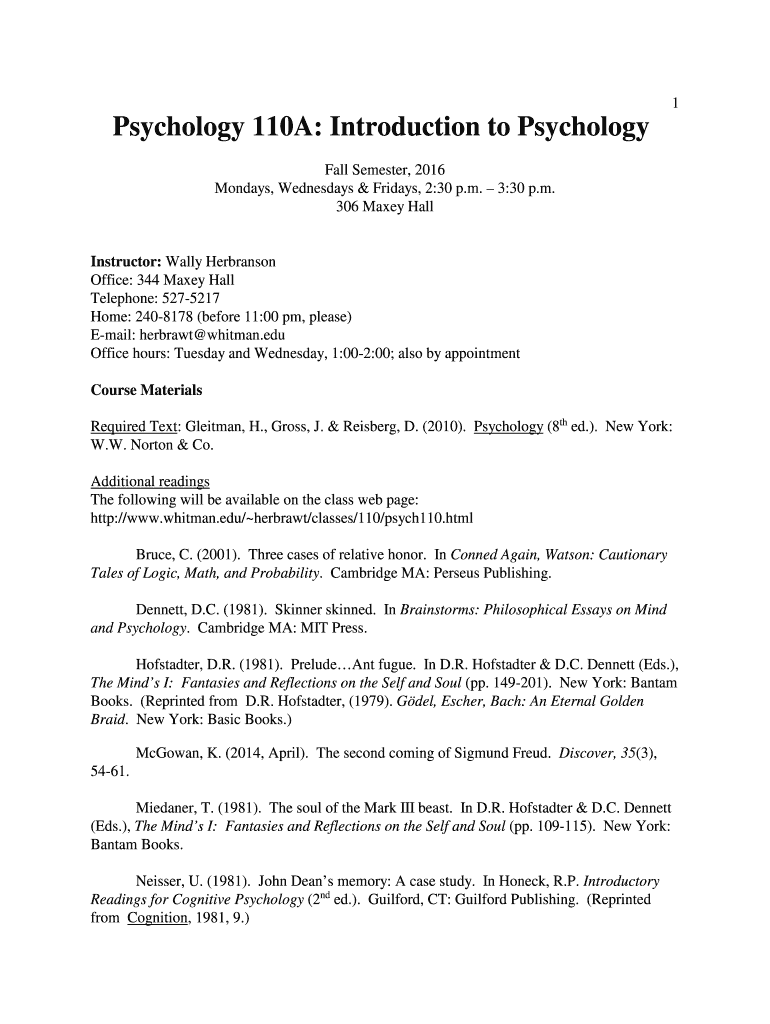







Definition and Purpose of Psychology 110A: Introduction to Psychology
Psychology 110A: Introduction to Psychology serves as a foundational course that offers students a comprehensive overview of psychology. It is designed to introduce the core concepts, theories, and methods used in the field of psychology. The course typically covers a wide range of topics, including cognitive processes, behavioral patterns, emotional responses, and social dynamics. Its primary aim is to equip students with a thorough understanding of psychology as a scientific discipline and to encourage them to explore specific areas of interest within the field.
How to Use the Psychology 110A: Introduction to Psychology Course Syllabus
The course syllabus for Psychology 110A: Introduction to Psychology acts as a roadmap, detailing what students can expect throughout the semester. It includes information about class timings, instructor contact details, the required textbooks, additional readings, and an overview of course objectives. Students should regularly consult the syllabus to track their progress and ensure they are meeting all requirements.
- Detailed weekly topics outline
- Grading criteria explanation
- Schedule of exams and assignments
- Attendance policies and participation requirements
Steps to Complete Psychology 110A: Introduction to Psychology Assignments
Completing assignments in Psychology 110A involves several steps, ensuring students meet academic expectations while deepening their understanding of the material.
- Review Assignment Guidelines: Read through the assignment requirements thoroughly.
- Conduct Research: Use required texts and supplementary materials for comprehensive insight.
- Draft & Organize: Prepare an outline before writing full responses or reports.
- Cite Sources Properly: Ensure all references follow the required academic format.
- Submit on Time: Use the prescribed submission method to meet deadlines.
Key Elements of the Psychology 110A: Introduction to Psychology Course
The key elements of the course encompass the integral components that form the structure and content of the course. They provide a scaffold for learning and assessment.
- Core Concepts: Introduction to fundamental psychological theories and methodologies.
- Practical Assignments: Opportunities for students to apply theories in real-world contexts.
- Classroom Discussions: Collaborative exploration of psychological phenomena.
- Instructor Feedback: Guidance throughout assignments and projects for improvement.
Examples of Using Psychology 110A: Introduction to Psychology in Practical Scenarios
Real-world application of classroom learning is emphasized in Psychology 110A, providing students with a practical framework to understand psychological principles.
- Case studies evaluating human behavioral patterns
- Experiments that illustrate psychological theories in action
- Group projects simulating psychological research processes
Who Typically Enrolls in the Psychology 110A: Introduction to Psychology Course
The course attracts a diverse group of students from various academic backgrounds. Understanding the typical audience helps personalize teaching methods and course material.
- Undergraduate Students: Often fulfilling general education requirements.
- Prospective Psychology Majors: Exploring the discipline as a potential field of study.
- Non-Psychology Majors: Interested in the intersection of psychology with other disciplines.
Required Materials for the Psychology 110A: Introduction to Psychology Course
Course success heavily depends on the availability and use of specified materials that support learning objectives.
- Textbook: The primary material needed for course comprehension.
- Supplementary Resources: Additional readings from academic journals and online sources.
- Digital Tools: Software platforms for assignments and communication.
Important Terms and Concepts in Psychology 110A: Introduction to Psychology
Familiarity with essential terms is crucial for understanding the nuanced language of psychology. Key terms are regularly discussed in lectures and required readings.
- Cognition: Mental processes involved in gaining knowledge and understanding.
- Behaviorism: The theory that all behaviors are acquired through conditioning.
- Neuroscience: The study of how the brain and the nervous system impact behavior and cognitive functions.
State-Specific Rules for Psychology 110A: Introduction to Psychology
While the core content of the course remains consistent, certain state-specific rules or institutional guidelines may influence how the course is conducted.
- Educational Standards Compliance: Adherence to regional accreditation requirements.
- Institutional Policies: Specific guidelines that may vary by university or college.
- Cultural Considerations: Adaptations reflecting the diverse demographic backgrounds of students.




