




01. Edit your substitution request form online
Type text, add images, blackout confidential details, add comments, highlights and more.

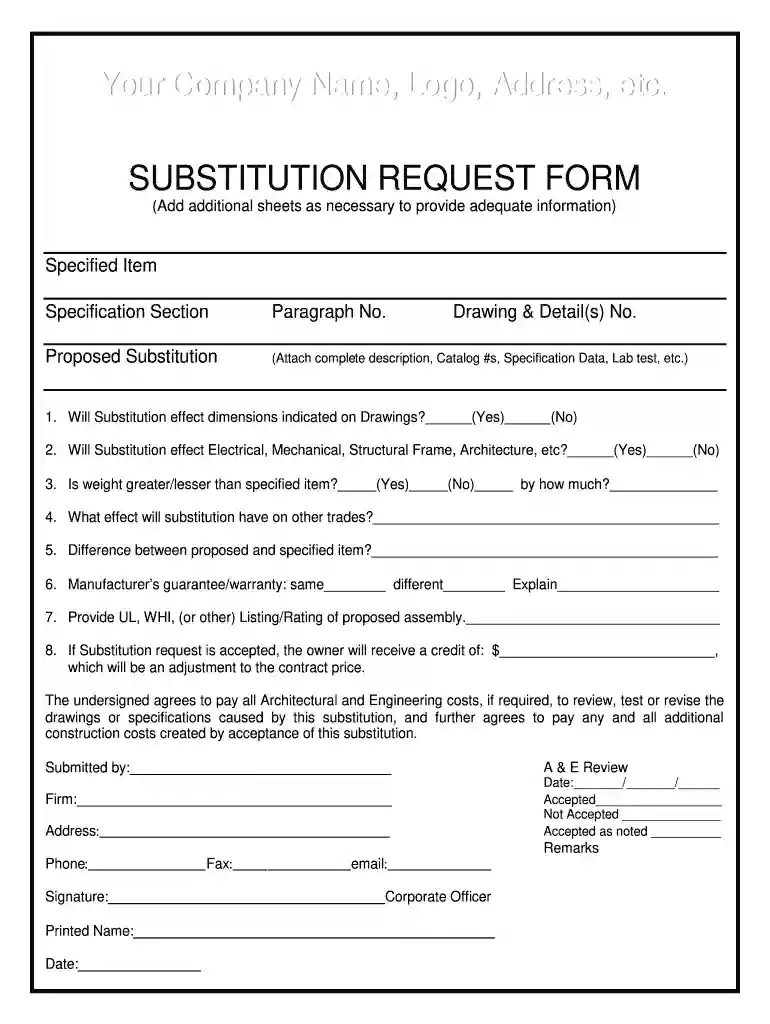
Type text, add images, blackout confidential details, add comments, highlights and more.

Draw your signature, type it, upload its image, or use your mobile device as a signature pad.

Send substitution form via email, link, or fax. You can also download it, export it or print it out.
A substitution request form is a formal document used in various industries, particularly in construction and project management. It allows contractors or stakeholders to propose changes to specific items in a project, detailing the reasons for the substitution and its implications. The form is essential for ensuring that any changes are documented properly, maintaining compliance with project specifications, and protecting the interests of all parties involved.
Completing a substitution request form involves several steps to ensure clarity and compliance with project specifications. Follow this outline for proper form completion:
The substitution request form serves as a legal record in construction projects. It is crucial for compliance with contractual obligations and for establishing transparency in changes to specifications. Proper execution of this form can help avoid disputes by ensuring all parties agree to the proposed changes and their effects.
Utilizing a substitution request form is common in several scenarios within construction and project management:
In the construction of a school, a contractor might submit a substitution request form proposing a different type of window that is more energy efficient. This would involve outlining the benefits, costs, and compliance with energy codes, thereby ensuring all parties, including school administrators, have visibility into the decision-making process.
Familiarizing oneself with key terminology associated with the substitution request form is vital for effective communication and compliance:
By understanding these terms, stakeholders can navigate the process of submitting and responding to substitution requests more effectively, ensuring all changes are accurately captured and communicated.
We've got more versions of the substitution request form form. Select the right substitution request form version from the list and start editing it straight away!
| Versions | Form popularity | Fillable & printable |
|---|---|---|
| 2009 | 4.7 Satisfied (61 Votes) |
At DocHub, your data security is our priority. We follow HIPAA, SOC2, GDPR, and other standards, so you can work on your documents with confidence.
Contractor and Subcontractor have investigated the proposed substitution and hereby represent that: A. They have personally investigated the proposedRead more
Proposed substitution has been fully investigated and determined to be equal or superior in all respects to specified product. Same warranty will be furnishedRead more
SUBSTITUTION. REQUEST. FORM. Project: To: Re: Substitution Request Number: From: Date: A/E Project Number: Contract For: Specification Title: DescriptionRead more


