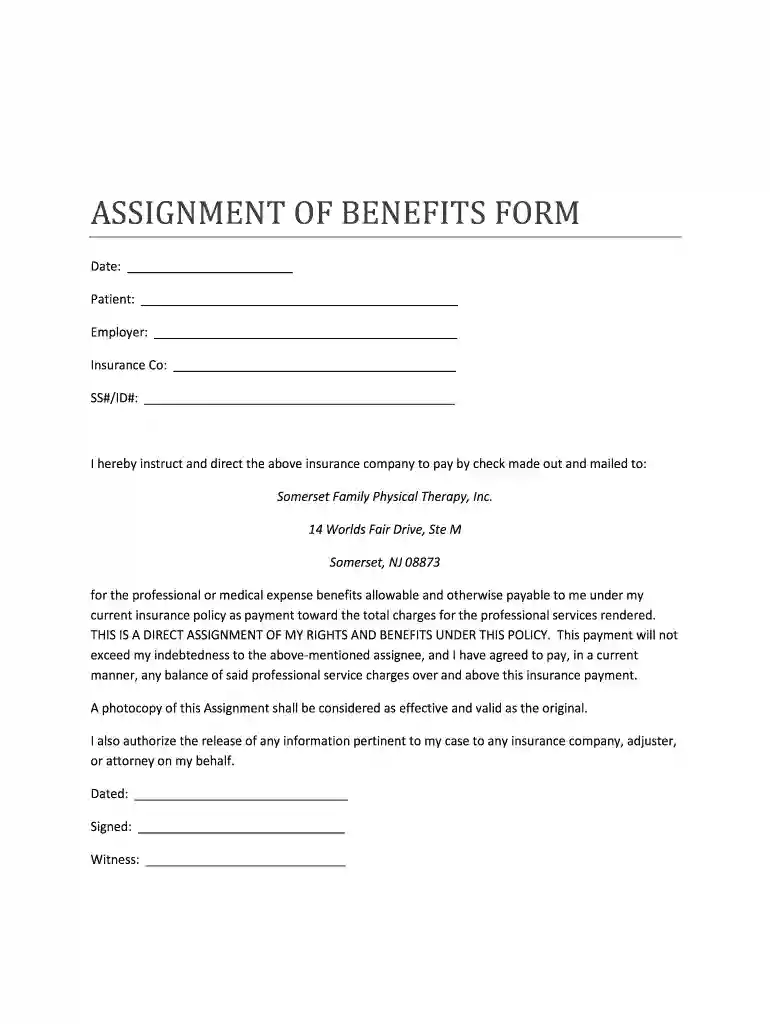
Definition and Importance of the Assignment of Benefits Form NJ
The Assignment of Benefits Form (AOB) in New Jersey is a crucial legal document that grants a healthcare provider the authority to bill and receive payment directly from an insurance company on behalf of the patient. It plays a significant role in streamlining the payment process and ensuring that patients do not have to manage the complexities of insurance claims themselves.
Purpose of the Assignment of Benefits Form
- Direct Payment: The form allows healthcare providers to receive direct payment from insurers, which can expedite the payment process and reduce administrative burdens for patients.
- Patient Convenience: By assigning benefits, patients can focus on their health and treatment without worrying about submitting claims to their insurance provider.
- Clear Documentation: The form provides clear documentation of the agreement between the patient and the provider, helping to prevent issues that may arise regarding payment disputes.
How to Use the Assignment of Benefits Form NJ
Using the Assignment of Benefits Form effectively requires understanding its components and proper execution.
Steps to Utilize the Assignment of Benefits Form
- Obtain the Form: First, acquire the correct version of the Assignment of Benefits Form NJ, typically available from the healthcare provider or online through relevant legal or health websites.
- Fill Out Patient Information: Include personal details such as the patient's name, contact information, policy number, and insurance company name.
- Sign and Date: The patient must sign the document to authorize the assignment. This signature confirms their agreement for the provider to access insurance benefits directly.
- Submit the Form: The completed form should be submitted to the healthcare provider, who will then handle the submission to the insurance company.
Key Considerations
- Always ensure the form is complete and accurate to avoid processing delays.
- Keep a copy of the signed form for personal records.
Legal Use of the Assignment of Benefits Form NJ
The Assignment of Benefits Form NJ operates under specific legal guidelines that govern its use in healthcare and insurance billing.
Legality and Compliance
- The AOB is recognized under New Jersey law and is compliant with federal regulations like the Health Insurance Portability and Accountability Act (HIPAA), ensuring patient privacy and security.
- It is essential that both the provider and the patient understand the implications of signing this document, especially regarding any limitations it may impose on the patient’s rights to pursue additional claims or remedies against the insurance company.
Important Terms Related to the Assignment of Benefits Form NJ
Understanding the terminology associated with the Assignment of Benefits Form can help clarify its use and importance.
Key Terms Defined
- Assignment of Benefits (AOB): A legal arrangement where a patient transfers the right to receive insurance benefits to a healthcare provider.
- Provider: The healthcare professional or facility that renders service and who will receive payment.
- Insurer: The insurance company responsible for processing claims and disbursing benefits.
- Patient: The individual receiving medical treatment, whose insurance policy is being accessed through the AOB.
Relevant Examples of Using the Assignment of Benefits Form NJ
Real-world examples enhance understanding of how the Assignment of Benefits Form operates in practice.
Case Scenarios
- Scenario 1: A patient undergoing physical therapy submits an AOB to Somerset Family Physical Therapy, allowing them to bill the insurer directly. This reduces the paperwork burden on the patient, enabling them to concentrate on recovery.
- Scenario 2: A chiropractor requires payment directly from the patient's insurance for a series of treatments. By having the patient sign the AOB, the chiropractor can expedite payment processing without waiting for the patient to handle claims submission.
State-Specific Rules for the Assignment of Benefits Form NJ
New Jersey has established specific regulations surrounding the use of Assignment of Benefits Forms that both providers and patients should be aware of.
Regulatory Framework
- Patient Rights: In New Jersey, patients have the right to revoke an AOB at any time by providing written notice, thereby releasing their provider from the authority to bill their insurance directly.
- Insurance Acceptance: Not all insurance plans may accept an AOB, so it's crucial for patients and providers to confirm this before submitting the form.
Conclusion of Key Considerations
The Assignment of Benefits Form NJ is a vital tool facilitating financial transactions between healthcare providers and insurance companies, enhancing the patient experience while ensuring compliance with legal standards. Understanding its usage, legal significance, and implications is essential for effective management of healthcare costs.