






Definition and Meaning
Problem definition techniques are systematic strategies used to identify, articulate, and address specific issues or challenges within various contexts, such as engineering, business, or personal decision-making. These techniques help in clarifying the scope and nature of a problem, breaking it down into manageable components, and ensuring that the underlying issue is correctly understood before solutions are developed. This approach aids in avoiding potential misdiagnosis of problems, which can lead to ineffective solutions.
How to Use Problem Definition Techniques
Using problem definition techniques involves a series of structured steps that facilitate a deep understanding of the problem at hand. Users often begin by gathering comprehensive information about the issue, considering context, stakeholders, and any known variables that could influence outcomes. Tools such as mind mapping, the Five Whys, or the Duncker Diagram can be employed to dissect the problem further, identifying its root causes or contributing factors. This phase is critical for ensuring that any forthcoming solutions are targeted and relevant.
- Mind Mapping: Visualize the problem and associated factors for a broader perspective.
- Five Whys: Drill down to the root cause by repeatedly asking "why."
- Duncker Diagram: Explore different approaches to resolving the problem by examining current and desired states.
Steps to Complete Problem Definition Techniques
To effectively utilize problem definition techniques, follow these detailed steps:
- Identify the Problem: Clearly state what the issue is. Establish the problem's boundaries and context.
- Gather Relevant Information: Collect data and insights from stakeholders, documents, and previous findings related to the problem.
- Analyze the Problem: Use techniques such as the Five Whys or Fishbone diagrams to identify root causes and contributing factors.
- Restate the Problem: Articulate the problem in different ways to ensure understanding among all stakeholders.
- Validate the Problem Definition: Ensure that all involved parties agree on the problem statement to foster a unified approach to finding solutions.
Key Elements of Problem Definition Techniques
Several core components are integral to problem definition techniques:
- Clarity: Problems need to be articulated clearly to avoid ambiguity.
- Comprehensiveness: Consider all relevant factors and variables influencing the problem.
- Stakeholder Involvement: Engaging stakeholders who are affected by the problem helps in capturing diverse perspectives.
- Iterative Review: Revisiting and refining the problem statement as new information emerges or circumstances change.
Who Typically Uses Problem Definition Techniques
Problem definition techniques are employed by professionals across various fields, including:
- Engineers: To address technical challenges and innovations.
- Business Analysts: For operational improvements and strategic planning.
- Healthcare Professionals: In diagnosing patient issues or improving care processes.
- Educators: To resolve academic or institutional challenges.
Examples of Using Problem Definition Techniques
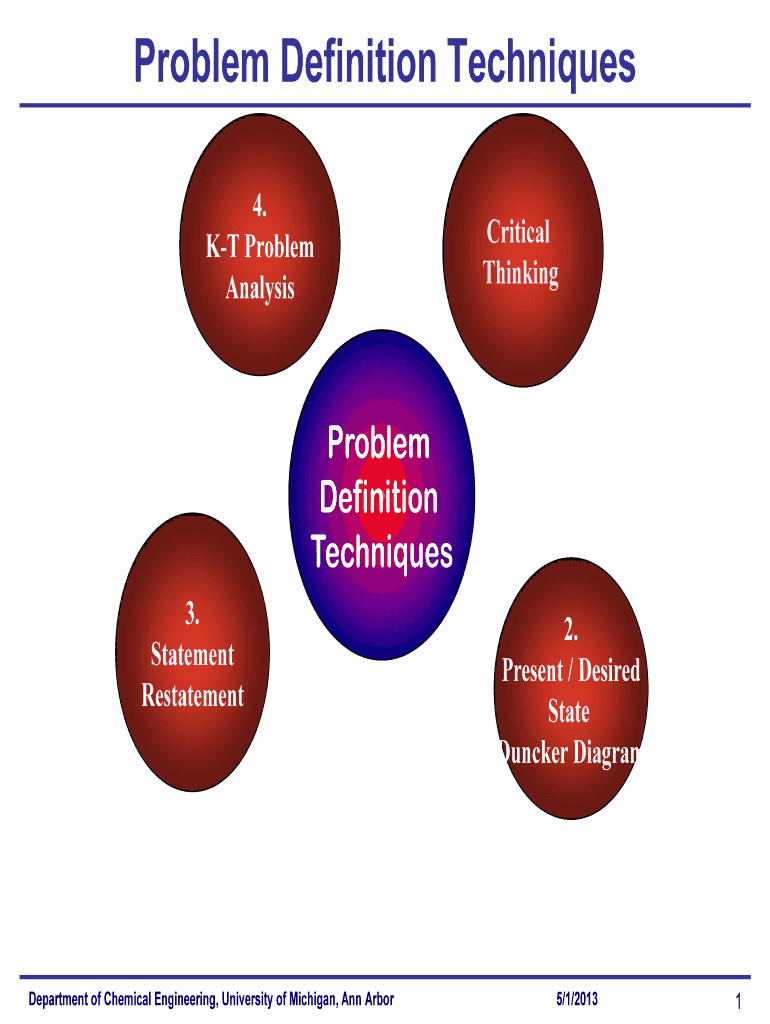
Providing practical insight into the application of problem definition techniques, a case study from the University of Michigan's Department of Chemical Engineering illustrates their use. Here, techniques like the Duncker Diagram and K-T Problem Analysis have been pivotal in dissecting complex engineering challenges. Another example involves 'Toasty O’s' cereal, where defining whether the speed to market or freshness was the core issue led to more effective strategies.
Important Terms Related to Problem Definition Techniques
Familiarity with specific terms can enhance the understanding of problem definition techniques:
- Root Cause Analysis: A method for identifying the underlying basis of a problem.
- SWOT Analysis: Evaluates Strengths, Weaknesses, Opportunities, and Threats related to a problem.
- Brainstorming: A group creativity technique leveraged to generate a variety of solutions.
Why Should You Use Problem Definition Techniques
Engaging problem definition techniques offers several advantages:
- Precision in Problem Solving: Correctly identifying the issue leads to more effective solutions.
- Resource Optimization: Prevents wasted efforts on misaligned solutions, saving time and resources.
- Increased Innovation: Encourages creative thinking by thoroughly exploring the problem landscape.
- Stakeholder Alignment: Ensures all parties have a shared understanding and agreement on the problem, facilitating cooperative resolution.