
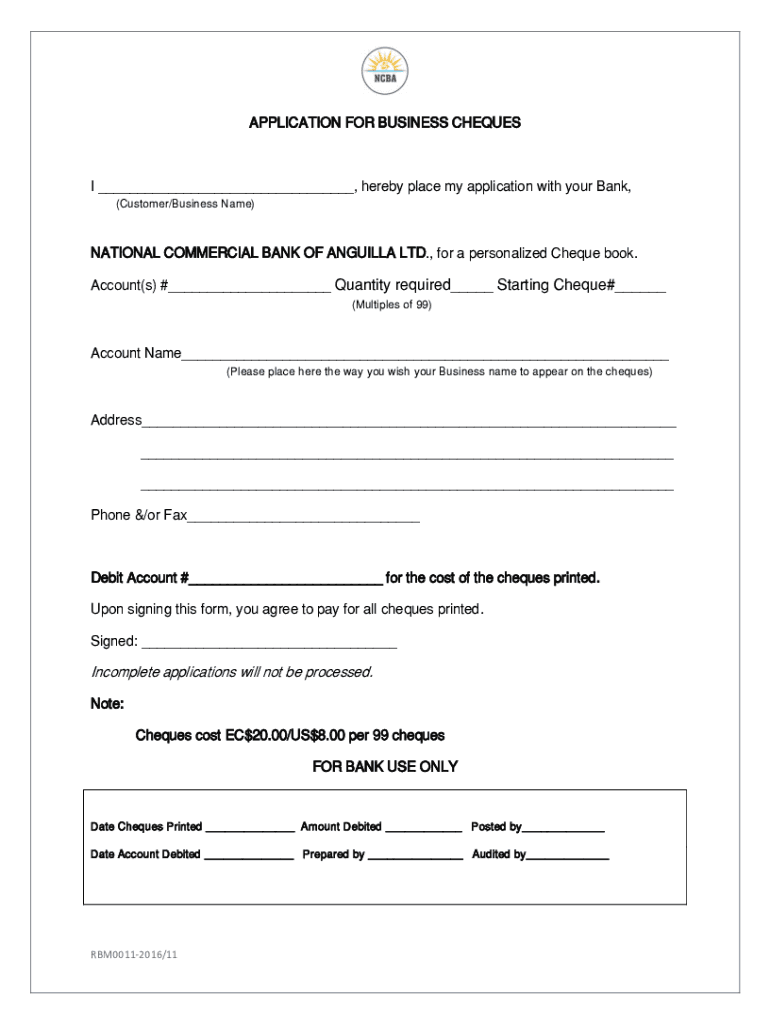







Definition & Meaning
A Cheque Book Request Letter is a formal document used by individuals or businesses to formally request the issuance of a new cheque book from their banking institution. This letter typically includes necessary information such as the account holder’s business name, account details, the number of cheque books requested, and an acknowledgment of any applicable fees associated with the request. This document is essential in prompting the bank to process and deliver the requested cheque book, ensuring the account holder can continue to manage their financial transactions efficiently.
How to Use the Cheque Book Request Letter
The Cheque Book Request Letter is utilized by submitting it to the bank where an individual or business holds an account. To use this document effectively, start by downloading the Word format template, if available, to simplify insertion of your specific details. Ensure that you accurately fill in all required fields, including personal or business information, the desired quantity of cheque books, and any additional instructions. After completing the letter, review it thoroughly to ensure all information is correct and no sections are left incomplete, as this might delay processing. Submit the letter directly to the bank either via mail, online submission, or by visiting the branch, depending on what options are provided by your banking institution.
Steps to Complete the Cheque Book Request Letter
-
Download the Template: Acquire the Word format template for the Cheque Book Request Letter from a trusted source.
-
Fill in Personal Information: Start by entering your full name or your business name at the top of the document, followed by your contact details.
-
Account Information: Provide your bank account number and branch details to ensure the bank can verify your account and process the request accurately.
-
Specify Cheque Book Quantity: Clearly state the number of cheque books you wish to receive. Specify any particular requirements, such as the number of cheques per book.
-
Agree to Terms: Include a statement acknowledging any fees associated with cheque book issuance and your agreement to pay these.
-
Review and Sign: Thoroughly review the letter for any inaccuracies. Sign the document, date it, and ensure it's legible.
-
Submission: Determine the preferred method of submission as proposed by the bank, such as mailing the letter, submitting it online, or handing it in at the local branch.
Key Elements of the Cheque Book Request Letter
- Account Holder Information: Includes name, contact details, and account number for verification.
- Request Details: The specific number of cheque books requested and any customization required.
- Acknowledgment of Fees: A statement confirming the understanding and acceptance of any charges applied for the cheque book issuance.
- Signature and Date: Signature of the account holder to authenticate the request and the date of submission.
- Additional Instructions: Any other instructions or requests tied to the cheque book usage or delivery method.
State-Specific Rules for the Cheque Book Request Letter
Though generally uniform, rules regarding cheque book requests can slightly differ based on state regulations. Some states may enforce specific consumer protection laws that banks must adhere to when issuing cheque books, such as notification requirements for any fee changes. It is prudent for customers to verify if their state has any distinct regulations or consumer rights regarding banking services which might impact the request process.
Who Typically Uses the Cheque Book Request Letter
The primary users of the Cheque Book Request Letter are businesses and individual account holders who maintain an active checking account and need cheque books for transactions. Businesses, especially, frequently require cheque books for managing vendor payments, payroll, and other expenditures that necessitate tracking via paper cheques. Additionally, individuals who prefer traditional methods of payment over digital banking might use this letter to ensure their cheque supply is uninterrupted.


Legal Use of the Cheque Book Request Letter
The Cheque Book Request Letter serves a legal function by providing a formal and traceable method for customers to request financial services from their bank. By using this document, the account holder establishes clear communication and a request trail, which can be critical in resolving disputes or clarifications related to the service request. Moreover, the acknowledgment of terms and fees within the letter ensures the account holder's consent and understanding of the banking services, protecting both the bank and the customer legally.
Examples of Using the Cheque Book Request Letter
Consider a small business that frequently issues payments to suppliers in cheque form. The business can use a Cheque Book Request Letter to order new cheque books well before their supply runs out. Or, an example from an individual perspective could be a retired person who prefers managing personal finances through cheques instead of digital transactions, ensuring continual access by regularly submitting the request letter to their bank.
Business Types That Benefit Most from the Cheque Book Request Letter
Businesses such as retail stores, service providers, and contract-based enterprises benefit significantly from having access to cheque books, as they often deal with various vendors and contractors requiring cheque payments. Additionally, non-profit organizations that handle donations may also find cheque books useful for transparent and traceable fund distribution. Businesses can streamline financial administration and maintain a clear financial record with cheque books easily accessible through documented requests.




