






Definition & Core Features of the Driver Vehicle Inspection Report Form
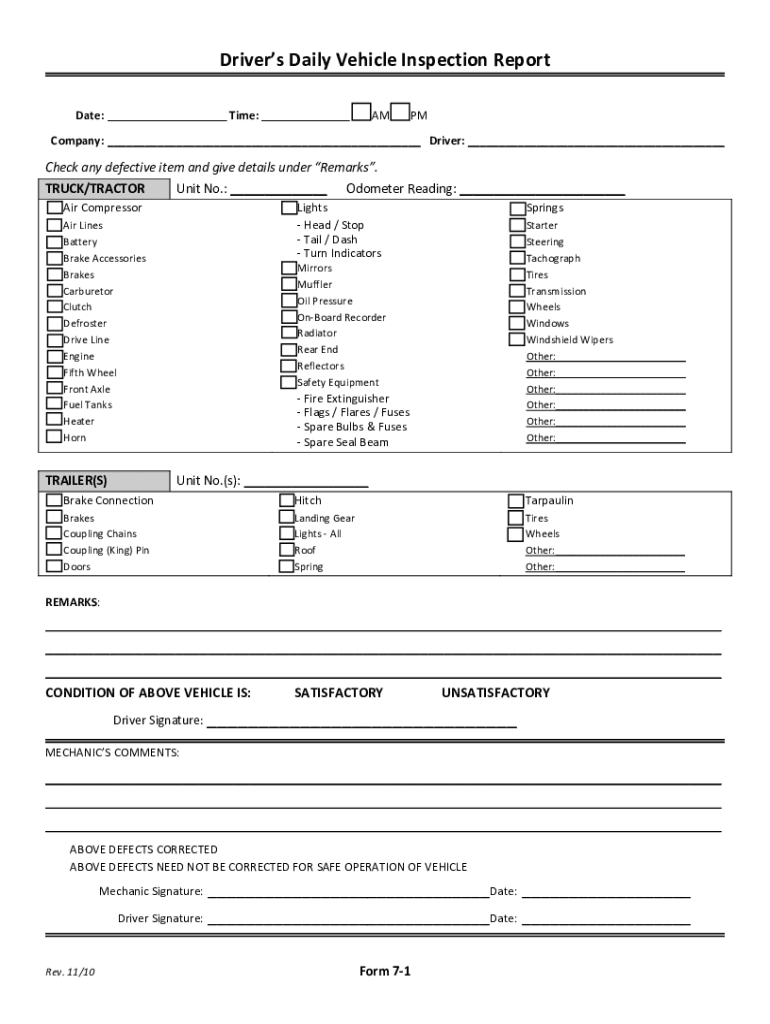
The Driver Vehicle Inspection Report (DVIR) form is essential for ensuring the safety and operational readiness of vehicles. It mandates that drivers assess and note the condition of various truck and trailer components, documenting any defects or issues that could affect vehicle performance or safety. This thorough check includes tires, brakes, lights, and the steering mechanism, among others. The DVIR serves not only as a vehicle maintenance tool but also as a compliance document that satisfies regulatory requirements in the transportation industry.
Steps to Complete the Printable Driver Vehicle Inspection Report Form
-
Initial Inspection: Begin by examining all vehicle facets as prescribed by the DVIR, checking each part systematically to ensure it meets safety standards.
-
Document Defective Items: If any defects are discovered, populate the defective items section with detailed descriptions.
-
Assess Overall Condition: After inspecting individual components, provide an assessment of the vehicle's overall condition.
-
Add Remarks: Include any additional remarks that might not fit into other sections of the form, such as potential repairs or maintenance needs.
-
Sign the Report: Ensure that both the driver and the mechanic, if involved, sign off on the report. The signatures confirm that necessary repairs have been completed or that the vehicle is safe to operate despite identified defects.
Key Elements of the Printable Driver Vehicle Inspection Report Form
-
Vehicle Information: Includes fields for the vehicle identification number, make, model, and license number.
-
List of Components: Covers all critical truck and trailer parts that require inspection, such as brakes, lights, and mirrors.
-
Defect Reporting Section: A dedicated area for listing discovered defects or issues.
-
Remarks: A section for additional notes and observations regarding vehicle condition or maintenance needs.
-
Signatures: The report requires driver and possibly mechanic signatures for validation.
-
Corrective Actions: Space for noting any corrective measures taken or needed to address reported defects.
Who Typically Uses the Printable Driver Vehicle Inspection Report Form
This form is predominantly utilized by commercial vehicle drivers and fleet operators. It plays a critical role in daily operations for industries relying on logistics and transportation services. Both individual owner-operators and large trucking companies use the DVIR to comply with safety standards set by regulatory bodies like the Federal Motor Carrier Safety Administration (FMCSA).


Legal Use and Compliance of the Printable Driver Vehicle Inspection Report Form
The DVIR is a legal requirement under United States regulations, specifically mandated by the FMCSA to ensure road safety and vehicle integrity. Truck drivers and fleet operators must complete and retain this report as part of their operational records. Compliance helps in avoiding penalties and ensures that any detected vehicle issues are addressed without delay, maintaining the safety of the vehicle and thereby the safety of public roadways.
Why Use the Printable Driver Vehicle Inspection Report Form
Using the DVIR is crucial for several reasons:
- Safety: Detecting mechanical issues early prevents accidents on the road.
- Regulatory Compliance: It fulfills legal obligations required by transportation and safety authorities.
- Maintenance Records: Provides documented evidence of vehicle maintenance and inspection activities.
- Operational Efficiency: Ensures vehicles are in optimal condition, reducing downtime and costly repairs due to neglected maintenance.
State-Specific Rules for the Printable Driver Vehicle Inspection Report Form
While federal guidelines provide a broad framework, individual states may have varying requirements regarding the DVIR. For instance, specific states might necessitate additional documentation or stricter compliance checks based on regional laws. Operators should consult their state’s Department of Transportation for any additional requirements or modifications necessary following state-specific rules.
Digital vs. Paper Version of the Printable Driver Vehicle Inspection Report Form
The DVIR can be managed electronically or completed in a traditional paper format. The digital version offers advantages, such as easy storage, quick access, and seamless integration with fleet management systems. It allows for real-time updates and better collaboration among teams and maintenance personnel, making it more environmentally friendly. Conversely, paper forms may be preferred in scenarios where digital technology is not feasible or during field inspections in remote areas without internet access.