
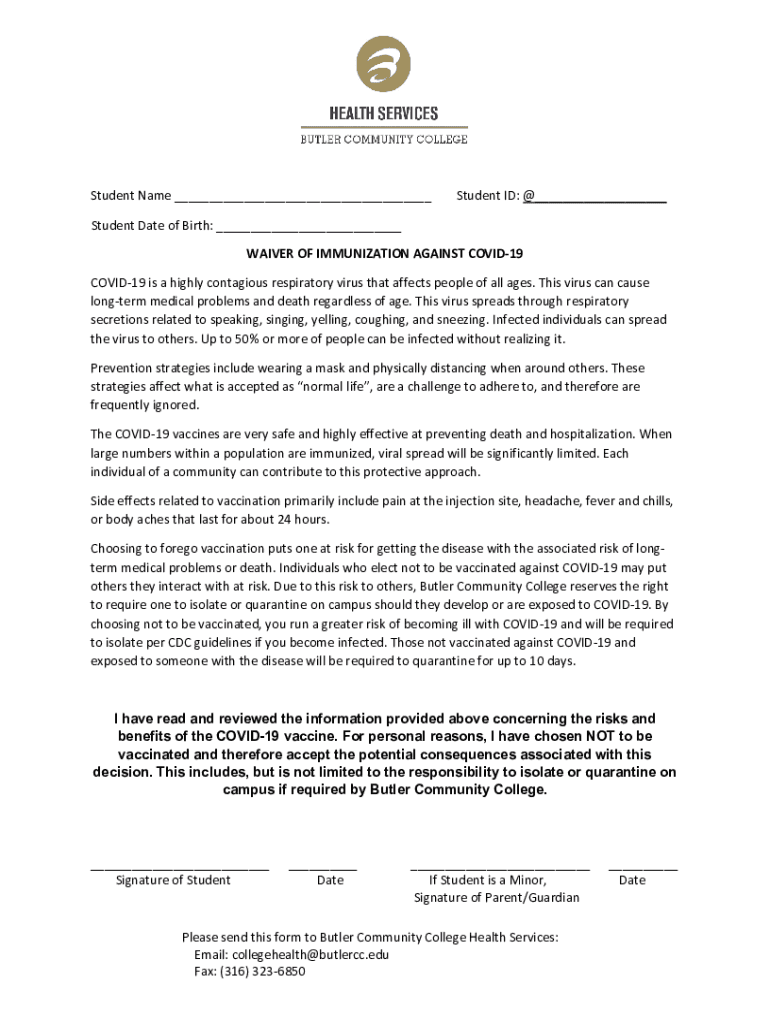







Definition and Purpose of the COVID-19 Vaccination Exemption Form
The COVID-19 Vaccination Exemption Form is a formal document that individuals use to request an exemption from receiving the COVID-19 vaccine. This form is often utilized by institutions such as universities, employers, or health organizations to record the decision of individuals who opt out of vaccination due to medical, religious, or personal reasons. It is critical for users to understand that submitting this form requires acknowledgment of the risks involved in forgoing vaccination, including exposure to the virus and potential transmission to others.
Key Elements Within the Form
- Personal Information: Typically requires name, contact details, and identifying information to validate the identity of the person seeking exemption.
- Reason for Exemption: Individuals must specify whether their exemption is based on medical, religious, or personal grounds and may need to supply additional documentation.
- Acknowledgment of Risk: Individuals must confirm they understand the risks associated with not receiving the COVID-19 vaccine, such as potential health impacts and public health considerations.
- Institutional Consequences: Depending on the organization, there may be specific consequences like mandatory mask-wearing, regular testing, or restricted access to facilities outlined in the form.
How to Obtain the COVID-19 Vaccination Exemption Form
Sources for Accessing the Form
- Educational Institutions: Colleges like Butler Community College may provide the form through their student health services or official website.
- Employers: Organizations often provide forms through human resources departments.
- Healthcare Providers: Some medical centers may give access based on physician recommendations.
Downloading the Form
- Visit the official website of the institution or organization you are associated with.
- Navigate to the health services or forms section.
- Download the form in the supported format, typically PDF for ease of completion and submission.
Steps to Complete the COVID-19 Vaccination Exemption Form
- Fill in Personal Details: Enter your name, address, contact information, and any other required personal details clearly.
- Select Exemption Type: Choose the type of exemption being requested – medical, religious, or personal – and attach any necessary evidence (e.g., medical certificate or religious statement).
- Declare Understanding and Consent: Initial or sign the section that outlines acknowledgment of the risks and institutional requirements.
- Review and Sign: Double-check the form for completeness and accuracy before adding your signature.
Tips for Accurate Completion
- Ensure all sections are filled out completely to avoid delays in processing.
- Attach supporting documentation, especially for medical exemptions where a healthcare provider's note is typically required.
- Sign and date the form as instructed. Unsigned forms may not be processed.
Who Typically Uses the COVID-19 Vaccination Exemption Form


Target Audiences
- Students: Particularly in universities where COVID-19 vaccination might be part of campus health mandates.
- Employees: In workplaces mandating vaccinations but allowing exemptions under specific criteria.
- Specific Populations: Individuals with documented medical conditions preventing vaccination or those holding religious beliefs opposing vaccination.
Example Scenarios
- A university student who is medically unable to receive a vaccine due to a severe allergic reaction may use this form to apply for an exemption from a school mandate.
- An employee whose religious beliefs contradict receiving the vaccine might submit this form to comply with workplace policies while avoiding vaccination.
Legal Use and Implications of the COVID-19 Vaccination Exemption Form
Compliance and Legal Framework
- ESIGN Act Compliance: Digital versions submitted online are considered legally valid if conforming to electronic signature laws.
- State Regulations: Some states may have specific considerations or additional requirements regarding exemptions that must be observed.
Penalties for Non-Compliance
- Inaccurate or fraudulent completion of the form could lead to disciplinary actions by the institution, such as fines or suspension.
- Legal consequences could arise from falsifying medical documents or religious statements to obtain an exemption unjustly.
State-Specific Rules for the COVID-19 Vaccination Exemption Form
Differing Requirements
- Medical Evidence: Some states may require a doctor's certification to prove medical necessity, whereas others may accept a signed statement from the individual.
- Religious Exemptions: States can have varying definitions of what constitutes a valid religious exemption, impacting the ease of exemption approval.
Important Considerations
- Always reference local health department guidelines to ensure compliance with geographic-specific mandates.
- Regulations frequently change in response to public health data, so staying updated is crucial for form applicants.
Digital vs. Paper Versions of the Form
Advantages of Digital Submission
- Convenience: It allows individuals to complete and submit forms from any location, reducing the need for physical visits.
- Efficiency: Digital forms are typically processed faster than paper forms, allowing for quicker responses from institutions.
Paper Form Considerations
- For those without reliable internet access, paper forms offer a viable alternative but may require more time due to mail processing delays.
Software Compatibility and Workflow Integration
Tools for Completion
- Document Platforms: Software like DocHub supports importing, editing, and signing PDF forms directly from platforms like Google Drive, enhancing user experience.
- Cloud Integration: Saves time by enabling easy transfer between platforms and secure storage, ensuring documents stay organized and easily retrievable.
These comprehensive insights into the COVID-19 Vaccination Exemption Form cater specifically to individuals needing detailed information on obtaining, completing, and understanding the form's implications within the U.S. context.




