






Definition and Meaning
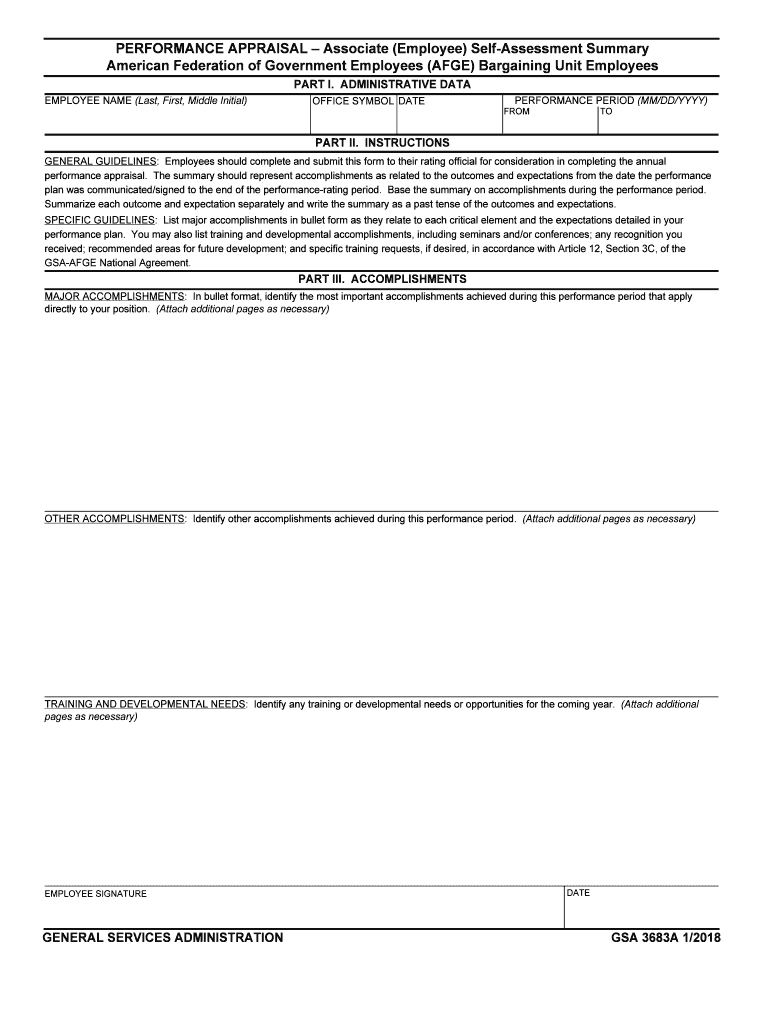
The PERFORMANCE APPRAISALAssociate (Employee) Self is a tool used by employees to conduct a self-assessment as part of their annual performance reviews. Typically, this form allows employees to reflect on their contributions, skills development, and areas for improvement over the past year. It is commonly used within organizations to align employee performance with organizational goals, providing a basis for discussions between employees and supervisors.
Key Aspects
- Objectives: The form focuses on summarizing key accomplishments, training undertakings, and future developmental needs.
- Alignment with Performance Plans: It ensures that employee self-assessments correspond with pre-established performance objectives.
- Employee Empowerment: By encouraging self-assessment, employees gain a voice in their performance appraisal process, fostering a sense of ownership over their professional growth.
How to Use the PERFORMANCE APPRAISALAssociate (Employee) Self
Employees should approach the form candidly, providing an honest evaluation of their performance. Follow these steps for effective use:
- Gather Information: Compile relevant data, including past performance reviews, feedback from peers and supervisors, and personal records of achievements.
- Review Objectives: Closely examine the initial performance objectives set at the beginning of the appraisal period.
- Detail Achievements: Clearly articulate each significant achievement, illustrating how these contributions met or exceeded expectations.
- Identify Areas for Growth: Highlight any areas where improvements were identified; note strategies for addressing these in future performance cycles.
- Future Development: Outline personal development goals, such as training courses or skill enhancement areas.
Tips for Completeness
- Contextual Examples: Use specific examples to highlight achievements.
- Quantitative Data: Include metrics or KPIs wherever possible to support claims.
- Balanced View: Offer insights into both successes and challenges candidly.
Key Elements of the PERFORMANCE APPRAISALAssociate (Employee) Self
Core Components
-
Personal Achievements: List significant milestones and contributions.
-
Skill Development: Include completed training sessions or newly acquired competencies.
-
Feedback Consideration: Incorporate feedback received during the year into your assessment.
-
Development Plans: Create an outline for future learning and growth areas.
-
Performance Metrics: Provide any quantified achievements, such as sales numbers or successfully completed projects, that demonstrate your impact.
Steps to Complete the PERFORMANCE APPRAISALAssociate (Employee) Self
To complete the form effectively, employees should follow a structured process:
- Prepare in Advance: Gather all necessary documentation and review your performance over the appraisal period.
- Draft Initial Thoughts: Jot down initial thoughts on key achievements and areas for growth.
- Self-Assessment: Complete the formal sections of the form, ensuring each response is detailed and reflective.
- Solicit Feedback: Obtain feedback from colleagues or mentors to enhance objectivity.
- Revise and Finalize: Review the form for completeness and clarity, adjusting any areas as needed.
- Submit: Deliver the form according to corporate guidelines, ensuring submission by any set deadlines.
Why Should You Use the PERFORMANCE APPRAISALAssociate (Employee) Self
Using the PERFORMANCE APPRAISALAssociate (Employee) Self form provides several benefits:
- Self-Reflection: Promotes introspection about one's performance and contributions.
- Performance Tracking: Ensures a documented record of annual achievements and goals.
- Goal Alignment: Aligns individual objectives with organizational strategy and goals.
- Professional Growth: Identifies opportunities for development and continued career growth.
Advantages for Employers
- Engaged Employees: Encourages active participation in the appraisal process, leading to greater employee engagement.
- Objective Evaluation: Facilitates a balanced, well-rounded evaluation process.
Important Terms Related to PERFORMANCE APPRAISALAssociate (Employee) Self
Glossary of Terms
- Self-Assessment: The process by which employees evaluate their own performance.
- Performance Objectives: Pre-determined goals that an employee aims to achieve during a specific period.
- Development Plan: A strategic outline of skills and competencies an employee plans to acquire.
- Key Performance Indicators (KPIs): Quantifiable measurements used to evaluate the success of an individual in achieving performance targets.
Obtaining the PERFORMANCE APPRAISALAssociate (Employee) Self
Employees who wish to use this form should take the following steps:
- Request from HR: Contact the human resources department for the official form.
- Digital Access: If available, download from the company’s intranet or document management system.
- Consult Supervisors: Inquire with supervisors or managers to ensure that you have the correct version of the form.
Format Considerations
- Paper Version: Available for traditional documentation methods.
- Digital Version: Editable format typically provided to integrate with existing document platforms like DocHub.
Who Typically Uses the PERFORMANCE APPRAISALAssociate (Employee) Self


Target Users
-
Employees: Used by individual staff members engaging in self-evaluation.
-
Supervisors: Often reviewed by line managers as part of the employee performance evaluation process.
-
HR Professionals: Utilizes these forms for organizational performance assessments.
-
Organizations: Widely adopted in corporate environments, especially where structured performance management processes are in place.
Examples of Using the PERFORMANCE APPRAISALAssociate (Employee) Self
Consider the following scenarios:
- Junior Developer: Completes a self-assessment documenting progress on coding skills, providing a direct comparison with prior appraisal periods to showcase improvement.
- Sales Professional: Highlights metrics such as sales targets achieved to demonstrate value added to the company through tangible numbers.
- Project Manager: Illustrates successful project deliveries with timelines and resolutions of challenges, supporting professional growth and successful problem-solving skills.
These examples show how the form can benefit employees across various roles, fostering detailed reflection aligned with specific job functions and responsibilities.