
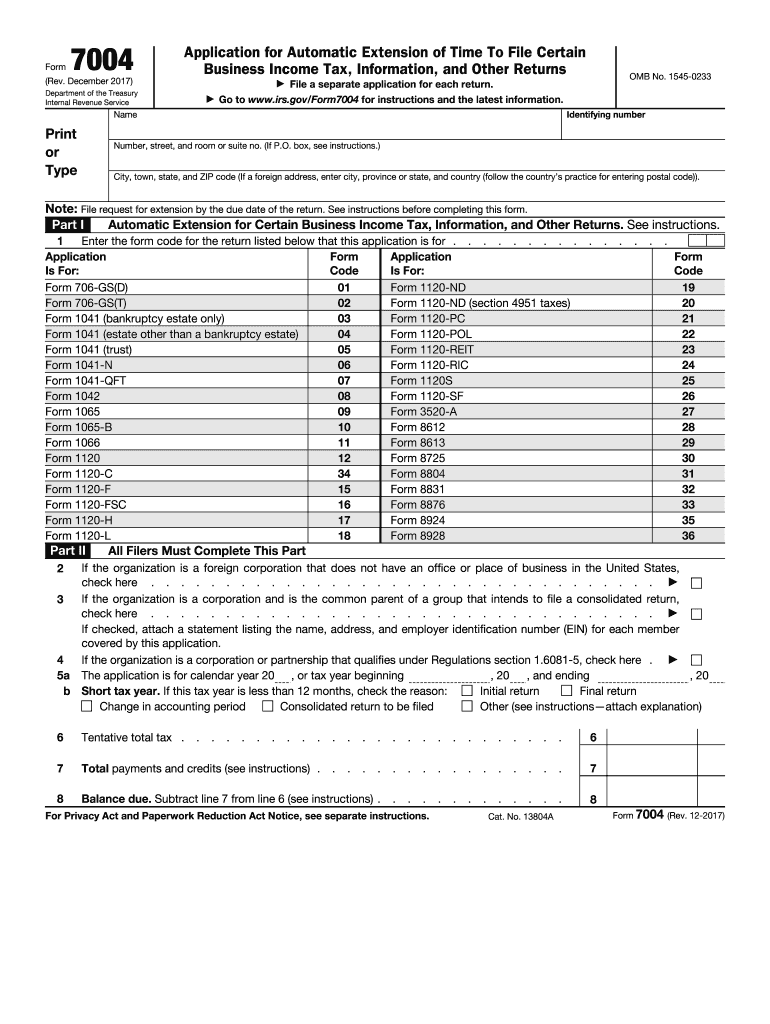







Definition and Purpose of Form 7004
Form 7004, known as the Application for Automatic Extension of Time to File Certain Business Income Tax, Information, and Other Returns, is widely used by U.S.-based businesses seeking an extension to submit various IRS returns. This form enables taxpayers to obtain an automatic extension for several business income tax returns and other related forms, allowing businesses additional time to ensure accurate completion of their tax obligations. Notably, filing Form 7004 only extends the filing deadline and does not extend the time to pay any taxes owed.
Usage of Form 7004 in Tax Planning
Businesses can strategically utilize Form 7004 as a part of their financial planning processes. By filing this form, companies can secure additional time to gather necessary documentation and finalize their financial statements. This is especially critical for entities with complex tax situations, as it provides a buffer to address unresolved accounting issues without incurring late filing penalties. It's essential to file Form 7004 no later than the original due date of the tax return for which an extension is sought.
Obtaining Form 7004
Businesses looking to file Form 7004 can easily access it through multiple channels. The IRS website is the primary resource for downloading the form in a PDF format. Taxpayers may also obtain the form using tax preparation software like TurboTax or QuickBooks, which often includes features for direct e-filing. Additionally, forms can be requested via mail by contacting the IRS; however, electronic options are recommended for their speed and convenience.
Steps to Complete Form 7004
-
Identify Taxpayer Information and Tax Year: Enter the business name, address, and Employer Identification Number (EIN). Specify the tax year for which you're seeking the extension.
-
Select Required Tax Form: Indicate the specific tax form number to which the extension applies. Form 7004 covers various returns, so ensure the correct form is selected.
-
Estimate Tax Liability: Provide an estimated calculation of current tax liability for the year in question and record any prepayments or credits applied.
-
Calculate Balance Due: Deduce payments and credits from the estimated tax liability to determine the balance due, if any.
-
Sign and Date: Conclude the process with an authorized signature and the date of completion, certifying the accuracy of information.
Importance of Filing Form 7004
Filing Form 7004 is crucial as it protects businesses from late filing penalties associated with various tax returns. By securing an extension, entities gain the necessary time to ensure their financial documentation is comprehensive and accurate. This is important for maintaining compliance with IRS mandates and preventing errors that might result in future audits.
Typical Users of Form 7004
A variety of business entities utilize Form 7004, including corporations, partnerships, and certain trusts. This form is particularly beneficial for those with complex financial structures that require meticulous financial reporting, such as multinational corporations or businesses with extensive partnerships and subsidiaries.
Key Elements Necessary on Form 7004
Form 7004 comprises several crucial components:
- Business Information: Name, address, and EIN.
- Tax Form and Year: The specific IRS form number related to the tax return and the corresponding tax year.
- Estimated Tax Payment: Approximate calculated tax liability minus any prepayments or credits.
- Authorization: Signature and date, confirming the accuracy of the provided information.
IRS Guidelines for Form 7004 Filing
The IRS provides specific instructions regarding the filing of Form 7004. The form must be filed on or before the original due date of the return for which an extension is desired. While the form extends the filing deadline, it does not delay any tax payments due, which should be paid to avoid interest and penalties accruing from late payment. Businesses are encouraged to use electronic filing options as recommended by the IRS for efficiency and immediate confirmation of receipt.
Filing Deadlines and Critical Dates
The deadline to submit Form 7004 is typically the original due date of the business tax return for the specific tax year. For calendar-year corporations, this is usually March 15th, while for partnerships and S corporations, it is March 15th as well. Understanding these deadlines is essential for businesses to timely file their request for an extension and meet IRS mandates without incurring penalties.




