






Definition and Meaning
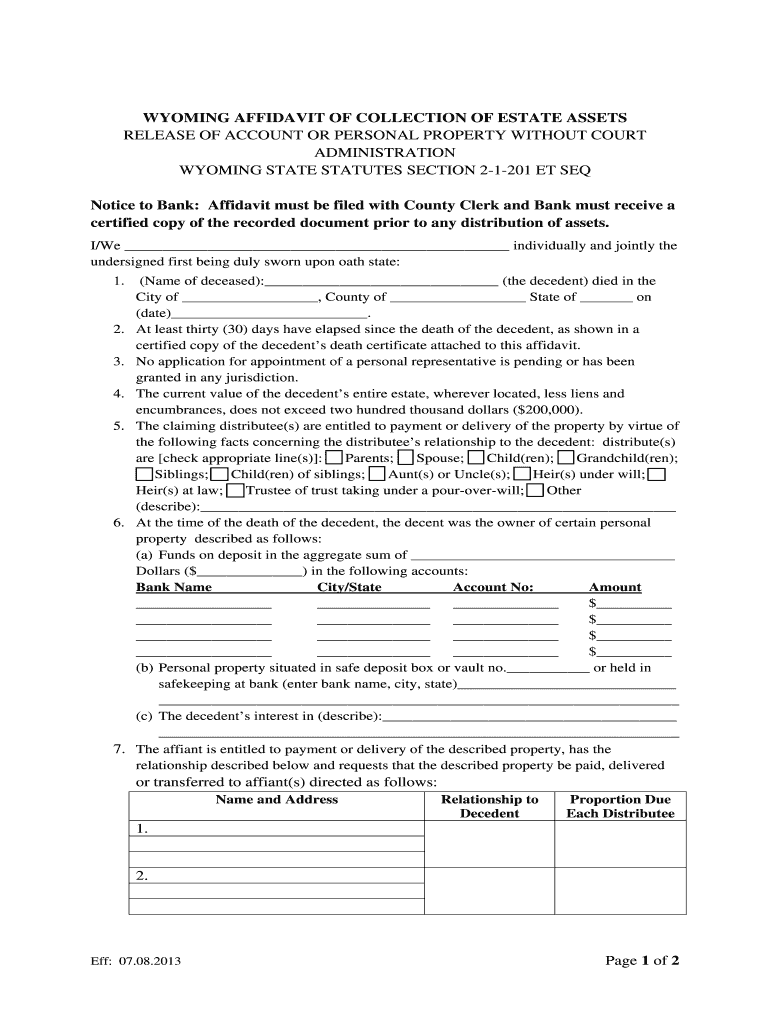
The Wyoming Affidavit of Collection of Estate is a legal tool used to manage the asset distribution of a deceased individual's estate without formal court administration. This affidavit allows heirs to collect the decedent's property if the estate meets certain criteria, streamlining the process and avoiding lengthy probate procedures. Typically, it involves confirming the death details, estate valuation, and the relationship between the deceased and the heirs or distributees. The primary purpose is to simplify and expedite the transfer of assets like bank accounts or personal properties through legal confirmation.
Key Components
- Affidavit Statement: A declaration outlining that the estate's net value does not exceed $200,000 and that all distributees are entitled heirs based on their relation to the decedent.
- Indemnification Provision: Assures banks or financial institutions are indemnified against claims once the assets are distributed, mitigating their risk.
- Signatures: Requires signatures from all distributees, confirming mutual agreement and understanding of the affidavit's terms.
How to Use the Wyoming Affidavit of Collection of Estate
The use of this affidavit begins with understanding eligibility—confirming the estate's value and relation to the decedent. Users should gather required documents and complete the affidavit thoroughly, ensuring all distributees are in agreement. The filed affidavit needs submission to the County Clerk and presentation to financial institutions where assets are held. This process authorizes the transfer of accounts or assets, adhering to state laws and conditions stated within the affidavit.
Steps to Complete the Wyoming Affidavit of Collection of Estate
- Verify Eligibility: Confirm that the estate’s total value is below $200,000.
- Gather Necessary Documents: Collect the decedent's death certificate, documents proving the value of the estate, and proof of the relationship between the deceased and distributees.
- Complete the Affidavit: Ensure all sections are accurately filled, listing all heirs and their respective shares and responsibilities.
- File with County Clerk: Submit the completed affidavit to the appropriate County Clerk’s office for official recognition.
- Present to Financial Institutions: Provide the affidavit to banks or other asset holders to facilitate the transfer of property or funds.
Considerations During Completion
- Accuracy: Each detail, from personal information to estate valuation, must be precisely documented to avoid disputes or delays.
- Required Signatures: Secure signatures from all distributees to validate the agreement and prevent legal challenges.
Key Elements of the Wyoming Affidavit of Collection of Estate
- Decedent’s Information: Includes full name, date of death, and last residence.
- Estate Valuation: Documentation or appraisal evidence confirming the estate’s complete value is under $200,000.
- Relationship to Decedent: Explicit declaration of each heir or distributee's relation, which supports their right to claim the estate.
- Legal Assertions: Statements affirming that the estate is not subject to probate or similar estate court procedures.
Essential Provisions
- Non-Probate Clause: Certifies that the estate qualifies for transfer without undergoing probate.
- Distribution Plan: Details how assets will be divided among heirs, ensuring clarity and equity.
State-Specific Rules for the Wyoming Affidavit of Collection of Estate
Wyoming imposes specific regulations for the affidavit process, including strict adherence to the maximum estate valuation. The state requires affidavits for estates not exceeding $200,000 and demands validation of all distributees’ claims and the absence of any ongoing probate proceedings. State laws also mandate indemnity clauses to protect financial institutions during the distribution phase.
Legal Use of the Wyoming Affidavit of Collection of Estate
This affidavit is particularly useful in handling small estate distributions efficiently. Legally binding under state laws, it facilitates the equitable allocation of the decedent's property without court interventions. This legal instrument respects the deceased's wishes while abiding by statutory requirements on asset distribution and heir agreements.
Importance in Estate Management
- Cost-Effective: Reduces legal fees and administrative costs associated with probate.
- Time-Saving: Significantly speeds up the process of asset transfer, allowing heirs to manage and access funds quicker than through traditional probate.
Important Terms Related to the Wyoming Affidavit of Collection of Estate
- Distributee: Any individual eligible to receive a portion of the decedent's estate based on legal rights or declarations within the affidavit.
- Indemnification: A safeguard provision protecting banks or financial entities from liability following asset distribution.
- Probate Avoidance: The strategic use of legal tools to transfer estate assets without engaging in the formal court-managed probate process.
Common Legal Terms
- Affiant: The person who swears to the statement contained in the affidavit.
- Estate: The total property, rights, and obligations of the decedent.
Examples of Using the Wyoming Affidavit of Collection of Estate
In practice, this affidavit can be used when a decedent’s estate, composed largely of cash in bank accounts under $200,000, needs to be transferred quickly to pay final expenses or debts. Another scenario involves a single heir, who needs to settle the estate's minor assets, streamlining the legal closure without lengthy court battles.
Practical Scenarios
- Single Heir Scenario: An only child uses the affidavit to consolidate and redistribute the decedent’s bank assets swiftly.
- Multiple Heirs: In cases involving numerous distributees, the affidavit helps secure agreement on asset distribution while obtaining necessary signatures to protect the proceedings legally.