




01. Edit your tenant move in checklist word online
Type text, add images, blackout confidential details, add comments, highlights and more.

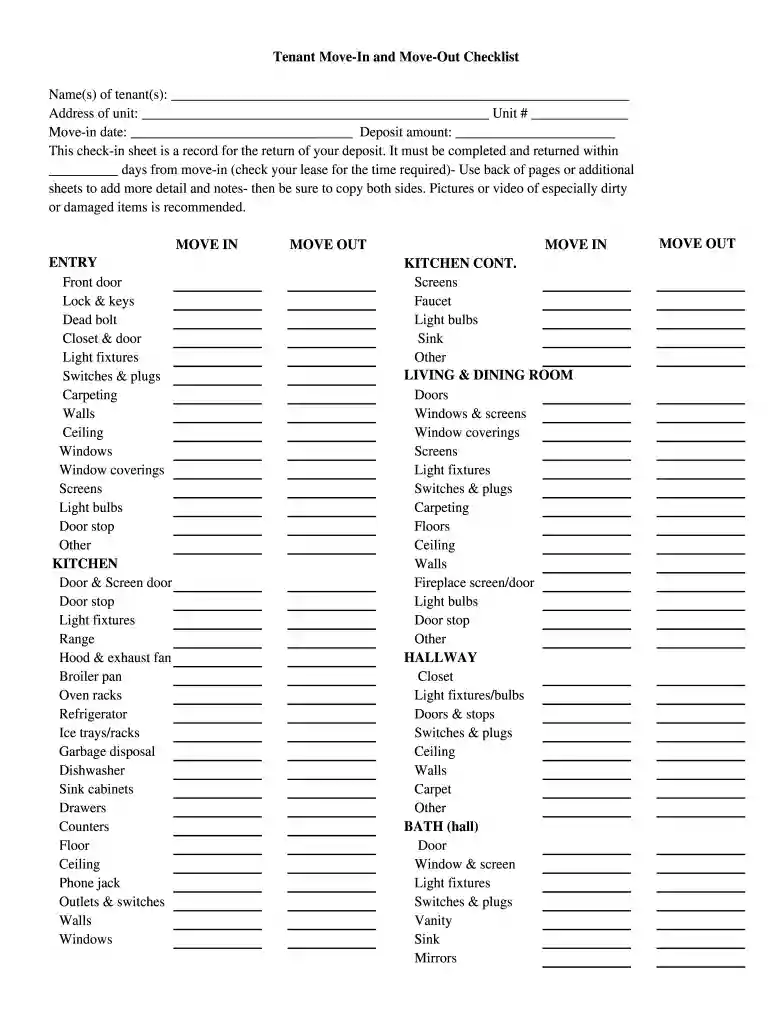
Type text, add images, blackout confidential details, add comments, highlights and more.

Draw your signature, type it, upload its image, or use your mobile device as a signature pad.

Send free tenant move in checklist via email, link, or fax. You can also download it, export it or print it out.
The Tenant Move-In and Move-Out Checklist is a crucial document for both landlords and tenants, serving as a comprehensive tool to assess the condition of a rental unit at the beginning and end of a tenancy. This checklist not only allows both parties to document the state of the property but also outlines responsibilities regarding repairs and maintenance, ultimately protecting the security deposit. By recording specific details about the condition of each area in the rental unit, including kitchens, bathrooms, living rooms, and bedrooms, this checklist aims to mitigate disputes related to property damage and cleanliness.
One of the primary purposes of the checklist is to provide a clear framework for both tenants and landlords, ensuring that expectations are set and understood from the outset of the rental agreement. By systematically evaluating the property, both parties can agree on what constitutes normal wear and tear versus intentional damage, thereby aiding in deposit negotiations at the end of the lease term. Effective utilization of this checklist promotes transparency and accountability, fostering a more positive rental experience.
Using the Tenant Move-In and Move-Out Checklist involves several straightforward steps designed to facilitate efficient documentation of the rental unit's condition.
Obtain the Checklist:
Conduct a Thorough Walk-Through:
Document Findings:
Sign and Date the Checklist:
Retain Copies:
Completing the Tenant Move-In and Move-Out Checklist requires diligence and attention to detail. Follow these organized steps to ensure thorough documentation:
Initial Preparation:
Begin with Major Areas:
Inspect Bathrooms and Bedrooms:
Evaluate Systems and Appliances:
Conduct Additional Inspections:
Final Review and Agreement:
The significance of the Tenant Move-In and Move-Out Checklist cannot be overstated. It serves multiple key functions:
Prevent Disputes: By providing a clear record of the property's condition, the checklist helps mitigate misunderstandings between tenants and landlords, thereby fostering a spirit of cooperation.
Security Deposit Protection: A detailed checklist allows tenants to secure their rightful deposits by proving that all damages were documented prior to their residency, protecting them from unjust claims.
Legal Accountability: Should disputes arise, having documentation of the unit’s condition serves as a legal safeguard for both parties, proving advantageous in potential court cases.
Standardized Process: The checklist establishes a standardized procedure for documenting property condition, promoting consistency in how inspections are conducted and evaluations made.
Encouragement for Property Maintenance: Regular utilization of the checklist encourages landlords to maintain their properties in good condition, as both parties have a vested interest in preserving the rental unit's value.
Utilizing the Tenant Move-In and Move-Out Checklist can vary depending on different rental scenarios. Here are a few practical examples:
New Tenants: Consider a new tenant moving into an apartment complex. They and their landlord conduct the walk-through on the day of move-in. They document a scratched floor panel in the living room, agreeing that it existed before the tenant’s arrival. This step ensures that the tenant is not held responsible for repairs at the end of the lease.
Ending a Lease: At the end of a lease term, a tenant and landlord again use the checklist during the move-out inspection. The tenant has cleaned and maintained the property well, leaving it in pre-tenancy condition. The signed checklist indicates that there are no new damages, thus allowing the tenant to recover their entire security deposit.
Multiple Roommates: In a shared rental, using the checklist as roommates move in together can help ensure that all parties agree on the condition of shared spaces. Any issues noted can be attributed appropriately, preventing disputes among roommates later.
These scenarios highlight how the checklist can play a pivotal role in smooth transitions, whether for new arrivals or individuals moving out of rental properties.
At DocHub, your data security is our priority. We follow HIPAA, SOC2, GDPR, and other standards, so you can work on your documents with confidence.
The owner/management agent and tenant together conduct a move-in/move-out inspection to document the condition of the unit at the time of move-in/move-out.Read more
Before you move-in and upon moving-out, be sure to carefully complete this check-list. Tenant Name(s):. Address Apt. No.: City: State: Zip:.Read more
Aug 27, 2012 Checklist to Complement other RSE Checklists for Remedy. Optimization within the Remedial Operation Phase of a Remedy. B. Case Study SummaryRead more


