
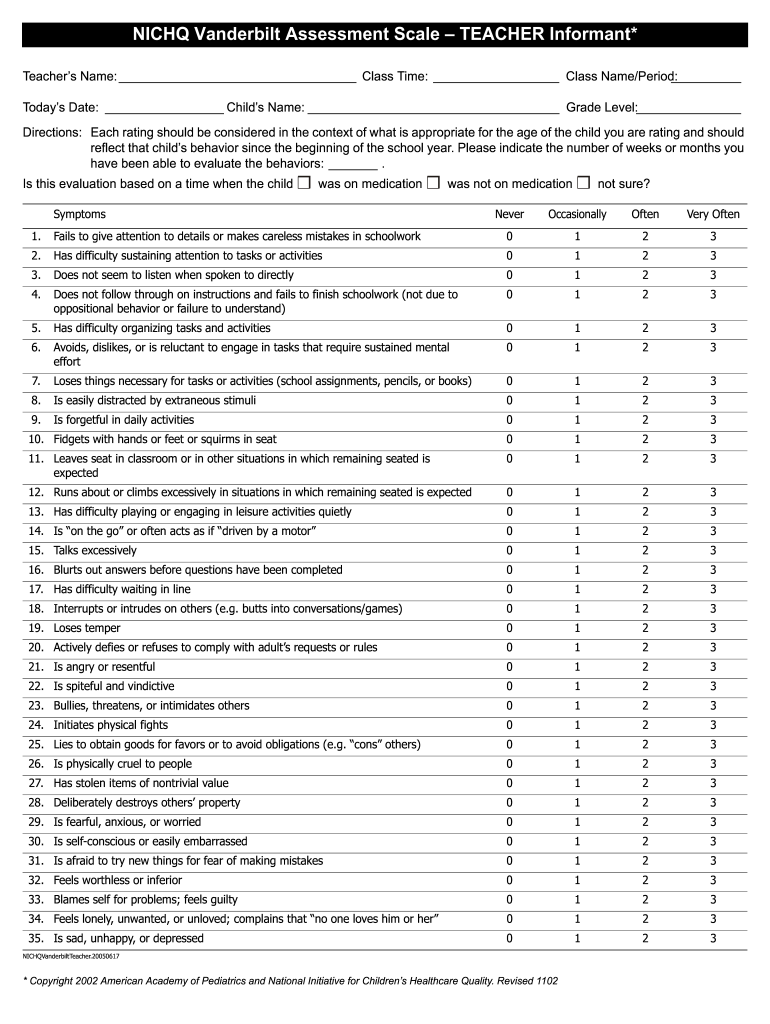







Definition and Purpose of the Vanderbilt Assessment
The Vanderbilt assessment is a structured tool designed to evaluate behavioral concerns, particularly in children, to determine the presence of attention-deficit/hyperactivity disorder (ADHD) and other related conditions. The assessment is widely used in educational and clinical settings, providing a comprehensive overview of children's behavior in various environments, specifically focusing on their actions within the classroom and at home.
The Vanderbilt assessment includes several components, such as questionnaires completed by teachers and parents detailing the child’s behaviors and academic performance. The insights gained from these questionnaires help mental health professionals formulate a diagnosis and create personalized intervention strategies. By assessing attention, hyperactivity, emotional issues, and academic performance, the Vanderbilt assessment plays a crucial role in identifying ADHD and ensuring appropriate educational support.
Key Components of the Vanderbilt Assessment Scale
The Vanderbilt assessment scale involves two primary questionnaires: one targeted at teachers and the other at parents.
Teacher Questionnaire
- Behavioral Ratings: This section asks educators to rate students on various behavioral issues, including inattention and hyperactivity.
- Academic Performance Assessment: Teachers provide evaluations in critical areas such as reading, mathematics, and written expression, reflecting the child’s academic capabilities.
Parent Questionnaire
- Behavioral Insights: Parents also assess their child's behavior in multiple settings and describe any emotional concerns.
- Context of Medication Use: Parents are asked to provide information regarding any medication their child may be taking, which aids in understanding the behavioral context.
These questionnaires collectively form a subjective yet insightful portrayal of a child's behavior, which is essential for holistic assessment and diagnosis.
Process for Completing the Vanderbilt Assessment
Completing the Vanderbilt assessment involves several steps to ensure accuracy and reliability in the evaluation process.
-
Access and Distribution of Questionnaires:
- Obtain the Vanderbilt assessment forms from a healthcare provider, educational institution, or online resources.
- Distribute the teacher and parent forms to ensure a range of insights on the child’s behavior.
-
Filling Out the Questionnaires:
- Encourage both parents and teachers to complete the assessments based on observations from the current school year.
- Providers may suggest reflecting on the child’s behavior with consideration for any medication impact.
-
Submission for Scoring:
- Once completed, the forms can be submitted to a qualified professional for evaluation.
- The aggregated scores from both questionnaires will produce an indication of ADHD and inform subsequent diagnostic decisions.
This structured approach ensures that the assessment captures comprehensive behavioral data from multiple sources, highlighting consistent patterns necessary for effective evaluation.
Importance of the Vanderbilt Assessment in ADHD Evaluation
The Vanderbilt assessment serves a vital role in the ADHD evaluation process for several reasons:
- Holistic Understanding: By incorporating perspectives from both teachers and parents, the assessment provides a well-rounded view of the child's behavior across different contexts.
- Guidance for Treatment: The findings can guide healthcare professionals in determining appropriate therapeutic or educational interventions, ensuring tailored support.
- Standardized Diagnostic Criteria: Utilizing the Vanderbilt assessment helps standardize the evaluation process, improving diagnostics across practitioners and settings.
- Identification of Co-occurring Issues: The assessment may also highlight additional behavioral disorders or learning difficulties, facilitating comprehensive support strategies beyond ADHD.
Understanding these important functions reveals the assessment's integral role in the identification and management of ADHD in children.
Who Typically Uses the Vanderbilt Assessment
The Vanderbilt assessment is primarily utilized by various stakeholders involved in child education and mental health:
- Educational Professionals: Teachers use the assessment to identify students who may be struggling with ADHD or related issues, influencing intervention and support measures tailored for individual students.
- Mental Health Clinicians: Psychologists, psychiatrists, or pediatricians rely on the assessment during diagnostic sessions to objectively evaluate behavior and mental health needs.
- Parents and Caregivers: Parents utilize the assessment to better understand their child's behavior and communicate effectively with educators regarding concerns and interventions necessary for support.
- School Districts: Many school districts adopt the Vanderbilt assessment as part of their special education evaluation process, ensuring that students receive appropriate accommodations under educational laws.
This broad application across educational and clinical settings emphasizes the assessment's significance in identifying behavioral challenges early on.


Legal Considerations and Compliance Related to the Vanderbilt Assessment
Using the Vanderbilt assessment in practice carries specific legal considerations to ensure compliance with educational and healthcare regulations:
- Confidentiality: All data collected through the assessment must be handled in accordance with laws governing data privacy, including the Family Educational Rights and Privacy Act (FERPA) and the Health Insurance Portability and Accountability Act (HIPAA).
- Informed Consent: Parents must provide consent before their child’s information is collected, emphasizing the importance of communicating the assessment’s purpose and intended use.
- Documentation Standards: Those administering the assessment need to follow updated and consistent standards to ensure the reliability and validity of the evaluations provided.
Adhering to these legal requirements safeguards the integrity of the assessment process and fosters trust between providers, families, and schools.
Conclusion and Future Directions for the Vanderbilt Assessment
With a continued focus on behavioral health in children, the Vanderbilt assessment is poised for further advancements, including online adaptations and improved accessibility. Its robust methodology offers significant insights into child behavior, which assists in early identification and intervention for ADHD and related disorders. Continued research and adaptation will enhance the assessment's effectiveness, ensuring that it meets the evolving needs of educators, clinicians, and families.




