






Detailed Composition of a Danielson Lesson Plan Template
A Danielson lesson plan template serves as a structured framework for educators to create effective lesson plans aligned with the Danielson Framework for Teaching. This section will explore its definition, utility, key components, and specific adaptations to meet diverse instructional needs.
Definition and Purpose of the Danielson Lesson Plan Template
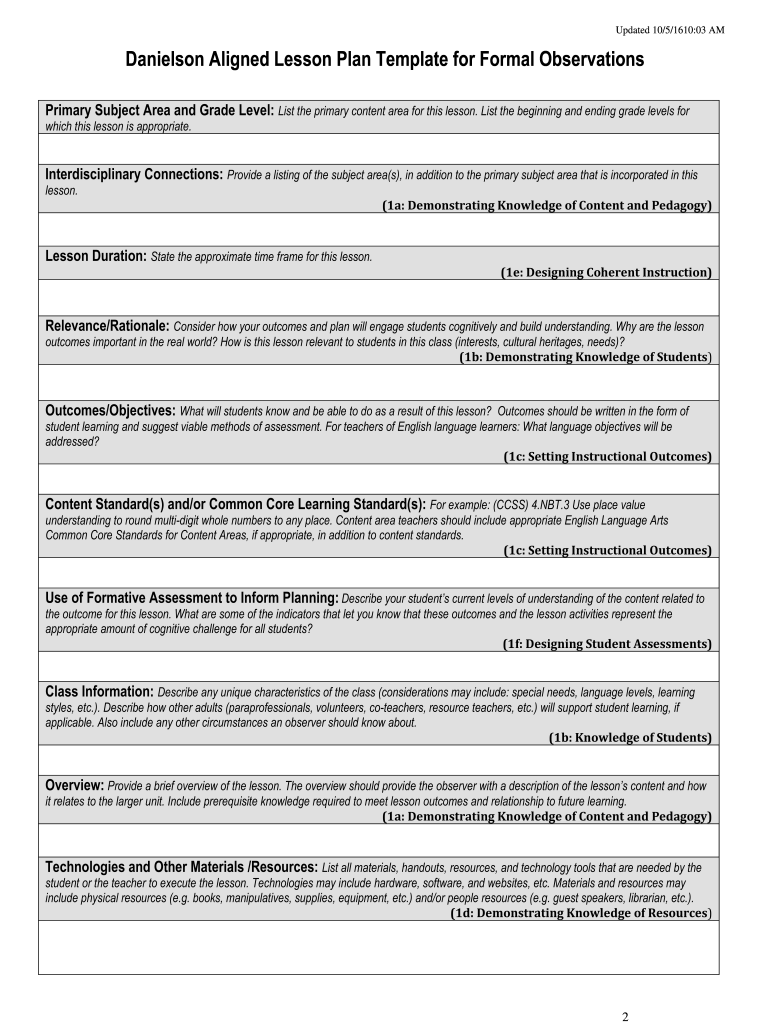
The Danielson lesson plan template is designed to enhance teaching effectiveness by providing a systematic approach to lesson planning. This template facilitates the planning process by breaking down essential elements that contribute to effective teaching and student engagement.
- Alignment to Standards: It aligns with educational standards and best practices, ensuring lessons meet both academic and pedagogical expectations.
- Structured Guidance: It serves as a guide for educators to reflect on their teaching practices, offering a clear structure that promotes critical thinking about lesson delivery.
Key Components of the Danielson Lesson Plan Template
The template typically includes several key sections, each serving a distinct purpose in the instructional design process.
- Lesson Overview: This section includes a brief description of the lesson, its objectives, and how it connects to previous learning.
- Learning Outcomes: Clearly defined outcomes specify what students are expected to achieve by the end of the lesson. These should be measurable and related to broader curriculum goals.
- Content Standards: This part lists relevant state or national content standards that the lesson addresses, ensuring adherence to educational requirements.
- Materials and Resources: Educators must outline all necessary materials, including texts, technology, and other resources to be used during the lesson.
- Instructional Procedures: Detailed steps outlining the lesson's flow, including direct instruction, group work, and independent practice, are crucial. This section may also incorporate:
- Engagement Strategies: Techniques for capturing student interest and ensuring participation.
- Differentiation Methods: Approaches to tailor instruction to meet the diverse needs of learners, including students with IEPs.
Assessment Strategies and Criteria for Success
Assessment is a pivotal part of the Danielson lesson plan template, enabling educators to gauge student understanding and effectiveness of the instruction provided.
- Formative Assessment: This entails ongoing assessments during the lesson to monitor student learning and adjust instruction as necessary.
- Success Criteria: Clearly defined criteria that outline the expectations for student performance, helping both teachers and students understand what constitutes success.
Addressing Anticipated Challenges
No lesson goes perfectly, and the template encourages educators to anticipate potential challenges that may arise during instruction.
- Identifying Difficulties: Teachers should assess possible barriers to student understanding and plan tailored interventions beforehand.
- Reflective Questions: At the conclusion of the lesson, educators are encouraged to reflect on the lesson's effectiveness, considering what went well and what could be improved for future iterations.
Variations and Customizations
The Danielson lesson plan template can be adapted for various teaching contexts and content areas.
- Danielson Aligned Templates: Educators can find specific formats adjusted to their subject matter or grade level, including Google Docs versions for easy editing and sharing.
- Integration of a 4As Approach: This instructional strategy—Anticipate, Activate, Apply, and Assess—can be embedded within each lesson plan to enhance engagement and understanding.
These key components of a Danielson lesson plan template enable educators to create well-organized lessons that are aligned with professional teaching standards, facilitating effective and engaging instruction in classrooms. By incorporating careful planning and strategic assessments, teachers can enhance their instructional practice and promote student success.