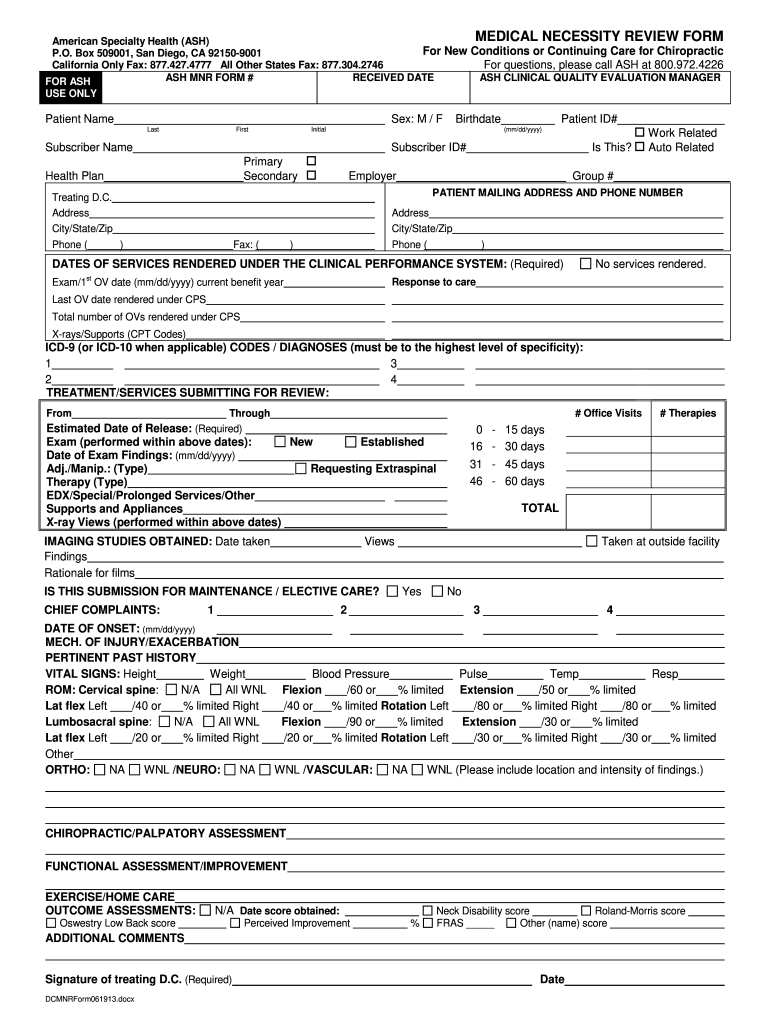







Definition and Purpose of the Ash Medical Necessity Form
The Ash Medical Necessity Form, frequently utilized in the healthcare sector, serves as a crucial document that helps assess whether specific medical treatments or services—such as chiropractic care—are necessary for a patient’s condition. This form is vital for establishing the medical legitimacy of services that require prior authorization, ensuring that healthcare providers are reimbursed for the treatments given.
The document typically includes patient information, treatment details, and clinical evaluations that support the necessity of the proposed services. By confirming medical necessity, the form aligns with regulatory requirements while aiding healthcare providers in adhering to both clinical and insurance standards.
How to Use the Ash Medical Necessity Form
Using the Ash Medical Necessity Form involves several key steps to ensure its effectiveness and compliance with health policies. Here’s a structured approach:
-
Gather Necessary Information: Before filling out the form, collect comprehensive patient information. This includes diagnosis, history of the condition, and previous treatments undertaken.
-
Complete the Form: Accurately fill out sections related to patient demographics, treatment provider details, etc. Clearly specify the recommended treatments and provide supporting clinical data.
-
Attach Documentation: Supplement the form with necessary documentation, such as clinical notes, test results, or any other relevant records.
-
Submit the Form: Send the completed form to the appropriate entity—usually the insurance provider or an authorization department—via the submitted method outlined in their instructions.
-
Follow Up: After submission, verify the status of the request to ensure that the review process is conducted in a timely manner.
Key Elements of the Ash Medical Necessity Form
Understanding the critical components of the Ash Medical Necessity Form can greatly streamline its use and improve accuracy. Key elements include:
-
Patient Information: Comprehensive details such as the patient’s name, date of birth, and insurance information.
-
Provider Information: Details about the healthcare provider, including their name, contact information, and credentials.
-
Clinical Assessment: A comprehensive evaluation that includes diagnosis codes, treatment history, and current health status, which helps substantiate the necessity of care.
-
Proposed Treatment Plan: Specific treatments recommended by the healthcare provider, including justifications for each service based on clinical guidelines.
-
Attachments: A checklist of any additional documents required, which may include previous medical records or referral notes.
Steps to Complete the Ash Medical Necessity Form
Completing the Ash Medical Necessity Form accurately is essential for facilitating timely authorizations. Follow these steps for successful completion:
-
Review Instruction Guidelines: Begin by reviewing any provided instructions to familiarize yourself with section requirements.
-
Fill in Patient Data: Start by entering the required patient details, ensuring accuracy in spelling and numbers.
-
Detail Clinical Information: Populate the treatment and clinical assessment sections with a clear description of the patient’s condition and rationale for recommended care.
-
Support with Documentation: Attach relevant documents that support medical necessity, making sure they are well-organized and clear.
-
Verify and Submit: Double-check all entries for completeness and accuracy before submitting the form as directed.
Important Terms Related to the Ash Medical Necessity Form
Familiarizing oneself with specific terminology can enhance understanding and usage of the Ash Medical Necessity Form:
-
Medical Necessity: Refers to healthcare services that are reasonable, necessary, and appropriate based on clinical standards.
-
Prior Authorization: A process used by health insurance companies to determine if a treatment is medically necessary before approval and reimbursement.
-
Clinical Evaluation: A systematic assessment of a patient's condition performed by a qualified healthcare professional to determine appropriate care.
-
Documentation: Any record or evidence that supports the rationale for a specific treatment or service, which may include clinical findings or lab results.
Legal Use of the Ash Medical Necessity Form
The legal implications of using the Ash Medical Necessity Form are significant, as incorrect use can lead to denials, potential fraud issues, and legal sanctions. It is legally binding when properly submitted and signed. It is critical that the information provided is accurate and truthful to protect both providers and patients. Non-compliance with the documentation requirements may result in penalties or loss of provider privileges from insurance panels.
Examples of Using the Ash Medical Necessity Form
Real-world scenarios can help clarify the practical application of the Ash Medical Necessity Form. Here are some examples:
-
Chiropractic Care: A patient with chronic back pain may require spinal adjustments that necessitate the completion of the form to justify ongoing treatment.
-
Physical Therapy: An individual recovering from surgery may need to document the necessity of physical therapy sessions, ensuring insurance coverage for multiple visits.
-
Preoperative Assessments: Prior to surgery, healthcare providers may need to demonstrate the medical necessity of the surgical procedure by documenting previous treatments and their effectiveness.
Who Typically Uses the Ash Medical Necessity Form
The Ash Medical Necessity Form is primarily utilized by:
-
Healthcare Providers: Physicians, chiropractors, physical therapists, and other medical professionals seeking to justify services for insurance reimbursement.
-
Patients: Individuals who may need their healthcare providers to document medical necessity to facilitate insurance claims.
-
Insurance Companies: These entities utilize the form to verify claims and assess the appropriateness of the treatments billed.
Each of these users has a vested interest in ensuring that the information submitted is accurate and comprehensive to support the medical necessity of provided treatments.