






Definition and Meaning
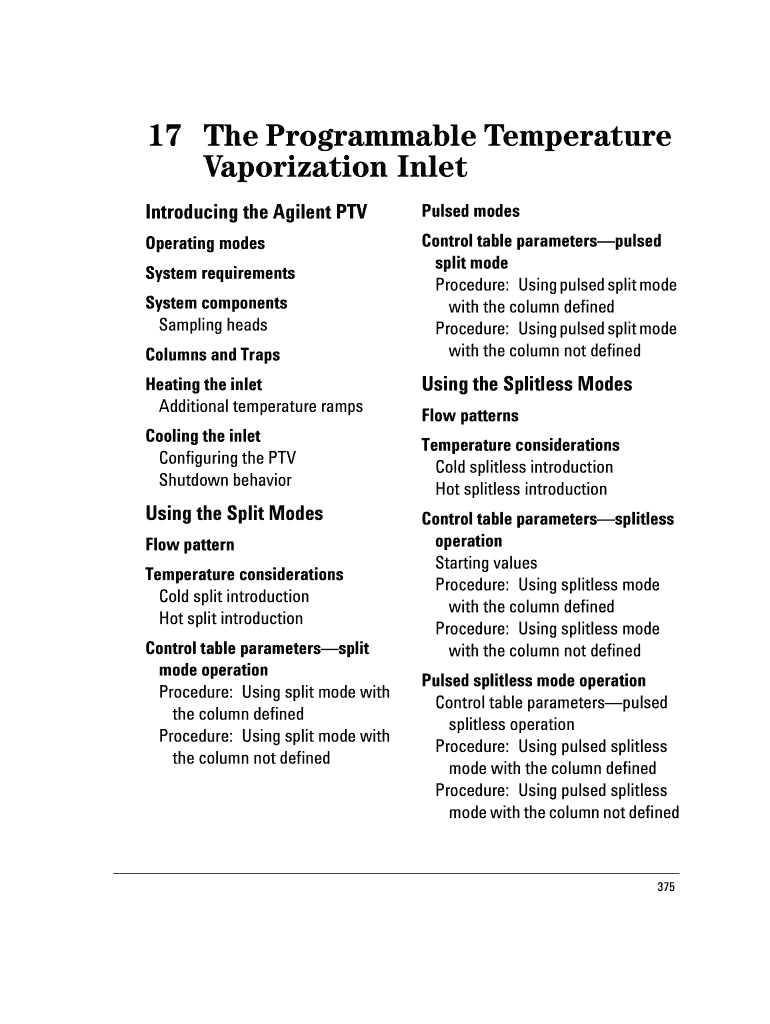
The Programmable Temperature Vaporization Inlet (PTV) is an advanced system used in gas chromatography for the introduction of samples. It is primarily utilized to control the vaporization process of samples with precision, thereby optimizing the analysis results. The term "ecs umass" references a specific application or setting within an educational or research context, likely affiliated with the University of Massachusetts. Understanding the functionality of a PTV can significantly enhance the accuracy and efficiency of chromatographic analysis.
Key Components
- Temperature Control: Essential for managing the volatile nature of the samples being analyzed.
- Vaporization Chamber: The core area where sample transformation from liquid to vapor occurs.
- Carrier Gas Management: Ensures proper transport of vaporized samples through the chromatography column.
Practical Applications
A PTV inlet is widely used in research and industrial laboratories where detailed analysis of complex mixtures is necessary. Its programmable nature allows users to set specific temperature profiles, accommodating different sample types and analysis requirements.
Steps for Using the Programmable Temperature Vaporization Inlet
-
Setup the Equipment:
- Ensure all connections between the PTV and the chromatography system are secure.
- Verify the temperature settings are appropriate for the sample type you are analyzing.
-
Prepare the Sample:
- Samples should be prepared and filtered properly to avoid blockages in the vaporization chamber.
- Concentrations should be calibrated to ensure accurate results.
-
Program Temperature Ramps:
- Utilize the PTV’s software to set initial, ramp, and final temperatures.
- Consider sample volatility and decomposition characteristics.
-
Data Collection and Analysis:
- Initiate the analysis sequence and monitor the system for anomalies.
- Use software tools to analyze and interpret the resulting chromatographic data.
Sample Handling Tips
- Avoid contamination by using clean instruments.
- Store samples in appropriate conditions until analysis.
Important Terms Related to the PTV Inlet
- Split Mode: Divides a sample to allow only a portion into the chromatography column.
- Splitless Mode: Introduces the entire sample into the column for comprehensive analysis.
- Solvent Venting: A technique used to remove solvents before analytical runs to avoid excess pressure build-up.
Additional Terminology
- Carrier Gas Pressure: Critical for maintaining sample flow through the column.
- Inlet Liner: Component that influences sample vaporization efficiency.
Legal Use of the Programmable Temperature Vaporization Inlet
Using a PTV inlet requires compliance with laboratory safety and regulatory standards. It is imperative to:
- Adhere to Institutional Protocols: Follow guidelines from relevant oversight bodies, such as the EPA or OSHA in the U.S.
- Ensure Accurate Calibration: Regularly calibrate equipment to avoid legal issues stemming from inaccurate data.
Regulatory Compliance
- Maintain records of sample analysis and instrumentation calibration.
- Implement proper waste disposal protocols for chemical residues.
Examples of Using the Programmable Temperature Vaporization Inlet
Scenario One: Environmental Sample Analysis
An environmental lab uses a PTV inlet to analyze air samples for volatile organic compounds (VOCs), allowing for precise investigation of pollution levels.
Scenario Two: Pharmaceutical Testing
In pharmaceuticals, PTV inlets facilitate the analysis of complex drug samples, ensuring that active ingredients are measured accurately and consistently across batches.
Software Compatibility
Digital integration with chromatography software enhances the functionality of PTV systems. Compatibility with platforms such as:
- TurboChrom
- ChemStation
- OpenLAB
These platforms streamline data acquisition and analysis processes, providing integrated solutions for laboratories. Ensuring that your PTV system works with these software applications is critical for maximizing efficiency and data integrity.
Business Types That Benefit Most from the PTV Inlet
- Chemical Manufacturing: Ensures the purity and composition of chemical products.
- Food and Beverage Industry: Analyzes and maintains flavor profiles and safety standards.
- Pharmaceutical Companies: Monitors drug composition and stability.
Targeted Applications
- Research Institutions: Conduct experimental analyses with nuanced control over test conditions.
- Environmental Agencies: Analyze air and water samples for pollution assessment.
Versions or Alternatives to the PTV Inlet
While the PTV inlet offers advanced features, alternatives include:
- Split/Splitless Inlets: Simpler systems that may suffice for less complex analyses.
- On-Column Inlets: Direct sample introduction for highly controlled analyses.
These alternatives vary in complexity and cost, allowing users to choose based on their specific analytical needs.
Required Documents for Setup and Compliance
When implementing a PTV system, ensure the following documentation:
- User Manuals: For detailed operational guidance.
- Calibration Certificates: Validate system accuracy through documented calibration history.
- Safety Data Sheets (SDS): Compliance with hazard communication standards.
Supporting Documents
Having comprehensive documentation ensures smooth operation, regulatory compliance, and straightforward troubleshooting, thereby optimizing laboratory productivity.
Conclusion
The programmable temperature vaporization inlet is a vital tool in gas chromatography, offering precision and versatility for diverse analytical applications. By understanding its features and requirements, users can enhance the accuracy of their analyses and ensure compliance with legal standards.