






Definition and Meaning
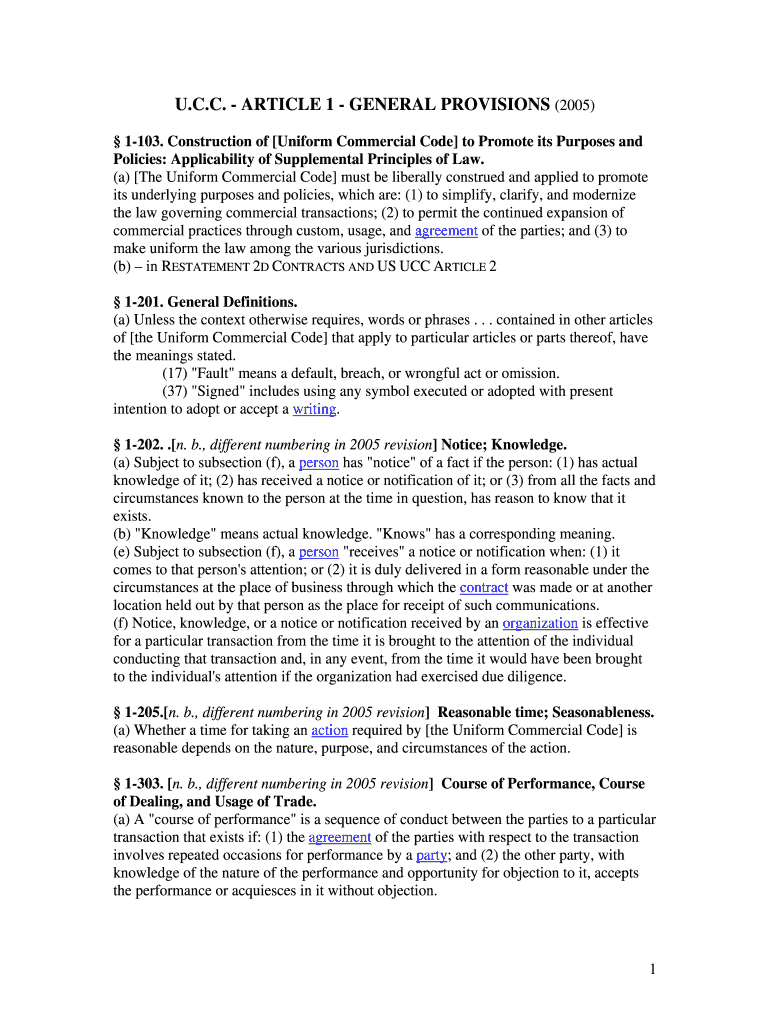
The "Construction of Uniform Commercial Code to Promote its Purposes and" refers to the principles and guidelines within the Uniform Commercial Code (U.C.C.) designed to support and enhance its foundational objectives. The U.C.C. aims to standardize and modernize commercial transactions across different jurisdictions in the United States, simplifying processes and reducing legal complexities. By providing a cohesive framework, the U.C.C. strives to promote uniformity and predictability, which are essential for the smooth conduct of business.
Key Elements of the Construction of Uniform Commercial Code
-
Promotion of Uniformity: The U.C.C. ensures that commercial laws remain consistent across various states, which aids in ease of business operations and mitigates potential legal conflicts.
-
Simplification and Modernization: As commerce evolves, the U.C.C. adapts to new practices and technologies to facilitate modern business transactions seamlessly.
-
Support for Commercial Practices: By accommodating evolving commercial practices, the U.C.C. allows for flexible and innovative business dealings.
-
Good Faith Obligation: Ensuring that parties involved in transactions act honestly and fairly, the U.C.C. upholds ethical standards within commercial activities.
Important Terms Related to the U.C.C.
-
Fault: Within the U.C.C., 'fault' may refer to any breach or omission that affects a party's performance within a contractual obligation.
-
Notice and Knowledge: These terms outline how information and awareness of facts can affect business dealings, especially in the context of agreements and contractual obligations.
-
Reasonable Time: This concept is used to determine the acceptable duration for performing contractual obligations, influenced by the nature and circumstances of the trade or transaction.
Legal Use of the U.C.C.
The legal framework under the U.C.C. is applied to govern commercial transactions, including sales, leases, negotiable instruments, and secured transactions. By leveraging the U.C.C., businesses can ensure contracts are executed fairly and disputes are resolved in a standardized manner. The consistent application of these laws helps to provide legal clarity and efficacious enforcement across state lines, fostering a reliable environment for commercial growth.
State-Specific Rules for the U.C.C.
While the U.C.C. is a uniform code, each state may have its modifications to better suit its local commercial climate. These alterations can impact elements such as filing procedures and standards for particular transactions. Understanding these state-specific variations is crucial for businesses operating in multiple jurisdictions, ensuring compliance and minimizing legal friction.
Who Typically Uses the U.C.C.
The U.C.C. is predominantly used by businesses, legal professionals, and financial institutions. Companies involved in inter-state commerce rely on these provisions for executing transactions, formulating contracts, and managing logistics. Legal practitioners and consultants leverage the U.C.C. to provide guidance on compliance and to mediate or litigate in case of disputes.


Business Types That Benefit the Most
Entities such as LLCs, corporations, and partnerships find the U.C.C. particularly beneficial due to its role in standardizing contracts and transactions. Businesses with extensive interstate operations appreciate the predictability provided by the U.C.C., which helps streamline processes and reduce the risk of legal inconsistencies.
Examples of Using the U.C.C.
Consider a scenario where a corporation based in California sells goods to a buyer in New York. The U.C.C. facilitates this transaction by providing a consistent legal framework, ensuring that both parties understand their rights and obligations clearly. Should a dispute arise, the U.C.C. offers a common ground for legal proceedings, minimizing potential discrepancies that could occur from varying state laws.
Steps to Complete Commercial Transactions Under the U.C.C.
-
Drafting a Contract: Utilize U.C.C. guidelines to create a comprehensive agreement, covering key terms such as delivery, payment, and dispute resolution.
-
Ensuring Compliance: Review state-specific adaptations of the U.C.C. to verify adherence to local commercial laws.
-
Execution of Agreement: Both parties must act in good faith, adhering to the agreed terms and timelines.
-
Addressing Disputes: In case of disagreements, the U.C.C. provides a legal pathway for resolution through mediation or court proceedings.
By following these steps and understanding the intricacies of the U.C.C., businesses can efficiently manage commercial transactions, thereby enhancing operational efficiency and reducing legal entanglements.