




01. Edit your face sheet online
Type text, add images, blackout confidential details, add comments, highlights and more.

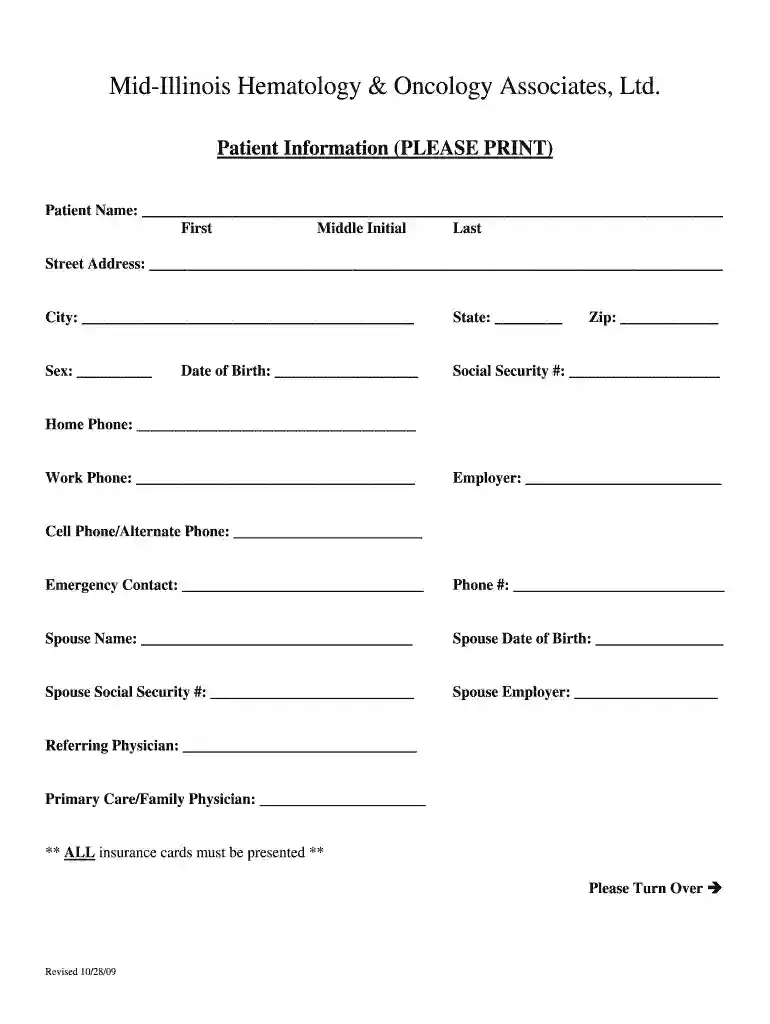
Type text, add images, blackout confidential details, add comments, highlights and more.

Draw your signature, type it, upload its image, or use your mobile device as a signature pad.

Send face sheet medical via email, link, or fax. You can also download it, export it or print it out.
A face sheet, also known as a patient face sheet or demographic face sheet, is a critical document used in healthcare settings to collect essential information about patients. It serves as a summary or cover page that compiles key personal and medical details in an organized manner. Typically, this sheet is utilized by medical offices, clinics, hospitals, and healthcare providers to ensure they maintain accurate records of patient demographics, contact information, insurance details, and medical history.
The primary purpose of a face sheet is to facilitate patient identification and streamline the process of collecting crucial medical information. In addition to the patient’s name and contact information, the face sheet often includes:
Understanding the face sheet's role and meaning is vital for both medical professionals and patients as it ensures that accurate and timely care is delivered.
Using a face sheet effectively requires understanding its components and how to apply the information gathered. Healthcare professionals and administrative staff should follow these essential steps:
Gather Necessary Information: Before completing the face sheet, ensure that patients provide accurate data, including personal identification details, insurance coverage, and emergency contacts.
Complete the Form Accurately: Utilize clear formatting and consistent language to fill out the face sheet, ensuring all required fields are completed. Special attention should be paid to details like the insurance policy number or emergency contact information, which are essential for prompt care and billing.
Review for Errors: After filling out the face sheet, review the document to confirm all entries are correct. This step is crucial, as inaccuracies can lead to significant issues during billing or emergency situations.
Update as Needed: Regularly check and update the face sheet during annual visits or whenever there are changes in patient information. Keeping this document current is vital for maintaining accurate medical records.
Ensure Privacy Compliance: Handle face sheets in compliance with HIPAA regulations to protect patient privacy. Secure storage and limited access should be considered standard practices within medical offices.
By following these steps, healthcare providers can maximize the utility of the face sheet, enhancing both patient care and administrative processes.
Completing a face sheet involves a systematic approach to ensure every relevant detail is captured. Here’s a breakdown of the steps involved:
Personal Information Section:
Insurance Information:
Emergency Contacts:
Medical History:
Additional Notes:
Completing these steps will create a comprehensive face sheet that serves its purpose effectively in medical contexts.
A face sheet typically encompasses several crucial elements that enable healthcare providers to access essential patient information quickly. These elements include:
Patient Identification: This section includes the patient’s full name, date of birth, age, gender, and contact details. Clear identification aids in accurate record-keeping and ensures personalized care.
Insurance and Billing Details: Recording insurance information, policy numbers, and any relevant group identification is vital for billing purposes and facilitating payment processes.
Medical History Overview: This segment can include previous illnesses, surgeries, allergies, and any ongoing medical treatments the patient is receiving. Understanding a patient's medical history is critical for providing informed healthcare.
Emergency Contact Information: Gather names, relationships, and phone numbers of emergency contacts to ensure that healthcare providers can communicate effectively in urgent situations.
Demographic Information: This may include the patient's address, ethnicity, and employment status, which can contribute to understanding health trends and tailoring healthcare services.
These elements collectively help in forming a complete picture of the patient and their healthcare needs.
The face sheet is primarily utilized by a diverse range of individuals and organizations within the healthcare system, including:
Healthcare Providers: Physicians, nurses, and other medical staff use face sheets to quickly access vital patient information needed for consultations and treatment planning.
Administrative Staff: Receptionists and office administrators rely on face sheets to manage patient appointments, billing information, and insurance claims processing.
Patients: Patients themselves fill out face sheets upon entering a medical practice, which helps them articulate their medical history and provide contact information to ensure proper care.
Insurance Companies: Insurers may also utilize face sheets when processing claims or verifying patient eligibility for coverage.
Understanding the various users of the face sheet helps in appreciating its importance and the need for accurate and complete information.


We've got more versions of the face sheet form. Select the right face sheet version from the list and start editing it straight away!
At DocHub, your data security is our priority. We follow HIPAA, SOC2, GDPR, and other standards, so you can work on your documents with confidence.
2. Names, addresses, and telephone numbers of the residents placing agency, emergency contacts, legal guardians, and parents, as applicable and appropriate. B.Read more
Universal Holder Face Sheet Instructions. The Universal Holder Face Sheet (UFS-1) form must be completed and submitted with all reports. Notice Report: CheckRead more
Precautionary statements. Prevention. Keep away from heat/sparks/open flames/hot surfaces. No smoking. Keep container tightly closed.Read more


