






Definition and Purpose of the Special Appeals Court Form
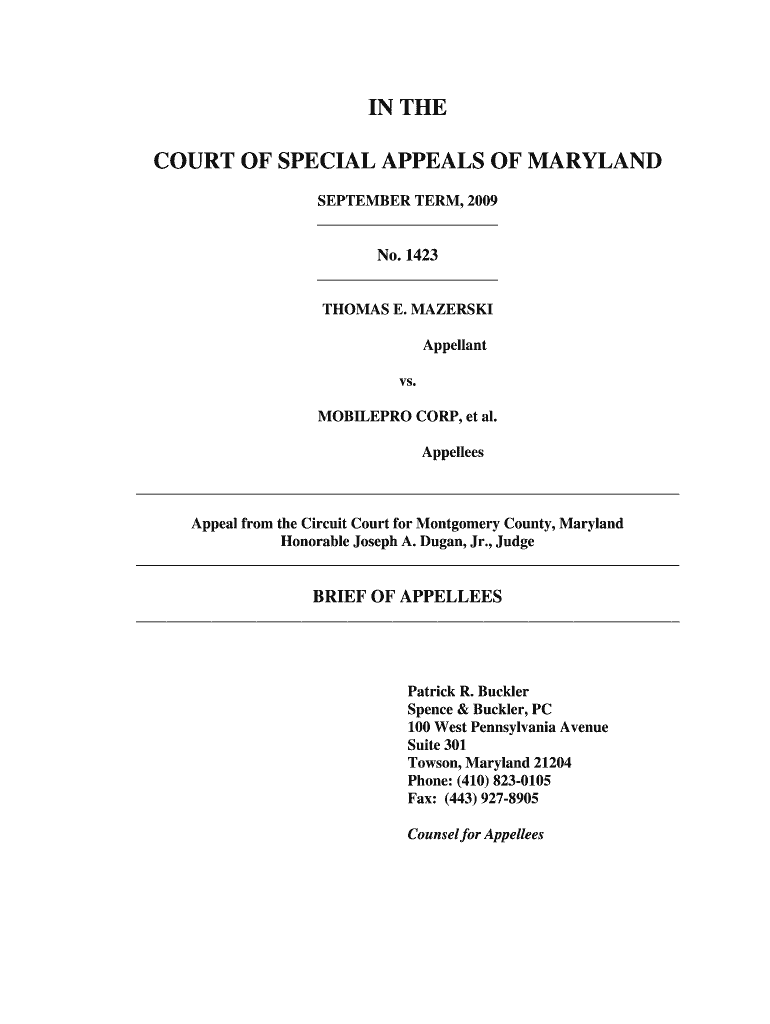
The "In the court of special appeals of maryland - University of Maryland - law umaryland" form is a legal document used within the Maryland judicial system, specifically within the Court of Special Appeals. This court serves as an intermediate appellate court to review decisions made by lower courts in Maryland. The purpose of this form is to facilitate the appellate process by outlining the specific grounds of appeal and supporting legal arguments. It ensures that the appeals court has a structured basis for reviewing the legal issues raised by parties from contested decisions.
Function and Importance
- Appellate Review: Provides a clear structure for presenting appeals, focusing on errors of law that may have occurred at trial.
- Legal Clarity: Outlines substantive and procedural aspects upheld or challenged, contributing to a fair reassessment of legal matters.
- Precedent Setting: Decisions rendered may influence future case law, underscoring the importance of a well-prepared appeal documentation.
How to Use the Special Appeals Court Form
Utilizing the form effectively requires a clear understanding of its components and procedural requirements.
Step-by-Step Usage
- Identify the Decision to Appeal: Determine which part of the lower court's ruling is being contested.
- Compile Relevant Legal Justifications: Gather all necessary legal arguments and supporting law to detail in the form.
- Complete the Form: Enter all required information, ensuring accuracy and adherence to specified guidelines.
- Submit According to Court Rules: File the form within the appellate jurisdiction according to Maryland’s rules of appellate procedure.
Common Mistakes to Avoid
- Omitting necessary legal citations, resulting in incomplete arguments.
- Failing to adhere to filing deadlines, which can jeopardize the appeals process.
- Neglecting proper formatting as per the court’s specifications.
Obtaining the Special Appeals Court Form
Accessing the appropriate form is crucial for timely and effective legal proceedings.
Where to Obtain
- Direct Download: Available on the official Maryland Courts website.
- Request from Clerk's Office: Can be obtained through the Clerk’s Office at the Court of Special Appeals.
- Educational Resources: Law libraries at institutions like the University of Maryland School of Law provide access and guidance.
Additional Resources
- Guidelines and Instructions: Detailed instruction manuals are often provided to assist in completing the form accurately.
Steps to Complete the Special Appeals Court Form
Filling out the form requires careful attention to detail and comprehension of the legal questions involved.
Detailed Procedure
- Fill Personal and Case Details: Start with fundamental information such as case number, parties involved, and court details.
- Articulate Grounds for Appeal: Define specific legal reasons for the appeal, referencing relevant laws and precedents.
- Evidence and Documentation: Attach supporting evidence, including transcripts and exhibits, if necessary.
- Legal Argumentation: Draft concise yet comprehensive legal points to support your position.
- Review and Proofread: Thoroughly check the document for accuracy and adherence to legal standards before submission.
Importance of the Special Appeals Court Form
Understanding the significance of this legal tool is vital for effective use in the judicial process.
Role in Legal Proceedings
- Upholding Justice: Ensures that appellate reviews are conducted systematically and justly.
- Facilitating Legal Advocacy: Enables legal representatives to convey their client's perspective convincingly.
- Ensuring Due Process: Part of the broader mechanism of ensuring procedural fairness in the legal system.
Benefits for Legal Professionals
- Provides a structured approach to appealing a court's decision, aiding in case management and strategy development.
Typical Users of the Special Appeals Court Form
Identifying who commonly engages with this form helps in understanding its applicability.
User Groups
- Attorneys and Legal Practitioners: Frequently use this form as part of their appellate advocacy.
- Self-represented Litigants: Although less common, individuals may also use this form when handling their own appeals.
- Legal Scholars and Students: Study the form for educational purposes, often within contexts like the University of Maryland School of Law.
Usage Context
- Articulating appeal grounds in civil, criminal, or administrative cases within Maryland’s jurisdiction.
Key Legal Elements of the Special Appeals Court Form
Grasping the foundational aspects of this form is essential for effective appellate submissions.
Core Components
- Case Identity Section: Outlines details about the case and involved parties.
- Grounds of Appeal: Specifies the basis upon which the appeal is filed.
- Legal Arguments and Citations: Includes detailed arguments supported by legal precedents and statutes.
Legal Compliance
- Ensures alignment with Maryland appellate procedural rules and judicial requirements.
State-Specific Rules for Maryland
Understanding Maryland-specific appellate procedures can aid in accurate form completion.
Maryland’s Appellate Procedure
- Maryland has unique rules regarding the deadlines, requirements, and procedures for filing appeals that practitioners must follow.
- The form must comply with specific formatting and submission guidelines, which may differ from those in other states or jurisdictions.
Practical Implications
- Familiarity with state-specific nuances can significantly impact the success of an appeal. Legal professionals must adapt their strategies to align with state laws and standards.