
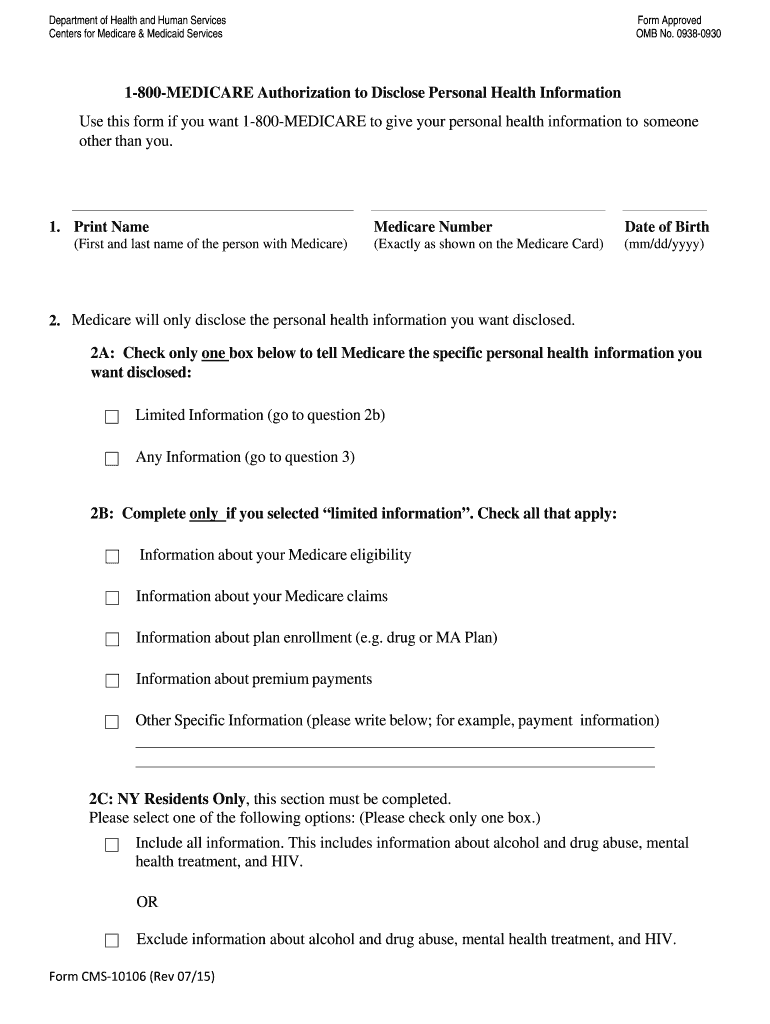







Definition and Meaning
The form titled "This form is used to advise Medicare of the person or persons" serves a crucial role in communicating personal health information authorization to Medicare. It allows Medicare beneficiaries to specify the individuals or organizations permitted to receive their health information. This function is particularly important for beneficiaries who wish to involve family members, caregivers, or legal representatives in their healthcare decisions. The form ensures that Medicare is informed of the authorized parties and helps facilitate effective communication between all involved entities.
How to Use the Form
Using this form involves several critical steps to ensure that the right individuals or organizations are granted access to personal health information. Beneficiaries need to:
- Identify the Purpose: Clearly state why the information needs to be disclosed.
- Select Authorized Persons: Specify the person or persons who should receive the information, including names and contact details.
- Define the Information Scope: Outline what specific information can be disclosed, such as medical history or treatment plans.
- Set Authorization Duration: Determine how long the authorization will remain valid, with options for indefinite or limited time frames.
- Sign and Date: Ensure that the beneficiary provides their signature to validate the form.
Practical Example
Consider a Medicare beneficiary who wants their daughter to manage their medical appointments. The beneficiary would list their daughter as an authorized person, define the medical details she can access, and specify that the authorization remains valid for one year.
How to Obtain the Form
The form can be obtained directly from the Centers for Medicare & Medicaid Services (CMS) website or requested from a local Social Security office. Additionally, healthcare providers associated with Medicare services can supply this form if needed. When sourcing the form online, ensure it's the most current version, as forms are periodically updated to reflect policy changes.
Steps to Complete the Form
- Download or Collect the Form: Ensure you have the correct and latest version of the form.
- Fill Out Personal Information: Include your name, Medicare number, and contact details.
- Specify Authorized Individuals: Clearly list the people or organizations that can receive your information.
- Detail the Information Scope: Indicate precisely what type of information they are allowed to access.
- Set Timeframe: Decide on the validity period for the authorization.
- Provide Your Signature: Sign and date the form, confirming its terms.
Detailed Breakdown
- Name and Contact Information: Ensure all beneficiary details are filled accurately to avoid processing delays.
- Information Disclosure: Detail whether the release includes only specific health records or broader categories such as ongoing treatments and tests.
- Signature Section: Include a witness signature if required by state law.
Why Use This Form
Using this form is essential for Medicare beneficiaries who want to ensure their health information is shared responsibly and with their explicit consent. It empowers individuals to involve trusted family members or legal representatives in their healthcare decisions. This is particularly beneficial for those with chronic conditions who need support in managing their medical affairs or for those who might become incapacitated and require a third party's involvement.
Key Elements of the Form
- Beneficiary Information: Includes all critical personal details required by Medicare for identity verification.
- Authorized Recipients: Lists all individuals or entities given access to the beneficiary’s health information.
- Information Scope: Defines the extent of access, which can include specific records or general information.
- Authorization Duration: States the length of time the consent is valid, which can be indefinite or time-bound.
- Signature and Date: A signature is mandatory to validate and activate the consent.
Legal Use of the Form
This form aligns with legal frameworks such as the Health Insurance Portability and Accountability Act (HIPAA), ensuring that all disclosed information is handled per federal laws governing patient privacy. Beneficiaries retain the right to revoke authorization at any time, should they wish to change or cancel the information-sharing arrangements.
State-Specific Considerations
Certain states, such as New York, may have additional requirements or protections, especially concerning sensitive information like mental health records or HIV-related data. It is important to consult with healthcare providers or legal professionals in specific states to remain compliant with local laws.
Form Submission Methods
Medicare beneficiaries can submit the form through multiple methods:
- Online Submission: Upload the completed form through the Medicare or CMS portal if available.
- Mail Submission: Send the physical form to the designated Medicare processing office.
- In-Person Submission: Deliver the form directly to a local Social Security or healthcare provider's office capable of processing Medicare documentation.
Advantages of Each Method
- Online: Quick and convenient, reducing processing time.
- Mail: Suitable for those who prefer paper documentation.
- In-Person: Offers the opportunity for immediate assistance and confirmation of receipt.




