






Definition & Meaning
The National Electronic Funds Transfer (NEFT) is an electronic system that facilitates the transfer of funds from one bank account to another within the country. Operated by the Reserve Bank of India, it allows account holders to conduct transactions in a secured and efficient manner. NEFT is particularly useful for processing routine payments such as salary disbursements, loans, and insurance payouts. Payments made via NEFT are processed in batches and settled on the same day, providing a reliable mechanism for commercial and personal banking needs.
How to Use the National Electronic Funds Transfer
To use NEFT, an account holder must have access to the internet banking platform provided by their bank. Once logged in, navigate to the 'Transfer Funds' section, where NEFT is usually listed alongside other payment options like RTGS or IMPS. Enter the recipient's bank account details, including the IFSC code, account number, and the amount to be transferred. Verify all the information before proceeding with the transaction. After confirmation, the bank processes the payment, and a unique transaction reference number is generated for tracking purposes.
Steps to Complete the National Electronic Funds Transfer
- Log into Your Internet Banking: Access your bank's online platform using your credentials.
- Select NEFT Option: Navigate to the fund transfer section and select NEFT as your transfer method.
- Enter Beneficiary Details: Input recipient's bank details, including name, account type, and IFSC code.
- Enter Transfer Amount: Specify the amount you want to send and any remarks if needed.
- Verify and Confirm: Double-check all information before confirming the transaction.
- Receive Confirmation: A confirmation message and transaction ID will be provided for future reference.
Key Elements of the National Electronic Funds Transfer
- Batch Processing: NEFT transactions are processed in hourly batches, ensuring timely settlement without delays.
- Security Measures: Uses multi-factor authentication and requires precise details, like IFSC codes, to enhance transaction security.
- Flexibility: Allows for the transfer of varied amounts, from nominal sums to large payouts, catering to different user needs.
- Transaction Limit: Upper limits vary between banks, and individuals should check specific bank guidelines to ensure compliance.
Required Documents
When initiating an NEFT transaction, several details are necessary to ensure smooth processing:
- Recipient's Bank Account Number: To identify the correct beneficiary account.
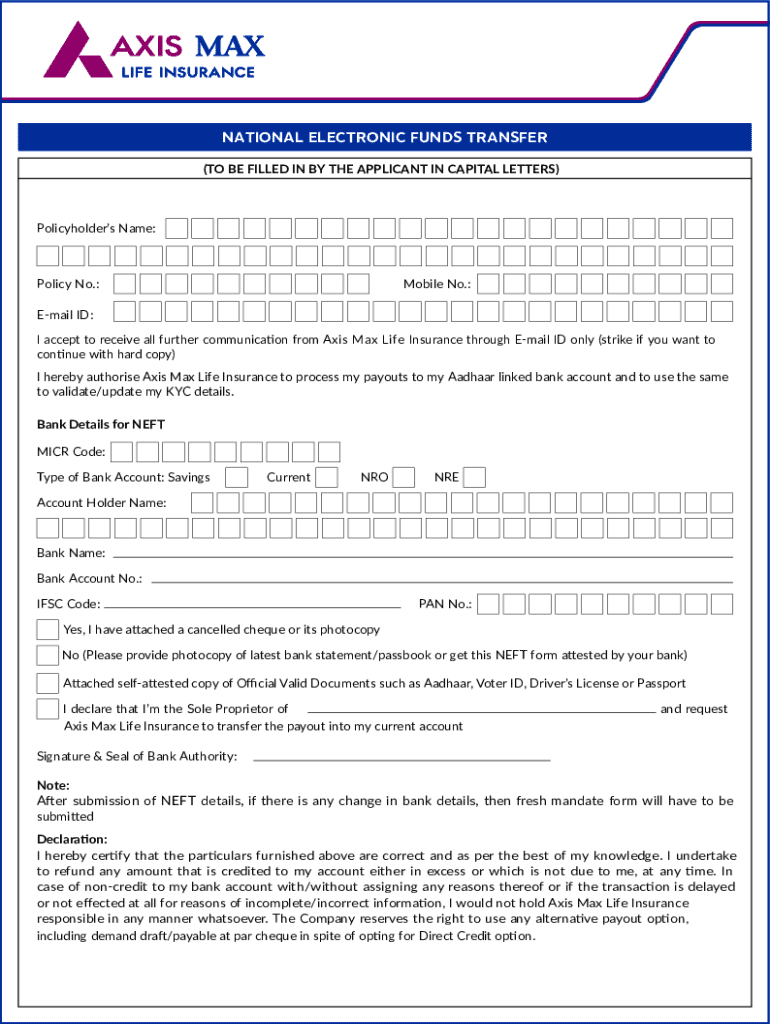
- IFSC Code: The unique code that identifies the specific bank branch.
- Sender's Account Details: Essential for authenticating the transaction and debiting the sender's account.
- Valid Identification: While not always required for online transactions, valid ID verification might be necessary for manual submissions.
Legal Use of the National Electronic Funds Transfer
Transactions via NEFT are governed by the guidelines set by the Reserve Bank of India, ensuring secure and legal transfers. Users must comply with all banking regulations and avoid using NEFT for any illicit activities such as money laundering. Banks may require additional documentation if the transaction amount exceeds a certain threshold, reflecting the importance of adhering to anti-money laundering laws.
Who Typically Uses the National Electronic Funds Transfer
NEFT is widely used by individuals and businesses across various sectors.
- Individuals: For fund transfers such as paying rent, sending money to family, or making personal investments.
- Businesses: Companies utilize NEFT for payroll transfers, vendor payments, and customer refunds.
- Insurance Companies: Like Axis Max Life Insurance, for disbursing policyholder payouts directly into the account linked with Aadhaar.


Form Submission Methods (Online / Mail / In-Person)
Transactions conducted through the NEFT system can be initiated via:
- Online: Through the bank’s internet banking portal, leveraging secure digital channels.
- Mobile: Via mobile banking apps which offer ease and flexibility for fund transfers.
- In-Person: By visiting the bank's branch, where physical forms can be filled and submitted for NEFT processing.
Each method offers varying degrees of convenience, speed, and accessibility to users, allowing them to choose based on their preferences and technical comfort levels.