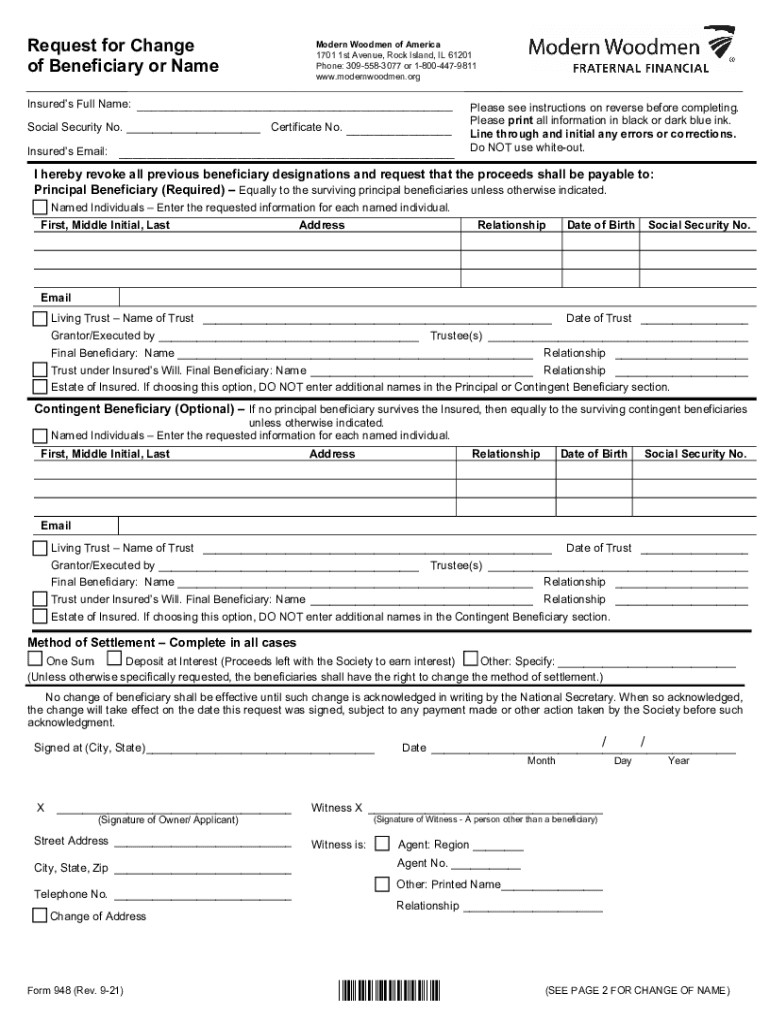







Definition and Purpose of the Application for Change of Beneficiary or Name
The "Application for Change of Beneficiary or Name" is a critical form used by policyholders to update the beneficiary or their own name on an existing insurance certificate, particularly with entities like Modern Woodmen of America. This form facilitates the revocation of previous beneficiary designations and the establishment of new principal and contingent beneficiaries. Such changes may arise due to life events, such as marriage, divorce, or a change in personal circumstances, that necessitate an update to keep the insurance records accurate and in line with the policyholder's current intentions.
Key Elements of the Form
To adequately complete the application for a change of beneficiary or name, specific information is required:
- Personal Details: Names, addresses, and contact information of the policyholder and the new beneficiaries.
- Current and New Information: Include both the details currently on record and the new data that will replace it.
- Relationship to Policyholder: Specify the relationship between the policyholder and the new beneficiaries.
- Signatures: The form typically requires the signatures of the policyholder, witnesses, and sometimes a notary, to validate the request.
- Method of Settlement: Optionally, instructions on how proceeds are to be managed should be included.
How to Use the Application for Change of Beneficiary or Name
Utilizing the form involves several structured steps:
- Review Instructions: Thoroughly read any accompanying guidelines to ensure correct completion.
- Gather Necessary Information: Collect all the details required to fill out the form accurately.
- Fill Out the Form: Provide clear and detailed information in all relevant sections, ensuring no fields are left incomplete unless specified.
- Submit Documentation: Attach required documents that verify identity changes or clarify beneficiary assignments (e.g., marriage certificate, court orders).
- Secure Signatures: Obtain all necessary signatures, including potential notarization if stipulated.
Why You May Need to Use This Form
Updating beneficiary designations is crucial for the following reasons:
- Life Changes: Marriage, divorce, birth of children, or death of an original beneficiary could necessitate updates.
- Legal Requirements: Changes in legal status may require official updates to keep records in compliance.
- Accurate Record-keeping: Ensuring all insurance documents reflect the current wishes and circumstances of the policyholder.
Who Typically Uses the Application for Change of Beneficiary or Name
This form is primarily used by:
- Policyholders: Individuals holding life insurance policies or annuities who need to update information regarding beneficiaries.
- Estate Planners: Professionals assisting clients in managing their estate plans may guide the use of these forms.


Steps to Complete the Application
Completing the form involves specific procedural steps:
Collecting Information
- Identify all necessary details, including policy numbers and names of current and new beneficiaries.
Completing Form Fields
- Meticulously fill out each section of the form, ensuring accuracy in names, addresses, and relationships.
Verification and Submission
- Double-check all entries for errors.
- Combine the completed form with any supplementary documents.
- Submit the application through specified channels, whether online, by mail, or in person, as per provider instructions.
Legal Use of the Application
The legal validity of this form hinges on compliance with:
- Insurer Policies: Adherence to specific insurance provider requirements, like those of Modern Woodmen of America.
- State Laws: Ensuring compliance with state-specific legal stipulations that govern beneficiary designations and name changes.
- Federal Guidelines: Adhering to relevant federal acts and legislation that impact beneficiaries and insured parties.
Required Documents
Depending on the nature of the change, the following documents may be necessary:
- Proof of Identification: Driver’s license or passport for name verification.
- Supporting Legal Documents: Marriage certificate, divorce decree, or court orders for name or beneficiary adjustments.
- Policy Details: A copy of the insurance certificate or policy involved in the change request.
Form Submission Methods
The application can be submitted via:
- Online Platforms: Some insurers offer digital submission options for faster processing.
- Mail: Completing and mailing the form through traditional postal services remains an option.
- In-Person: Directly visiting an insurance office can facilitate hand delivery for immediate processing.
This structure ensures comprehensive coverage of the "Application for Change of Beneficiary or Name" form, addressing critical user needs and providing detailed guidance on its usage and legal implications.